Russia Permits Euro-3 Standard Fuel Sales Until End of 2026 Amid Refinery Disruptions
Russian government allows circulation of Euro-3 gasoline and diesel with higher sulfur content to stabilize the domestic fuel market through 2026.
The Russian government has authorized the circulation of gasoline and diesel fuel meeting the outdated Euro-3 environmental standard until the end of 2026. This move, formalized by a government resolution signed by Prime Minister Mikhail Mishustin, permits the sale of fuels with elevated sulfur content domestically but excludes their export to other Eurasian Economic Union (EAEU) member states.
Strategic Response to Fuel Supply Instability
The Euro-3 standard, originally implemented in Europe between 2000 and 2005, allows sulfur levels of up to 150 mg/kg in gasoline and 350 mg/kg in diesel. In contrast, the more stringent Euro-5 standard permits only 10 mg/kg sulfur in both fuel types, reflecting a 15- to 35-fold difference. The Ministry of Energy highlighted the higher sulfur limits inherent in Euro-3 fuels.
The government resolution indicates that certain Russian oil refineries will be authorized to produce and sell fuel under the Euro-3 standard on the internal market. According to official statements, this regulatory rollback is part of "preventive measures aimed at preventing destabilization in the domestic energy market." Notably, Euro-3 fuels will not bear the standardized marking required for circulation within the EAEU, restricting their distribution solely to Russia.
"The decision to ease fuel quality requirements is intended to leverage refinery capacities unable to produce higher-standard fuels, ensuring market stability amid current disruptions," said a representative from the Ministry of Energy.
Moreover, reports in late June indicated the government is considering extending permissions through mid-2027 for the production and sale of fuels meeting even older Euro-2 and Euro-4 standards and possibly lifting import restrictions on such fuels. Euro-2 fuel sales have been banned in Russia since 2013.
Business Implications and Industry Challenges
Dmitry Prokofiev, Communications Director at NEFT Research, explained that relaxing standards allows the use of crude oil without deep refining and enables refineries lacking modern upgrading capacities to remain operational. This simplification of production processes is crucial amid current supply challenges, but comes with trade-offs.
"While the approach stabilizes fuel availability, Euro-2 fuel use may pose safety concerns for many modern vehicles," Prokofiev noted, highlighting potential long-term implications for automotive performance and emissions compliance.
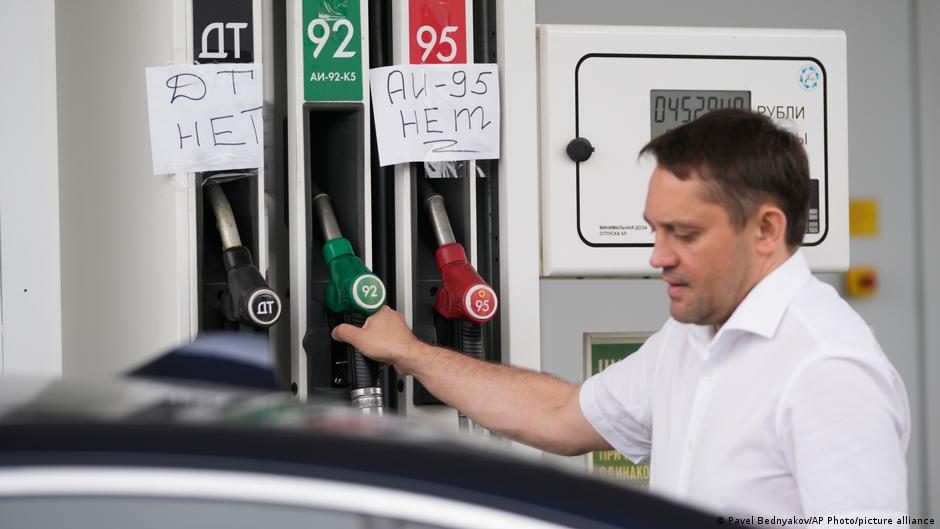
The underlying cause of the fuel crisis is a series of systematic attacks by Ukrainian armed forces targeting Russian refineries and energy infrastructure. The situation escalated sharply in late May when the Moscow-based Kapotnya refinery, responsible for approximately 40% of the capital's fuel supply, sustained two strikes within a week, forcing its shutdown until late 2026 or early 2027.
Production data from Reuters reveals a 25% year-over-year decline in gasoline output to 85,000 tons per day, against a summer consumption rate of 110,000 tons daily. The agency RBC reports that over 40 Russian regions, including occupied territories in Ukraine, have already imposed official fuel sale restrictions while consumer complaints have originated from 85 federal subjects.
Analytical firm Kpler notes that gasoline stocks in Russia have diminished by several hundred thousand tons over the past three months. President Vladimir Putin has publicly acknowledged the existence of a fuel deficit.
This regulatory rollback signals a strategic pivot in Russia’s energy policy, prioritizing supply continuity over environmental standards amid heightened geopolitical and operational risks. Energy sector executives and board members now face complex decisions balancing regulatory compliance, infrastructure resilience, and long-term sustainability.