Saratov Refinery Halts Operations After Ukrainian Drone Attacks Amid Russian Fuel Shortages
Ukraine’s drone strikes have forced a key Russian refinery to suspend processing, exacerbating fuel supply challenges across Russia.
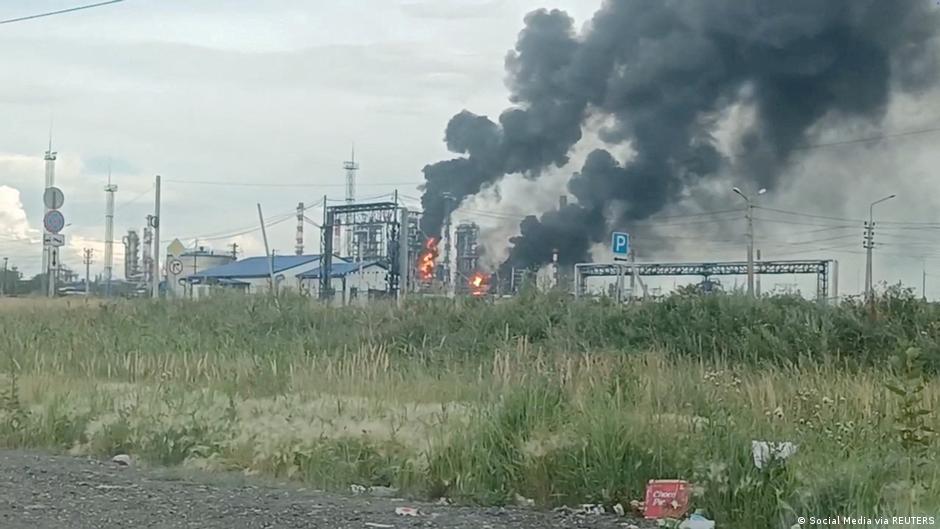
Russia’s Saratov oil refinery has ceased operations indefinitely following damage sustained from recent Ukrainian drone strikes, Reuters reported on July 9, citing two anonymous sources familiar with the situation. The attack targeted the refinery’s primary crude distillation unit, CDU-6, which processed up to 20,000 tons of crude oil daily. This unit was the sole installation of its kind at the facility.
The governor of Saratov Oblast, Roman Busargin, confirmed that the drone strikes damaged civilian infrastructure but withheld further details. Meanwhile, Ukraine’s General Staff stated that the strike on July 8 specifically hit the Saratov refinery, owned by Rosneft. This facility has been subjected to multiple attacks since the start of the Russia-Ukraine conflict.
"The attack damaged the refinery’s core processing capabilities, leading to an indefinite suspension of operations," a source told Reuters.
Impact on Russian Refining Capacity and Fuel Market
Rosneft did not respond to Reuters’ requests for comment. However, independent media analysis reveals that at least 13 Russian refineries have partially or fully shut down in the first half of 2026 due to similar Ukrainian drone attacks. According to Novaya Gazeta Europe, these disruptions have removed approximately 25% of Russia’s overall oil refining capacity and 30% of its gasoline and diesel production.
The timeline for resuming production at damaged facilities varies. For example, the Kapotnya refinery near Moscow, attacked in mid-June, is not expected to return to full operation until at least December. Such prolonged outages have a significant ripple effect on Russia’s fuel supply chain.
By early July, the gasoline shortage resulting from refinery shutdowns affected an estimated 50 million Russians—around 35% of the population—according to the Financial Times. This figure is based on rough estimates of vehicle ownership per region. In response, several regional governments and fuel suppliers imposed gasoline sales restrictions, with declared high alert statuses in areas including Zabaykalsky Krai, Penza, and Irkutsk regions.
Additionally, the Russian government extended a ban on diesel fuel exports through July 31 to prioritize domestic supply. This export restriction, initially imposed in late January 2026, had not previously applied directly to producers.
Corporate and Strategic Responses in Russia’s Refining Sector
Deputy Prime Minister Alexander Novak stated that Russian refining companies have ramped up output at operating plants to maximum capacity. They have also released previously stockpiled fuel volumes to the market, shortened repair durations, postponed planned maintenance, and leveraged the capacity of medium and small refineries to mitigate shortages.
These executive decisions highlight the sector’s strategic emphasis on maintaining supply continuity amid ongoing military disruptions. The shift towards maximizing existing capacity and deferring maintenance reflects a tactical trade-off that may affect long-term operational stability.
Industry observers note that the attacks underscore vulnerabilities in Russia’s energy infrastructure, particularly its reliance on a limited number of high-capacity processing units. Sustained disruptions raise questions about the resilience of oil refining operations and the broader implications for Russia’s energy security and export strategy.