Trump Commits to Removing Syria from Terrorism Sponsors List, Signaling Strategic Shift
U.S. President Donald Trump pledges to delist Syria as a state sponsor of terrorism, opening avenues for American investments and reshaping Middle East policy.
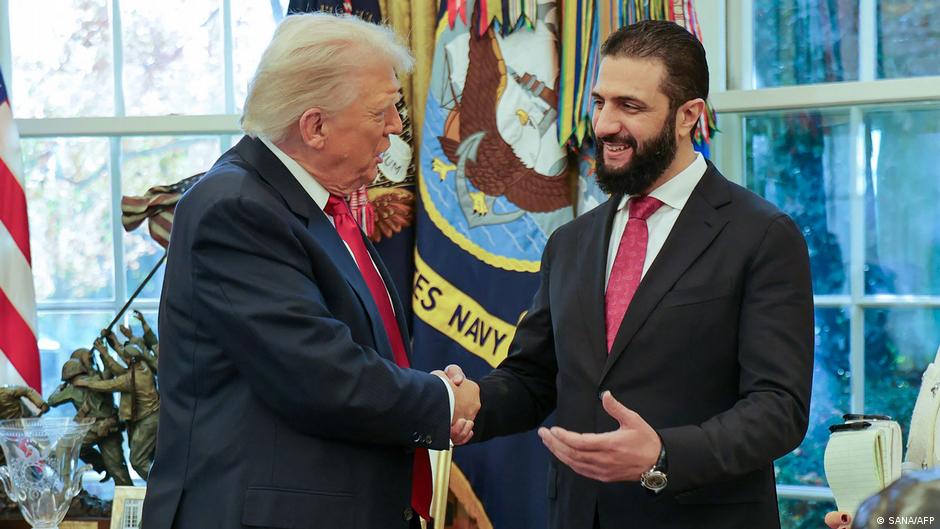
In a landmark move signaling a strategic pivot in U.S. foreign and economic policy, President Donald Trump has promised to remove Syria from the U.S. list of state sponsors of terrorism. The announcement came in a direct letter to Syria's interim president, Ahmed al-Sharaa, marking a rare overture between the two nations amid years of conflict and sanctions.
The communication, revealed by Reuters, emphasized American corporate interest in Syria’s reconstruction efforts. "We have American companies ready to invest in Syria and help make your country greater and more prosperous than ever," Trump stated in the letter.
Executive Decisions and Boardroom Implications
This development follows a personal meeting between Trump and al-Sharaa during the NATO summit in Ankara, underscoring the diplomatic priority the U.S. administration is assigning to Syria’s reintegration. Earlier, Trump had signed an executive order lifting sanctions on Syria, and instructed Secretary of State Marco Rubio to evaluate the formal removal of Syria from the terrorism sponsor list.
"The lifting of sanctions opens unprecedented opportunities for economic restoration and global reintegration for Syria," stated Syrian authorities, highlighting the broader geopolitical implications.
The designation of Syria as a state sponsor of terrorism had long restricted U.S. foreign assistance, arms exports, and financial transactions, effectively barring American firms from engaging with Syrian markets. Its removal not only pivots U.S. foreign policy but also unlocks new opportunities for American businesses seeking to participate in Syria’s post-conflict reconstruction—a sector already attracting interest from Saudi firms.
Strategically, this is the first official engagement between U.S. and Syrian leadership in 25 years, recalling the last U.S.-Syria summit under President Bill Clinton in 2000. The reestablishment of direct dialogue and easing of economic sanctions represent a significant recalibration of U.S. Middle East policy with potential to reshape regional alliances.
Additionally, the complete withdrawal of U.S. troops from Syria, formally confirmed by both Damascus and the U.S. Central Command, has altered the military landscape. The Syrian Ministry of Foreign Affairs welcomed the professional handover of former U.S. military bases back to Syrian control, emphasizing the constructive nature of U.S.-Syrian relations following the historic White House meeting in November 2025.
From a corporate strategy perspective, the normalization signals an emerging market for infrastructure, energy, and security firms. Companies now face a new frontier to navigate complex regulatory changes and political risk, balanced by potentially high returns in a nation seeking to rebuild after prolonged conflict.
Moreover, the U.S. military will continue to support partner-led counterterrorism operations vital for defeating ISIS and stabilizing the region, ensuring a sustained albeit redefined American presence.
For boards and executives, the unfolding situation presents critical considerations: evaluating exposure to geopolitical risk, assessing opportunities in emerging Syrian markets, and calibrating engagement strategies aligned with shifting U.S. foreign policy priorities.
As Syria moves toward reintegration into the global economy with American endorsement, businesses and policymakers alike must closely monitor developments to capitalize on new markets while managing the inherent uncertainties of a transitioning geopolitical environment.