Uzbekistan Central Bank Maintains Key Interest Rate Amid Inflation and External Risks
Despite declining inflation, Uzbekistan’s Central Bank keeps its key rate steady due to rising food prices and global economic uncertainties.
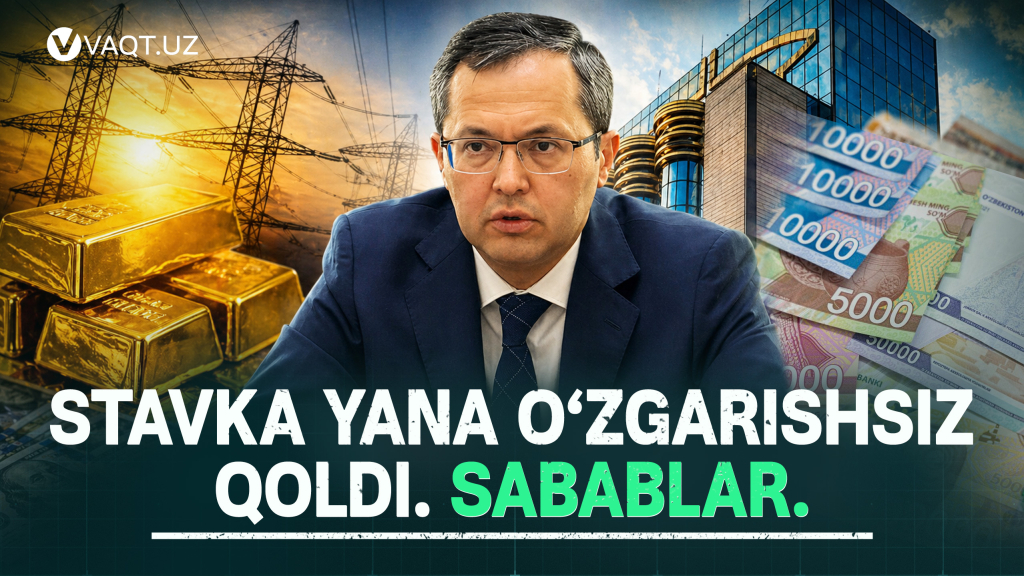
On April 29, the Central Bank of Uzbekistan's board decided to maintain the key interest rate at an annual 14%, reflecting a cautious stance amidst mixed inflation dynamics and external economic pressures.
Balancing Inflation Trends and Economic Growth
Although overall inflation has exhibited a downward trend, with annual inflation falling to 7.1% in March 2024, certain inflationary pressures persist. Notably, food prices continue to rise at a pace exceeding general inflation, presenting a significant challenge for monetary policy makers.
Central Bank Chairman Temur Ishmetov emphasized that the deliberations focused exclusively on keeping the key interest rate unchanged. He noted that while inflation is decreasing, the rate of decline has slowed, and some sectors show no improvement. This uneven inflation landscape complicates the prospect of lowering the key rate in the near term.
"The process of inflation reduction is ongoing but uneven, with some segments showing no signs of easing," Ishmetov stated, underscoring the cautious approach adopted by the Central Bank.
Energy tariffs and utility prices have been factored into the inflation calculations, with the government announcing up to a 10% indexation at the start of the year. However, exact figures on the tariff adjustments remain unconfirmed, adding uncertainty to future inflation expectations.
External Risks and Domestic Economic Growth
External economic factors also contribute to the Central Bank’s cautious policy. The International Monetary Fund recently downgraded its global growth forecast and highlighted persistent inflation risks, particularly in energy and food prices, which could influence local markets.
Domestically, Uzbekistan’s economy expanded by 8.7% in the first quarter of 2024, surpassing forecasts and potentially increasing internal demand and inflationary pressures. This robust growth further complicates the Central Bank’s decision-making environment.
Additionally, the ongoing privatization efforts of state-owned banks, including Sanoatqurilishbank, Aloqabank, and Asakabank, are under progress. Although the Central Bank is not directly involved in these processes, it participates in assessment and analysis stages, reflecting its broader role in the financial sector's stability.
On currency policy, the regulator maintains a firm stance on preserving a free-floating exchange rate regime, avoiding artificial interventions to influence the currency market.
Outlook for Monetary Policy
Looking ahead, the Central Bank has signaled that future decisions will depend heavily on inflation trajectories and risk assessments. Should inflationary pressures ease significantly, there is potential for interest rate reductions. Conversely, if inflation risks persist, the bank may tighten monetary policy further to ensure economic stability.
This approach highlights the Central Bank’s commitment to balancing growth and price stability amid a challenging global and domestic environment.


