AfD Expels Politician for Hitler-Like Speech Amid Internal Party Turmoil
Alexander Eichwald’s expulsion highlights rising tensions and ideological divisions within Germany’s populist AfD party.
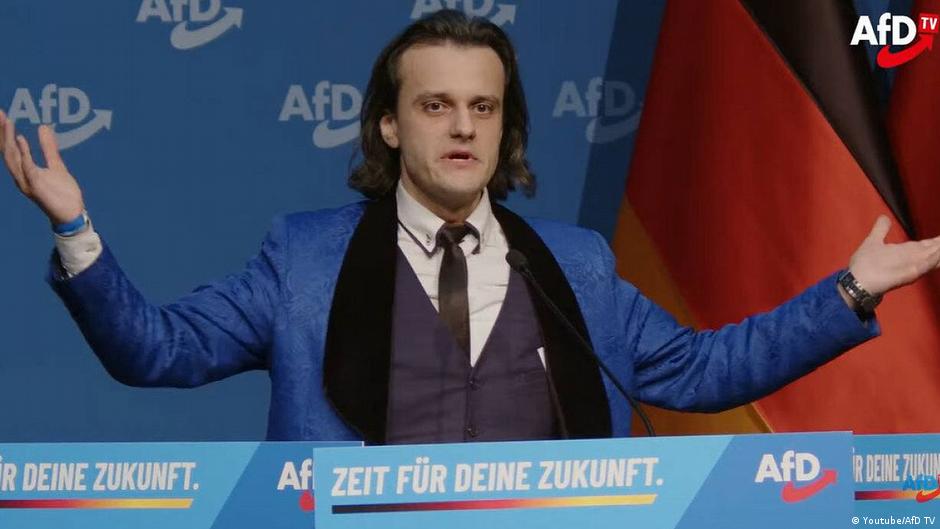
Germany's right-wing populist party Alternative for Germany (AfD) has expelled 30-year-old politician Alexander Eichwald following controversy over his speech at a party youth wing congress, where his manner of speaking closely resembled that of Adolf Hitler. The decision, announced on April 25, was driven by party disciplinary concerns over reputational damage.
Internal Party Dynamics and Strategic Implications
Eichwald, a Russian-born German politician, gained media attention for his speech delivered at the AfD youth organization "Generation Germany" congress held in North Rhine-Westphalia in late November 2025. His gesturing, elongated words, and particular pronunciation of the letter "r" evoked the infamous oratory style of Hitler, sparking widespread criticism.
"His speech was a planned action to highlight the presence of neo-Nazi elements within AfD leadership and to hold up a mirror to society," Eichwald stated in a later interview.
Despite the backlash, Eichwald defended his approach as a deliberate political statement rather than parody or satire. He emphasized that his intent was to expose extremist tendencies within the party, drawing parallels between contemporary Germany and the Weimar Republic era, which led to Hitler's rise.
Following the controversy, the AfD disciplinary court ruled to expel Eichwald, citing conduct that inflicted serious harm on the party's image. Eichwald retains the right to appeal the decision at the party’s federal arbitration court and has expressed his intention to do so, underscoring ongoing internal resistance.
Notably, Eichwald did not attend the disciplinary hearing, having submitted his defense in writing. His background includes migrating from Rostov-on-Don, Russia, to Germany at age nine and learning German through cultural influences such as the music group Rammstein. While he does speak with a Russian accent, his typical pronunciation does not mirror the exaggerated style he used in the controversial speech, indicating a conscious performative choice.
Beyond the speech itself, Eichwald has voiced criticism of the AfD leadership, particularly targeting co-chair Alice Weidel, who in January 2025 described Hitler and Stalin as "spiritual brothers." For Eichwald, a Russian-German, this was an affront, diminishing the historical suffering of Slavic peoples during World War II.
In a further demonstration of defiance, days before his expulsion Eichwald published a half-hour video on YouTube repeating the speech's distinctive "r" pronunciation and reaffirmed his willingness to deliver the speech again, signaling unresolved friction within the party.
Boardroom and Executive Considerations for AfD
The Eichwald episode underscores challenges for AfD’s leadership in balancing hardline nationalist rhetoric with broader party cohesion and public image management. The disciplinary action reflects a strategic move to distance the party from overt associations with Nazi symbolism, which could alienate moderate supporters and complicate electoral prospects.
However, Eichwald’s vocal dissent and appeal rights indicate that factions within AfD remain deeply divided over ideological direction and messaging strategies. For executives and board members steering the party, navigating these internal conflicts will be critical to maintaining unity and political momentum amid Germany’s polarized political landscape.
As the AfD grapples with these challenges, the Eichwald case serves as a case study in the risks of provocative political theater and the governance complexities faced by populist organizations managing extremist elements.