Viktor Orban Declines Parliamentary Seat Amid Leadership Reshuffle in Hungary’s Fidesz Party
Former Prime Minister Viktor Orban steps back from parliamentary role but aims to retain party leadership amid Hungary’s political transition.
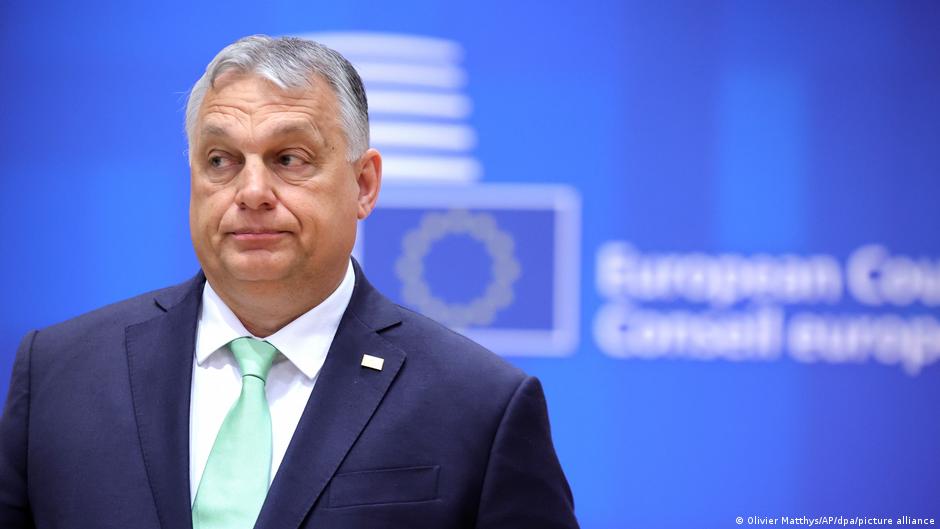
Following the electoral defeat of his party, Fidesz – Hungarian Civic Alliance, Viktor Orban announced that he will not take up his parliamentary seat in the newly convened Hungarian Parliament. This decision marks a significant shift in the leadership dynamics within Fidesz as the party prepares to navigate a new political landscape under opposition rule.
Orban’s Strategic Withdrawal and Party Leadership
Viktor Orban, who served as Hungary’s Prime Minister until the recent parliamentary elections, declared on April 25 that he is relinquishing his parliamentary mandate. He emphasized that the mandate, which he received as the lead candidate of the Fidesz-Christian Democratic People’s Party (KDNP) coalition, effectively belongs to Fidesz as a whole. Orban stated,
"I have decided to give up the mandate. Now, I am needed not in parliament but to reorganize the national movement."
While stepping down from parliamentary duties, Orban signaled his intent to remain the chairman of Fidesz, with plans to discuss his leadership status at the party congress scheduled for June. Meanwhile, Gergely Gulyás, former head of the Prime Minister’s Office, is set to become the new leader of the Fidesz-KDNP parliamentary group, indicating a reallocation of parliamentary responsibilities within the party.
Implications for Hungary’s Political and Strategic Direction
The incoming government, led by Peter Marki-Zay’s opposition coalition "Tisa," is expected to bring sweeping policy changes. Marki-Zay is slated to assume the prime ministership on May 9 and has promised to reverse several key decisions made under Orban’s administration. Notably, Marki-Zay intends to halt Hungary’s withdrawal process from the International Criminal Court (ICC), a move initiated by Orban after the ICC issued an arrest warrant for Israeli Prime Minister Benjamin Netanyahu, whom Orban had hosted despite the warrant.
Furthermore, Marki-Zay has committed to ending Hungary’s blockade on the allocation of a €90 billion EU loan package to Ukraine and lifting sanctions against Russia, marking a significant shift from Orban’s more Russia- and Israel-aligned foreign policy stance. Recent reports suggest that Hungary agreed to release the EU credit funds after Ukraine resumed pumping Russian oil through the Druzhba pipeline to Hungary, even though Marki-Zay expressed reservations about Hungary’s direct financial involvement in Ukraine’s support.
Orban’s tenure was characterized by strong ties with Russian President Vladimir Putin and an openness to Moscow, maintained even after Russia’s full-scale invasion of Ukraine. Attempts to bolster Orban’s electoral prospects reportedly included the deployment of Russian political consultants, but these efforts failed to secure electoral victory.
Following the election, the Kremlin declined to congratulate Marki-Zay, labeling Hungary as a "non-friendly country," although it remains open to maintaining pragmatic relations with the new government. Marki-Zay himself has indicated a willingness to sustain dialogue with Russia, signaling a nuanced approach to Hungary’s geopolitical positioning.
Orban’s retreat from parliamentary politics, while maintaining party leadership, suggests a strategic repositioning aimed at consolidating influence within Fidesz during a time of political transition. The reshuffle sets the stage for internal party reforms and a recalibration of opposition strategies as Hungary undertakes a new chapter in governance.