EU Leaders Prepare for Potential Russia Talks Amid Uncertain Moscow Stance
European Council President António Costa engages EU members on strategy for possible negotiations with Russia amid ambiguous readiness.
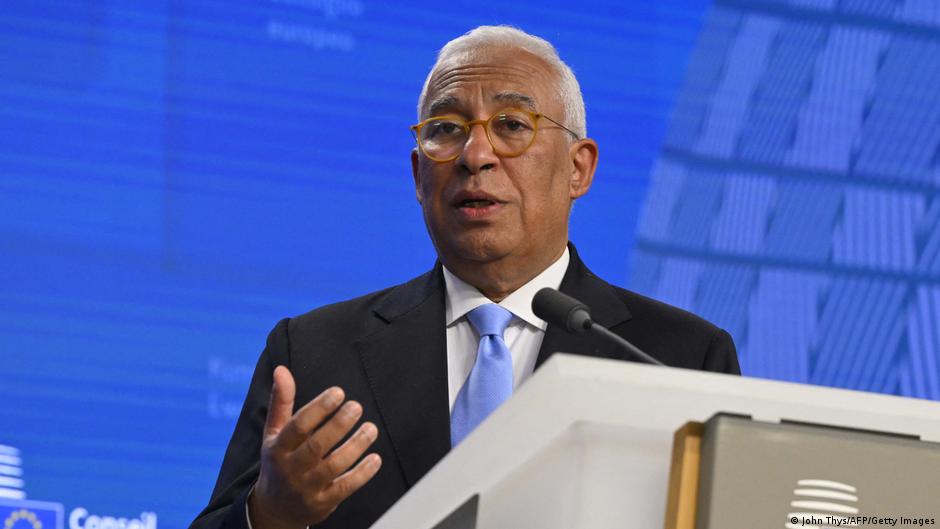
European Union leaders are actively preparing for potential negotiations with Russian President Vladimir Putin, according to European Council President António Costa. Speaking at the European University Institute in Florence, Costa emphasized ongoing discussions with leaders of all 27 EU member states to determine the optimal approach and agenda should talks with Moscow become feasible.
Balancing Readiness and Strategic Coordination
"I am in talks with the leaders of the 27 member countries to decide how we organize ourselves best and what exactly we need to discuss with Russia at the appropriate moment," Costa said. While acknowledging "potential" for dialogue, he stressed that no concrete indication of Moscow’s readiness for "effective" and "serious" engagement has yet emerged.
"The overall message from Putin is that Russia is ready for constructive dialogue if the other side is prepared as well. If not, Russia is not interested," a source close to the Russian president told observers.
EU leaders also affirmed their intention not to impede negotiations being conducted by the United States. Costa referenced a recent Cyprus summit where Ukrainian President Volodymyr Zelensky urged EU representatives to be ready to "make a positive contribution to negotiations." Ukrainian officials have echoed the need for "closer coordination at the European level," envisioning the EU acting as a unified voice representing all Europeans in any diplomatic efforts.
Historical Context and Recent Diplomatic Setbacks
The last substantial EU-Russia dialogue occurred in early February 2026, when French presidential advisers visited Moscow to discuss the EU’s possible role in peace negotiations to end the Ukraine conflict. Those proposals were reportedly rejected by Kremlin officials. Further complicating matters, in March reports surfaced alleging that Putin’s aide, Yuri Ushakov, used profane language in dismissing French negotiation overtures. Kremlin spokesperson Dmitry Peskov stated that the French delegation "did not bring any positive signals," leaving "nothing positive to hear in response."
Meanwhile, escalating geopolitical tensions have also affected related diplomatic channels. The US special envoy Stephen Witkoff’s upcoming meeting with Ukraine’s National Security and Defense Council Secretary Rustem Umerov in Miami marks the first bilateral discussion since the US and Israel initiated conflict with Iran on February 28. Witkoff and Jared Kushner, formerly involved in mediation efforts concerning Ukraine, have shifted focus toward negotiations over the Middle East conflict. This shift has contributed to the suspension of the planned trilateral talks between Russia, the US, and Ukraine.
Prospects for a Peace Agreement
Despite these challenges, Ukrainian presidential office head Kirill Budanov, a member of the Ukrainian negotiation team, expressed cautious optimism. He noted that Moscow and Kyiv are approaching a peace agreement and that resolution of the war might not be protracted. Budanov pointed out that although both sides have maintained "maximalist" positions during talks so far, there is movement toward compromise.
As EU leaders coordinate strategy, the evolving geopolitical landscape demands careful navigation of the delicate balance between readiness to engage Moscow and managing broader transatlantic alliances and regional conflicts. The coming months will test the EU’s capacity to unify its voice and leverage its diplomatic influence amidst complex and competing pressures.