King Charles III Arrives in U.S. Amid Strained UK-US Relations Over Iran Conflict
King Charles III’s visit to the U.S. aims to restore traditionally close ties amid political tensions over Iran and energy policies.
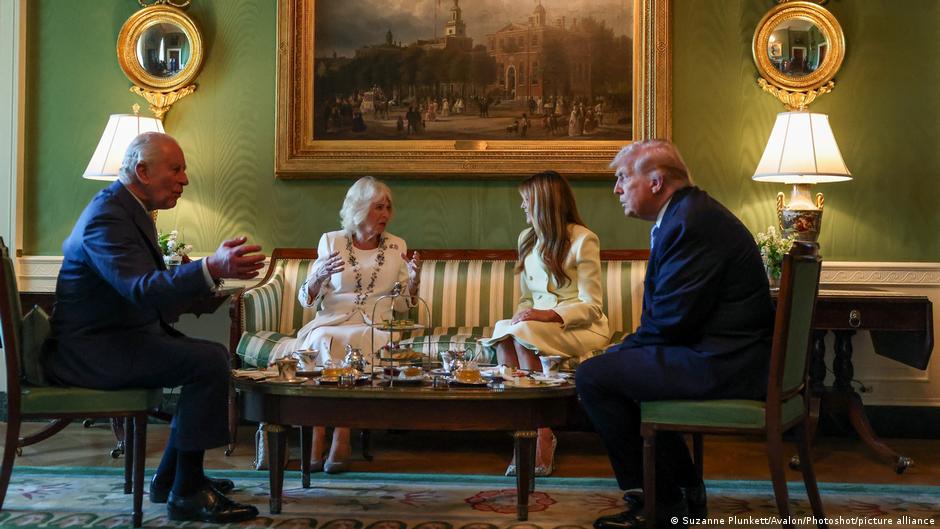
King Charles III and Queen Camilla arrived in the United States on April 27 for an official visit marked by heightened political sensitivity. The visit comes at a time of strained Anglo-American relations, largely due to differing stances on the ongoing conflict between the U.S., Israel, and Iran.
President Donald Trump and First Lady Melania Trump welcomed the British monarchs at the White House in Washington, D.C. This marks the first visit of a British sovereign to the U.S. since 2007 and is conducted under strict security measures following a shooting incident at the Washington Hilton hotel on April 25 during the annual White House Correspondents’ Association dinner attended by President Trump.
Diplomatic Challenges and Strategic Implications
King Charles III’s visit is widely interpreted as a "delicate" diplomatic mission, aiming to mend traditionally strong U.S.-UK ties that have been disrupted in recent months. The tensions stem largely from contrasting approaches to the war involving the U.S., Israel, and Iran.
In March, UK Prime Minister Keir Starmer refused to allow the U.S. to use British military bases for strikes against Iran and declined to send British naval vessels to the strategically critical Strait of Hormuz. This move underscored the United Kingdom’s reluctance to fully align with Washington’s military strategies in the region.
"The King’s visit underscores efforts to reaffirm the 'special relationship' amid diverging defense policies and geopolitical pressures," a senior diplomatic analyst noted.
President Trump publicly criticized the British Navy’s capabilities, stating in an April 1 interview with The Telegraph that the UK fleet was "too old" to effectively control the Strait of Hormuz. He further condemned NATO members as "cowards" for their positions on the Iran conflict, even describing the alliance as a "paper tiger" and suggesting he was seriously considering withdrawing the U.S. from NATO.
In response, Prime Minister Starmer has expressed frustration over global energy market volatility, attributing fluctuating British energy bills to the geopolitical maneuvers of leaders like Russian President Vladimir Putin and Donald Trump. Starmer’s government is investing in domestic energy infrastructure to reduce dependence on unpredictable foreign influences.
Despite these tensions, President Trump has downplayed the impact of cooled relations on King Charles III’s visit, emphasizing that the monarch is "not involved" in NATO decisions and describing him as a "great guy" and "friend."
Following the White House reception, King Charles III is scheduled to address a joint session of the U.S. Congress. This will mark only the second time a British monarch has spoken to the American legislature, the first being Queen Elizabeth II in 1991. The royal couple will subsequently travel to New York to participate in commemorations marking the anniversary of the September 11, 2001 terrorist attacks.
The visit reflects the complexities of transatlantic alliances in the current geopolitical climate, highlighting the challenges faced by executive leaders in balancing historic partnerships with emerging strategic priorities.
As the U.S. and UK navigate these diplomatic headwinds, the visit of King Charles III serves as both a symbolic reaffirmation of long-standing ties and a subtle test of the resilience of the "special relationship" amid evolving global dynamics.