Trump Halts US Negotiators’ Pakistan Trip Amid Strategic Shift in Iran Talks
President Trump ends US delegation’s travel to Pakistan, citing American leverage and remote communication capabilities in Iran negotiations.
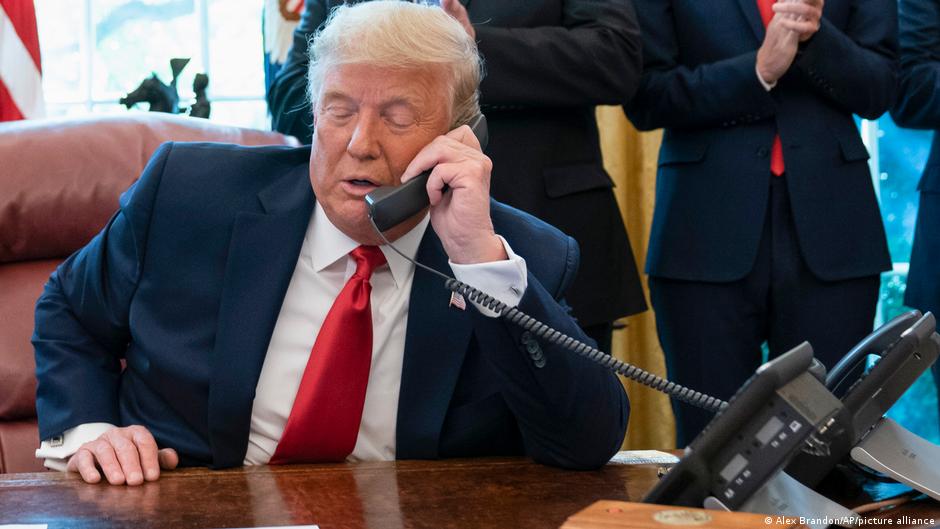
President Donald Trump announced that American officials will no longer travel to Pakistan to engage in negotiations with Iran aimed at ending the ongoing conflict. In a recent interview on Fox News' The Sunday Briefing, Trump emphasized the United States’ dominant position in the conflict and the impracticality of sending delegations abroad for talks.
Strategic Reassessment of Negotiation Logistics
"We hold all the cards," Trump stated, elaborating that if Iran wishes to negotiate, the country can initiate contact with Washington directly by phone. He highlighted the existence of secure communication lines but also expressed reservations about the absolute security of any telephone connection. "We have good, protected lines, although, honestly, I’m not sure any phone line can be completely secure, but we have protected lines," Trump explained.
"If they want to talk, they can come to us or call us. We won’t send people on an 18-hour journey just to meet." — President Donald Trump
The President underscored that dispatching negotiators to Pakistan entails a significant time commitment and administrative burden. He noted that if Iran desires dialogue, it should utilize remote communication channels rather than expect the United States to send delegations overseas.
This announcement came a day after Trump canceled a previously scheduled trip for his envoys Steven Witkoff and Jared Kushner to Islamabad for a planned round of talks at the end of April. In a social media post, Trump criticized the internal dynamics on the Iranian side, stating, "Too much time is spent on travel, too much work! Moreover, their leadership is in great disarray and confusion. No one knows who's in charge, including themselves. Plus, we hold all the cards, and they have none!"
Diplomatic Implications and Regional Dynamics
On the same day, Iranian Foreign Minister Abbas Araghchi, representing Iran in the negotiations, departed Pakistan. He summarized Iran’s position as setting realistic parameters for a permanent ceasefire but questioned the United States' sincerity towards diplomacy. "We outlined Iran’s position regarding realistic frameworks for a final end to the war against Iran. It remains to be seen how serious the U.S. really is about diplomacy," Araghchi remarked.
Earlier negotiations between the two nations took place in Islamabad on April 11, shortly after a ceasefire agreement was reached. However, these talks did not yield any breakthrough. The following day, Trump announced the initiation of a blockade on the Strait of Hormuz, a strategic chokepoint, which Iran condemned as a violation of the ceasefire.
Tehran has conditioned further progress in negotiations on the lifting of the U.S. blockade on Iranian ports. Conversely, Trump insists that Iran must abandon its demand to resume its nuclear program, which the U.S. and Israel cite as a primary cause for the conflict escalation.
Meanwhile, the ceasefire remains in effect in the Middle East, initially imposed for two weeks. As the deadline approached, Trump declared an extension of the truce "until negotiations conclude one way or another," attributing the decision to a request from the Iranian side.
Boardroom and Executive Insights
From a business and executive perspective, the Trump administration’s decision to halt in-person diplomatic delegations abroad highlights a strategic prioritization of resource allocation and operational efficiency. The move signals a preference for leveraging technology and centralizing decision-making within Washington, potentially streamlining communication but also reducing flexibility in face-to-face diplomacy.
Corporate strategists and boards overseeing multinational operations may interpret this shift as emblematic of broader trends towards minimizing travel-related expenditures and risks amidst complex international engagements. It also raises questions about the effectiveness and adaptability of remote negotiations in high-stakes geopolitical contexts.