Moscow Drone Attack Disrupts Airports and Tests Russian Crisis Management
Russian officials said air defenses destroyed more than 100 drones headed toward Moscow, forcing airport restrictions and diversions across key aviation hubs.
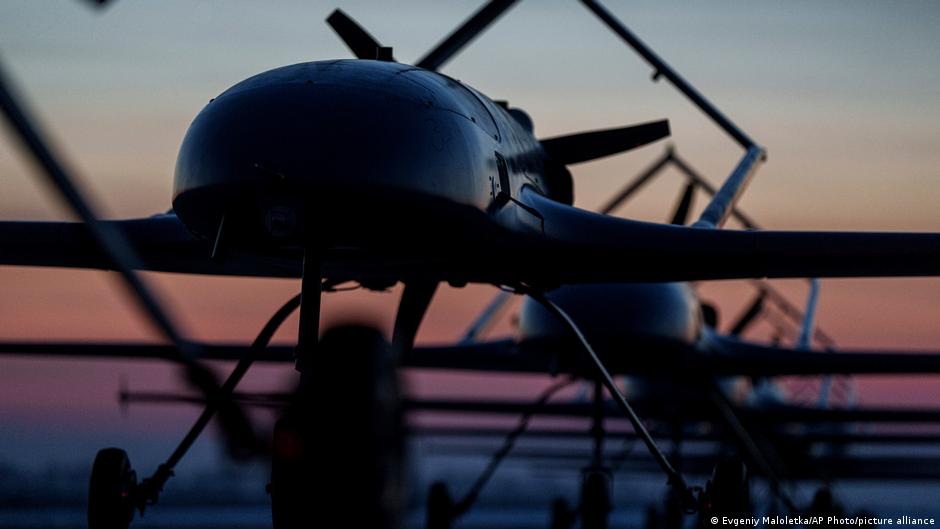
Russian officials reported a large overnight drone attack aimed toward Moscow, an incident that briefly disrupted the capital’s aviation system and widened operational pressure across several regional airports. Moscow Mayor Sergei Sobyanin said in Telegram posts that Russian air defenses destroyed more than 100 unmanned aerial vehicles that were heading toward the Russian capital during the night into Wednesday, October 14.
Sobyanin did not specify where in the Moscow region the drones were destroyed or what their potential targets may have been. The absence of detail left airlines, airport operators and regional authorities managing the consequences of a security incident whose operational footprint extended well beyond the capital.
Temporary restrictions on aircraft arrivals and departures were introduced on the evening of October 13 at Moscow’s four major airports: Vnukovo, Domodedovo, Sheremetyevo and Zhukovsky. The restrictions were reflected in notices from the Telegram channel “Govorit Rosaviatsiya,” which tracks communications from Russia’s aviation authority. The measures forced flight diversions and schedule changes, underscoring how drone threats can translate quickly into commercial disruption for carriers, passengers and airport infrastructure.
Aviation Network Under Strain
According to the state news agency TASS, more than 30 aircraft flying to Moscow were redirected to other cities. The agency reported that 19 aircraft bound for Vnukovo instead landed in Nizhny Novgorod, St. Petersburg, Minsk, Pskov and Istanbul.
The Telegram channel “Ostorozhno, Novosti,” associated with journalist Ksenia Sobchak, reported separately that, according to information from St. Petersburg’s Pulkovo airport, 20 aircraft headed for Moscow were redirected there because of the restrictions. The figures point to a significant rerouting burden for Russia’s aviation network, particularly when concentrated across a short overnight window.
The restrictions were not limited to Moscow. “Govorit Rosaviatsiya” reported that overnight restrictions on October 14 were also introduced at airports in Volgograd, Nizhny Novgorod, Samara, Penza, Saratov and Yaroslavl. Low-cost carrier Pobeda also reported schedule adjustments because of prolonged restrictions at airports serving the Moscow aviation hub and the Volga region, according to “Ostorozhno, Novosti.”
For airline executives and airport managers, such incidents create immediate operational dilemmas. Aircraft and crew can be displaced from planned rotations, passengers must be rebooked or held, and knock-on delays can spread through domestic and international schedules. Even without public confirmation of damage at Moscow airports, the restrictions show how airspace security decisions can impose costs on carriers and airport operators through uncertainty alone.
“More than 100 unmanned aerial vehicles heading toward Moscow were destroyed,” Sobyanin said in posts on Telegram, without identifying the exact areas where the drones were intercepted.
The incident also highlights the extent to which Russian aviation, already operating in a constrained geopolitical environment, remains exposed to security-driven disruptions. Each temporary closure or diversion requires coordination between aviation regulators, airport operators, airlines and regional authorities. In a system centered heavily on Moscow, disruption at the capital’s airports can rapidly become a national logistics issue.
Regional Damage and Industrial Risk
While the Moscow-region interceptions dominated the aviation response, officials elsewhere reported direct consequences from drone attacks. Saratov Region Governor Roman Busargin said at least one person was killed as a result of a drone attack. He reported damage to several residential buildings in the city of Balakovo.
“As a result of the UAV attack, several residential buildings in the city of Balakovo were damaged. Preliminary information: one person has died. All emergency services are working at the scene,” Busargin wrote on Telegram.
The report of a fatality near Saratov adds a human toll to an event whose business effects were most visible in airport restrictions and aircraft diversions. For regional administrations, the response requires both emergency management and public communication at a moment when residents, businesses and local infrastructure operators are seeking clarity about risk.
In the Stavropol region, Governor Vladimir Vladimirov said air defenses had repelled a drone raid aimed toward the industrial zone of Nevinnomyssk. He did not specify which industrial facilities may have been targeted. The lack of detail is notable because industrial zones can include energy, manufacturing, logistics or chemical assets, any of which could carry broader commercial implications if operations were interrupted.
For corporate leaders operating in Russia, the overnight events reinforce a strategic reality: security risk is no longer confined to military installations or border regions. Aviation hubs, regional cities and industrial zones all featured in official accounts of the night’s developments. That creates planning challenges for companies that depend on predictable transport links, uninterrupted production and reliable movement of staff and goods.
The boardroom implications are practical rather than abstract. Firms with operations in affected regions may need to review contingency planning for travel disruption, supply chains and employee safety. Airlines and airport service providers face the recurring challenge of maintaining schedules under sudden regulatory restrictions. Industrial companies may have to evaluate whether facilities near reported drone routes or air-defense activity require additional continuity planning.
Russian officials framed the central event as a successful air-defense response, with more than 100 drones destroyed before reaching Moscow. Yet the wider disruption shows that interception alone does not eliminate the business impact. Temporary airport closures, diverted aircraft, regional restrictions and reported damage in residential areas demonstrate how drone attacks can impose operational costs even when authorities say they have prevented the main strike.
By Wednesday morning, the full scope of the economic consequences was not specified in the official reports cited. What was clear is that a single overnight drone wave produced a multi-region response involving aviation regulators, airport operators, airlines, emergency services and regional governors. For Russia’s transport and industrial sectors, the episode was another reminder that crisis management has become part of ordinary operating conditions.