EU Consensus Moves Ukraine and Moldova Into New Accession Negotiation Phase
The decision opens market and competitiveness talks, raising strategic stakes for governments, investors and corporate planners.
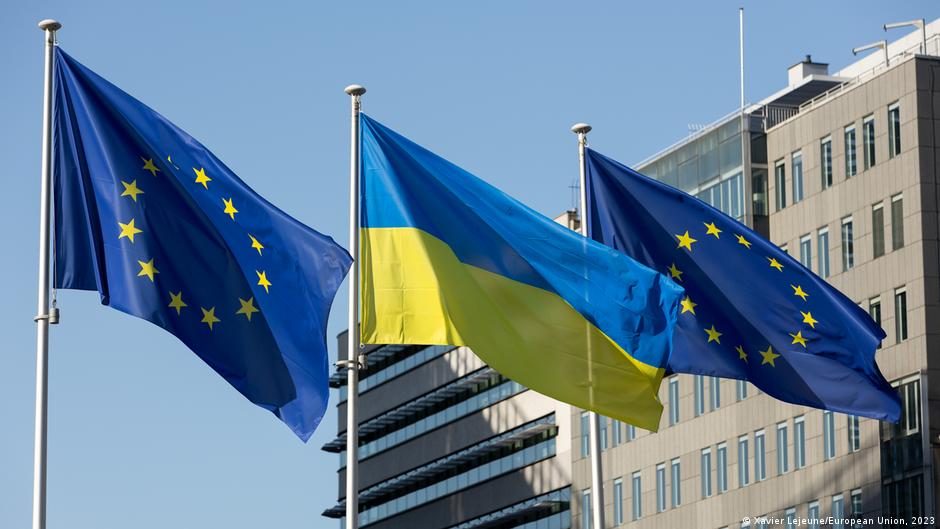
European Union member states have agreed to open negotiation clusters 2 and 3 in the accession talks for Ukraine and Moldova, a step that moves both candidate countries deeper into the technical and economic core of the bloc’s enlargement process. Irish Minister of State for European Affairs Thomas Byrne announced the agreement on X on Monday, October 12, saying all EU governments had reached consensus on the move.
For policymakers, the decision is procedural but significant. For companies and investors tracking the future regulatory map of Eastern Europe, it points to the next phase of alignment with EU rules governing markets, competition, growth policy and institutional standards. The two clusters now set to open are “Internal Market” and “Competitiveness and Inclusive Growth,” areas with direct implications for business regulation, market access and long-term capital allocation.
“I can confirm that all EU member states have agreed to open clusters 2 and 3 for Ukraine and Moldova,” Byrne wrote, also referring to separate accession-related steps for Albania and Montenegro.
Byrne described the sequence of enlargement activity as following a “Montenegro Monday” with a “Super Tuesday” for Albania, Moldova and Ukraine. According to his statement, EU member states also agreed to close chapters 17, 18 and 19 for Albania and chapter 20 for Montenegro. The remarks underscored the broader enlargement agenda advancing across multiple candidate countries at the same time.
Boardroom Relevance of the Next Clusters
The opening of the internal market cluster is especially relevant for companies that view Ukraine and Moldova as potential future parts of the EU’s commercial architecture. Accession negotiations do not grant membership, and they do not immediately change market rules. But they do begin a structured process in which candidate countries are assessed on their readiness to apply EU standards across areas of legislation and public policy.
For executives, that process matters because it can influence the timing and direction of legal convergence. Internal market alignment can affect rules on goods, services, labor, capital and corporate operations. Competitiveness and inclusive growth can touch policy areas tied to business conditions, growth strategy and the ability of economies to integrate with EU standards. The source announcement does not specify individual regulatory changes under these clusters, but the themes themselves signal a move from broad political commitment toward economically consequential negotiations.
The decision also reflects the degree to which EU enlargement is becoming a strategic business issue, not only a diplomatic one. Ukraine’s accession path is unfolding while the country remains at war and is seeking budget and military support. Moldova’s path is similarly framed by reform requirements and geopolitical pressure. For boards and executives with exposure to the region, the EU process is a signal to monitor alongside security risk, reconstruction planning, supply-chain decisions and future investment frameworks.
Earlier on October 12, Ukraine’s Verkhovna Rada approved amendments to the education law in two readings and as a whole. The amendments concerned the rights of national minorities. The measure was described as necessary to obtain Hungary’s consent to opening the second and third negotiation clusters for Ukraine’s EU accession. Later that evening, Ukrainian lawmaker Yaroslav Zheleznyak reported on Telegram that President Volodymyr Zelensky had signed the adopted law.
That sequence illustrates the boardroom logic of accession politics: progress can depend on targeted domestic legislative changes that resolve objections from individual EU member states. Since enlargement decisions require political agreement among the bloc’s governments, candidate countries must manage not only European Commission benchmarks but also the specific concerns of member-state capitals. In this case, the education-law amendments were tied to Hungary’s position on Ukraine’s talks.
Six Clusters, One Long Negotiation
EU accession negotiations are organized into six large thematic sections, known as clusters. These clusters cover different spheres of legislation and state policy. During the talks, the European Union evaluates how ready a candidate country is to apply EU rules and standards. The six clusters are “Fundamentals,” “Internal Market,” “Competitiveness and Inclusive Growth,” “Green Agenda and Sustainable Connectivity,” “Resources, Agriculture and Cohesion,” and “External Relations.”
The first of the six negotiation clusters on Ukraine’s path to EU membership, “Fundamentals,” was opened on June 15. The move to open clusters 2 and 3 therefore marks the next stage in the sequencing of talks. It expands the agenda from foundational governance and institutional issues into areas more visibly connected with economic integration and market behavior.
The timing had been signaled in advance. On October 5, EU Enlargement Commissioner Marta Kos said at a press conference following a meeting of the Moldova-EU Association that the EU could open two accession negotiation clusters for Ukraine and Moldova during an intergovernmental conference on the sidelines of the EU General Affairs Council, scheduled for October 13 in Luxembourg.
Kos said Ukraine and Moldova were carrying out systemic reforms under very difficult conditions and were among four states leading in accession negotiations. She also said the European Commission would publish a detailed assessment of reforms across all areas in candidate countries on October 28 in its annual enlargement report.
Her remarks placed the October decision within a broader monitoring cycle. For governments, the annual report will provide a formal assessment of reform progress. For businesses, it may become a reference point for judging how quickly candidate countries are moving toward European standards in areas that affect investment risk, regulatory predictability and public-sector capacity.
Kos also urged observers not to forget that Ukraine is fighting for survival while simultaneously pursuing EU accession and implementing reforms, including reforms needed to obtain additional funds for the state budget and army needs. That framing is central to the strategic implications of the accession process. Ukraine is being evaluated as a candidate country while operating under wartime pressure, and its reform agenda is tied not only to long-term membership aspirations but also to near-term financing needs.
For Ukraine and Moldova, the opening of clusters 2 and 3 does not remove the uncertainty inherent in EU accession. The process remains lengthy, technical and politically contingent. But it moves both countries into negotiations that matter directly to the economic operating environment. For executives weighing exposure to the region, the signal is that the EU’s enlargement machinery is still moving, and that domestic reforms, member-state diplomacy and market-rule alignment are now increasingly intertwined.