EU to Fund Ukraine Drone and Missile Purchases as War Tops Council Agenda
Brussels is preparing fresh military financing for Kyiv while EU leaders weigh Ukraine’s 2027 funding needs and accession talks.
The European Union is preparing to allocate additional financing to Kyiv in mid-October for the purchase of drones and missiles, a move that places Ukraine’s defense requirements back at the center of Brussels’ strategic and budgetary agenda.
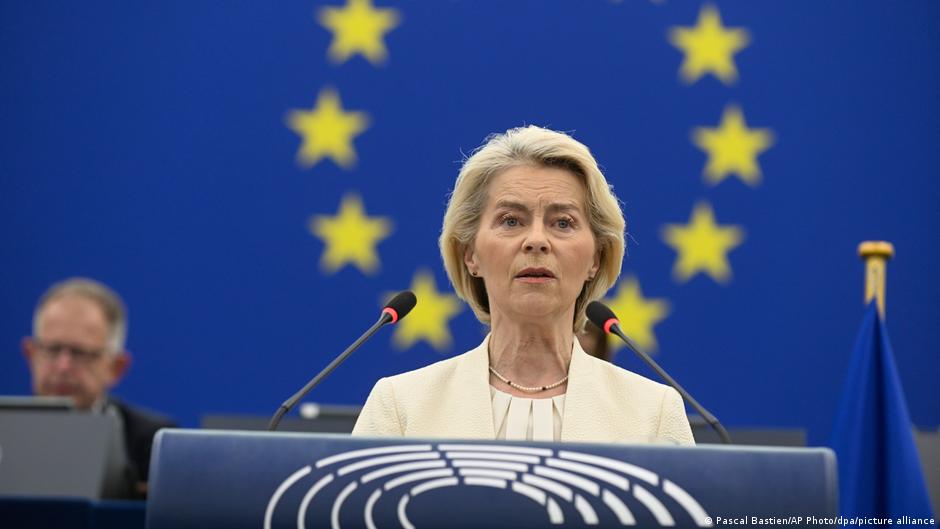
European Commission President Ursula von der Leyen announced the planned support on Sunday, October 11, in a post on X following a telephone conversation with Ukrainian President Volodymyr Zelensky. She said the new financing was needed to strengthen Ukraine’s defense and protect its airspace. Von der Leyen did not specify the amount of the funding or identify its sources.
For EU policymakers, the decision reflects a broader shift in the war’s financial architecture. Support for Ukraine is no longer being framed only as emergency aid, but as a recurring strategic commitment requiring procurement planning, multiyear financing and political coordination among member states. Drones and missiles are among the most urgent battlefield requirements for Kyiv as Russia continues a prolonged campaign both on the front line and against civilian infrastructure deeper inside Ukraine.
“This is necessary to strengthen Ukraine’s defense and protect its airspace,” von der Leyen said.
Ukraine Returns to the Top of the EU Agenda
Officials in Brussels emphasized that the situation in Ukraine will be one of the central topics at this week’s European Council meeting. The agenda is expected to include Ukraine’s financing needs for the coming year and ways to mobilize new international support.
That discussion carries direct implications for EU budget planning and for the bloc’s broader geopolitical strategy. Funding military purchases such as drones and missiles requires not only political agreement but also decisions about procurement channels, burden sharing and the balance between national and EU-level support. For European leaders, the issue is increasingly tied to the credibility of the EU’s long-term commitment to Ukraine and to the bloc’s ability to act as a strategic actor during a sustained war on its eastern flank.
The Commission president also indicated that two new clusters of topics will be unlocked as part of Ukraine’s negotiations with the European Union. That step signals that, even as the immediate focus remains military and financial support, Brussels is continuing to advance Ukraine’s integration track. In boardroom terms, the EU is managing two linked portfolios: the urgent defense account and the longer-term institutional integration project.
Von der Leyen said she fully supported Zelensky’s call for a ceasefire that would help protect global food supplies and energy infrastructure in Ukraine and Russia. Her remarks placed the latest financing decision within a wider economic frame, one that extends beyond the battlefield to commodity flows, energy security and infrastructure risk.
According to von der Leyen, the war has entered a new and even darker phase. Russia, she said, is waging a war of attrition on the battlefield and striking civilians far beyond the front line. That assessment helps explain why air defense and strike capabilities remain high on Kyiv’s list of needs, and why Brussels is moving to reinforce Ukraine’s ability to counter aerial attacks.
Long-Term Financing and Reform Conditions
The new drone and missile support follows an earlier financial decision by the European Commission. On October 2, the Commission approved the allocation of a 2.9 billion euro tranche to Kyiv under the Ukraine Facility, a mechanism created to provide long-term financial assistance to Ukraine.
The Ukraine Facility covers the period from 2024 through 2027 and is designed to allow the EU to provide up to 50 billion euros in stable and predictable financial support over that period. Brussels has described the mechanism as a way to give Ukraine financial visibility while tying assistance to specific recovery and reform commitments.
Payments under the facility are closely linked to Ukraine’s implementation of a defined recovery and reform plan, as well as to support for democratic mechanisms, the rule of law and human rights. The European Commission has stressed that disbursements are made quarterly after verification that the relevant conditions have been met.
That structure reflects a corporate-style governance approach to wartime assistance: financing is recurring, conditional and tied to measurable commitments. For Kyiv, the arrangement offers a predictable funding channel at a time of extraordinary fiscal and military pressure. For the EU, it provides a framework for oversight and accountability as member states continue to commit large-scale resources.
The latest pledge for drones and missiles adds a defense-procurement layer to that financial framework. While the Commission has not disclosed the amount or sources of the new funding, the timing is notable. Coming ahead of a European Council meeting focused on Ukraine’s funding needs for the next year, the announcement signals that Brussels intends to keep military support, macro-financial assistance and accession negotiations moving in parallel.
For executives and investors watching European policy, the decision also underscores the persistence of wartime spending as a defining feature of the region’s economic and political environment. Defense procurement, energy infrastructure protection, food supply stability and public-sector financing are increasingly intertwined. The EU’s support package for Ukraine is therefore not only a matter of foreign policy, but a major test of institutional capacity, fiscal coordination and strategic decision-making across the bloc.