U.S. Strike Disables Panama-Flagged Cargo Ship Amid Iran Blockade
CENTCOM says the vessel ignored repeated warnings in the Gulf of Oman, sharpening risks for shipping, energy markets and U.S. political leaders.
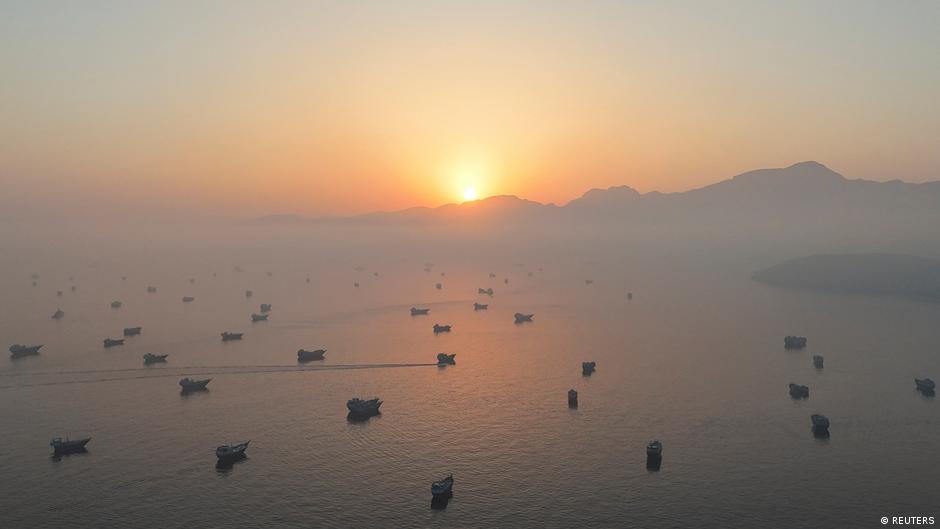
A U.S. Air Force fighter jet used a precision munition on October 10 to disable the stern section of the commercial cargo vessel M/V Ocean Molica in the Gulf of Oman, according to U.S. Central Command. CENTCOM said the strike rendered the Panama-flagged ship’s propulsion system completely inoperable while leaving the crew unharmed.
The vessel, also known as Arika Sun, had previously departed an Iranian port, according to the command. CENTCOM said the crew ignored repeated warnings and attempted to break an active maritime blockade against Iran. The statement was published by the command’s press service on X.
For corporate leaders with exposure to shipping, fuel, insurance or Middle East supply chains, the incident is not only a military development. It is a boardroom risk event. A commercial vessel was deliberately disabled by U.S. forces in one of the world’s most strategically sensitive maritime regions, reinforcing that the conflict around Iran is now directly affecting operating assumptions for international trade.
CENTCOM said crews should heed blockade warnings.
Blockade Enforcement Becomes a Business Variable
CENTCOM said U.S. forces resumed the American blockade on July 14 against all vessels traveling to or from Iranian ports. Over the following three months, the command said four commercial vessels were disabled and 135 vessels were forced to turn around and change course. During the same period, U.S. forces destroyed 10 tankers linked to what was described as the shadow network of Iran’s Islamic Revolutionary Guard Corps.
Those figures point to a widening operational perimeter around Iran-linked shipping. For executives, the central question is no longer whether the blockade is symbolic, but how consistently it will be enforced and how quickly compliance failures can escalate into physical disruption. The disabling of Ocean Molica suggests that a vessel’s registry, route history and response to warnings may all become material considerations in voyage planning, chartering decisions and risk pricing.
Panama-flagged commercial vessels are common in global shipping, and the use of such flags underscores the complexity facing compliance departments and boards. A vessel’s flag state may not fully capture the commercial, logistical or geopolitical risk attached to its itinerary. Companies moving commodities, manufactured goods or energy products through the Gulf of Oman and Strait of Hormuz must now account for enforcement actions that can remove ships from service without loss of crew but with immediate consequences for cargo, schedules and contractual performance.
Strait of Hormuz Incident Adds to Market Pressure
Separately, the United Kingdom Maritime Trade Operations organization reported that a tanker had again come under fire in the Strait of Hormuz. According to the captain, the vessel was struck on its port side by an unknown projectile, causing a fire. UKMTO said the crew was safe.
The tanker incident reinforces the dual pressure on maritime commerce in the region: formal blockade enforcement on one side and direct attacks on vessels on the other. For boards overseeing energy, transportation, manufacturing and retail businesses, that combination complicates planning. Insurance costs, route decisions, inventory buffers and fuel procurement strategies may all be affected when a chokepoint such as Hormuz is repeatedly disrupted.
The Strait of Hormuz is central to energy security and global trade flows, and the renewed attacks come after Group of Seven leaders on October 2 condemned Iran’s continuing attacks on neighboring countries as well as actions they said violate international trade, energy security and the global economy. G7 representatives called for the immediate and full restoration of the rights and principles of navigation in the Strait of Hormuz and said they intended to strengthen collective efforts to achieve that goal.
That diplomatic language matters for companies because it signals that the shipping issue is being treated as a collective economic-security priority, not only as a regional military problem. If governments intensify coordination, corporations may face more detailed sanctions screening, tighter documentation expectations and greater pressure to demonstrate that their counterparties and cargoes are not tied to prohibited Iranian activity or related networks.
Political and Corporate Timelines Collide
The escalation also lands in a politically sensitive period in the United States. Fuel prices have risen significantly again in recent weeks against the backdrop of the war with Iran. That increase has added pressure on Republicans roughly a month before the U.S. congressional midterm elections, where recent polls indicate their popularity among voters has declined.
For American companies, the electoral dimension is not a side issue. Energy prices shape consumer spending, logistics budgets and inflation expectations. When fuel costs rise close to an election, policy responses can become more urgent and less predictable. Executives may need to prepare for stronger rhetoric, additional enforcement actions, or new measures affecting trade with Iran and associated maritime networks.
The Ocean Molica episode therefore sits at the intersection of military enforcement, political pressure and commercial exposure. CENTCOM’s account presents the action as a response to a vessel trying to breach the blockade after repeated warnings. At the same time, the broader pattern described by U.S. forces shows a sustained campaign affecting dozens of ships and multiple tankers over three months.
For boards and senior management teams, the practical implication is clear: maritime risk around Iran is now a strategic planning issue. Companies that treat the Gulf of Oman and Strait of Hormuz as routine transit zones may need to revisit assumptions about route reliability, counterparty diligence and crisis response. The immediate crew safety reported in both incidents may limit the human toll, but the commercial signal is sharp: ships, cargoes and schedules connected to Iranian routes face a materially more contested operating environment.