Latvian Nationals Detained at RAF Molesworth After Breach of U.K. Base
British counterterrorism police are investigating a security breach at RAF Molesworth, a base hosting NATO and U.S. intelligence facilities.
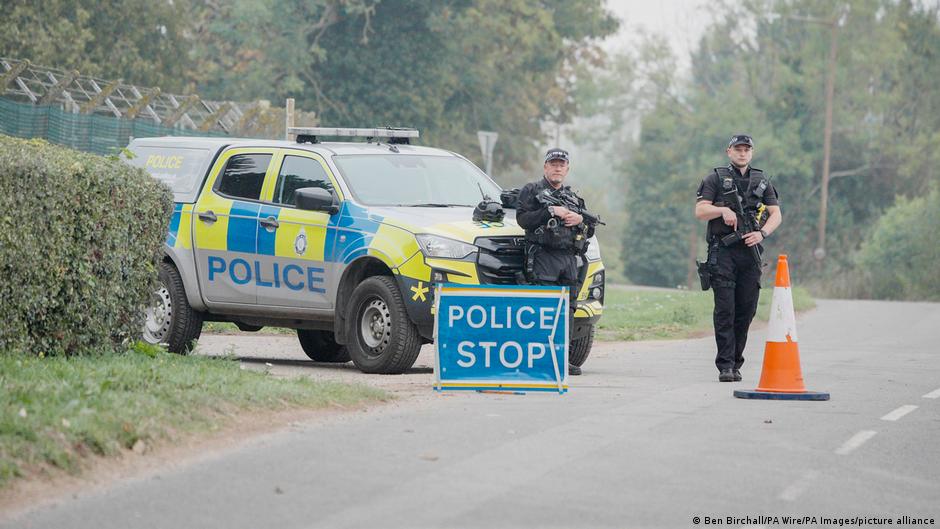
British counterterrorism police have detained two Latvian citizens after they allegedly entered RAF Molesworth, a military air base in southeastern England that hosts NATO and U.S. intelligence facilities. The arrests have put renewed attention on the security posture around strategic defense sites in the United Kingdom and the operational decisions facing allied military leaders at a time of heightened concern over threats to critical infrastructure.
The two detained men, aged 32 and 36, are accused of damaging fencing around the perimeter of the facility before entering the base overnight on October 8. British authorities said the men intended to "cause damage to the United Kingdom," according to reporting by AFP citing the relevant British agency. An investigation is underway.
RAF Molesworth is not merely a local military installation. Its role as a site for NATO and U.S. intelligence centers makes any intrusion a matter with consequences beyond ordinary criminal trespass. For defense planners, corporate security contractors, and government executives responsible for risk management, the episode underscores how physical perimeter vulnerabilities can quickly become strategic concerns when the assets involved are tied to intelligence cooperation and alliance operations.
Security Breach Raises Governance Questions
From a boardroom perspective, the incident is a reminder that national security risk is increasingly intertwined with executive decision-making, procurement, and crisis governance. Military bases depend on layers of public-sector authority, private contractors, infrastructure providers, and local law enforcement coordination. When a breach occurs, leaders are forced to assess not only what happened at the fence line, but whether the wider security architecture is resilient enough for the threat environment.
Police have not disclosed detailed information about the men’s motives beyond the statement that their goal was to cause harm to the United Kingdom. That limited disclosure leaves investigators with a broad field of inquiry, including how the men reached the site, whether they acted independently, and whether any operational weaknesses were exposed by their ability to damage the perimeter and enter the grounds.
Authorities said the men intended to "cause damage to the United Kingdom," while adding that the investigation remains ongoing.
For allied defense institutions, even a contained intrusion can carry reputational and operational implications. Facilities associated with intelligence work rely heavily on deterrence, access control, and confidence among partner governments. A breach that appears minor in physical terms can prompt reviews of staffing, surveillance coverage, contractor performance, and emergency response protocols.
The business implications are also clear. Security vendors, facilities managers, and technology providers serving defense installations may face closer scrutiny when incidents occur at high-value sites. Executive teams in those sectors often have to respond to questions from government clients about whether existing systems are adequate and whether additional investment in detection, perimeter reinforcement, or response coordination is required.
No Indicated Link to RAF Fairford Incident
A police representative said that, for now, there is "nothing to indicate" a connection between the RAF Molesworth breach and a separate incident at RAF Fairford in late September. That distinction matters because RAF Fairford had already become the focus of heightened security concern after a local resident reported "suspicious" activity near the base.
In that earlier case, police discovered three vans containing "some quantity" of gasoline. The surrounding area was cordoned off, and residents of a nearby village were evacuated. Seven suspects were detained and later released under certain conditions, according to reporting by dpa.
The Fairford incident carried additional strategic weight because the United States decided to withdraw American B-1 bombers that had been based at the airfield. U.S. President Donald Trump explained the decision by citing "threats" from people he said were "linked to Iran." That decision demonstrated how security concerns around a military installation can quickly move from local policing to international military posture.
Although police have not linked the Fairford and Molesworth episodes, the proximity in time may intensify internal reviews across British and allied defense sites. Executives and senior officials responsible for military readiness often have to plan against both confirmed threats and ambiguous patterns. Even when incidents are formally separate, they can shape the same management conversation: whether current physical security assumptions still match the risk environment.
The detention of two Latvian nationals may also raise diplomatic and legal sensitivities. Authorities have identified the men by citizenship and age, but no further public details have been provided in the source account about charges, affiliations, or whether they had assistance. That leaves the next phase of the investigation central to determining whether the case is treated as an isolated intrusion, a counterterrorism matter with broader implications, or part of a more complex security picture.
For NATO and U.S. stakeholders operating from British territory, the issue is likely to be less about one damaged fence than about enterprise risk. Intelligence facilities depend on secrecy, continuity, and trust among allies. A breach forces decision-makers to examine whether their defenses are sufficiently layered and whether the response mechanisms between police, military authorities, and partner governments are moving at the speed required by the current threat landscape.
As the investigation continues, the immediate facts remain limited but serious: two Latvian citizens entered RAF Molesworth after allegedly damaging the perimeter, British counterterrorism police detained them, and authorities say their intent was to harm the United Kingdom. The broader strategic question now sits with security leaders and policymakers: how to protect allied military infrastructure in an environment where even localized incidents can carry international consequences.