Ukraine Team to Meet Trump Envoys on New Plan to End Russia War
The talks place senior Ukrainian officials across from Jared Kushner and Steve Witkoff as Kyiv seeks leverage, sanctions pressure and expanded battlefield tools.
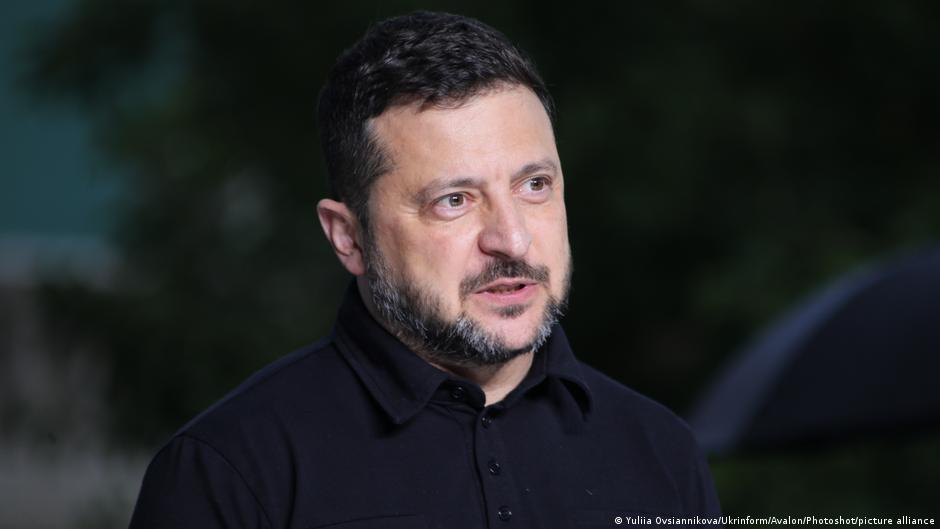
A Ukrainian delegation is set to hold talks in the United States on October 9 and 10 with special representatives of U.S. President Donald Trump over a new plan aimed at ending the war with Russia, according to comments by Ukrainian President Volodymyr Zelensky on Thursday, October 8.
The meetings will bring Kyiv’s senior political and security officials into discussions with Jared Kushner and Steve Witkoff, Trump’s special representatives. For Ukraine, the composition of the delegation signals that the talks are not being treated as a narrow diplomatic exchange, but as a high-stakes strategic negotiation spanning security, sanctions, political alignment and the operational terms of pressure on Moscow.
Zelensky said Ukraine will be represented by Kyrylo Budanov, head of the Office of the President; Serhiy Kyslytsia, deputy head of the Office of the President of Ukraine; Davyd Arakhamia, head of the Servant of the People faction in parliament; and Rustem Umerov, head of Ukraine’s Foreign Intelligence Service. He also said the European side may join the talks.
For Washington and Kyiv alike, the meeting introduces a boardroom-style question into a war that has long been shaped by military attrition and political endurance: whether a new negotiating framework can alter incentives for Russia, align Western pressure tools and give Ukraine enough leverage to move the conflict out of its current phase.
A Negotiation Framed Around Leverage
The Ukrainian service of Voice of America, citing a senior U.S. official, reported that the meeting will focus on a new proposal that covers all aspects of the conflict and is intended to end the war. The breadth of that description matters. A proposal that addresses “all aspects” of the conflict would likely require coordination across security guarantees, territorial questions, sanctions policy, military aid, economic restrictions and the role of European partners.
For Ukraine’s leadership, the central corporate-style challenge is sequencing: how to enter talks without signaling weakness, how to convert battlefield and economic pressure into negotiating capital, and how to ensure that any U.S.-backed plan does not become a mechanism for freezing the conflict on terms favorable to Moscow.
Zelensky’s public remarks before the delegation’s trip suggest Kyiv is focused on leverage before settlement. He responded sharply on October 8 to comments by U.S. Secretary of State Marco Rubio, who told the Greek newspaper Kathimerini that the war in Ukraine had reached a deadlock and that, in his view, there were no prospects for resolving the conflict through negotiations.
“We are not in a diplomatic deadlock,” Zelensky said, arguing that Russia’s economy should be cut off and that sanctions should be imposed on its weapons.
Zelensky criticized what he described as the inconsistency of negotiating future economic projects with Russia while also declaring the diplomatic track blocked. His message was directed not only at Moscow, but at Western policymakers and business-linked constituencies that may see future engagement with Russia as an eventual commercial opportunity.
“You cannot, you understand, on the one hand agree with the Russians on some economic projects for the future, and on the other say that we are in some political situation, in a diplomatic deadlock and so on,” Zelensky said, according to Ukrinform. “We are not in a diplomatic deadlock. Close off his whole economy. Sew Russia’s mouth shut. Do not feed them with your sales. Just impose sanctions on their weapons.”
Starlink, Air Superiority and Strategic Pressure
Zelensky also called on the United States to allow Ukraine to use Starlink over Russian territory. He said that such permission would help Ukraine “dominate” in the air and ultimately force Russian President Vladimir Putin to sit at the negotiating table.
That appeal places a private-sector technology platform at the center of a state-level war strategy. For American business readers, the request highlights the continuing entanglement of commercial infrastructure, national security policy and battlefield operations. Starlink’s role is not presented here as a consumer connectivity issue, but as a strategic asset whose operating permissions could influence Ukraine’s ability to pressure Russian military and infrastructure targets.
The request also underscores a recurring management problem for governments overseeing wartime partnerships with private companies: where to draw operational boundaries when commercial technology becomes essential to military outcomes. Ukraine’s position, as described by Zelensky, is that expanded use would strengthen its ability to compel negotiations, not merely improve tactical performance.
Retaliatory Strikes and Infrastructure Risk
Zelensky said Ukraine is responding symmetrically to Russian strikes, including attacks on data centers. “Data centers, you all know, they hit and are hitting our data centers. We answered them. I cannot say all the details,” he said, according to RBC-Ukraine.
In the early hours of October 8, the Armed Forces of Ukraine struck a Yandex data center in the city of Sasovo in Russia’s Ryazan region with drones. A fire broke out, and the data center completely stopped operations. No one was injured.
The reported strike adds another layer to the war’s economic and technological dimension. Data centers are critical infrastructure for digital services, corporate operations and state-linked systems. By pointing to reciprocal action, Zelensky is signaling that Ukraine views Russian attacks on its digital infrastructure as grounds for equivalent responses against Russian facilities.
For executives and policymakers watching the conflict, the implication is that infrastructure exposure is widening. Energy assets, logistics networks and defense production have long been part of the strategic map. Data centers now appear more explicitly in the category of assets exposed to wartime disruption, with operational continuity, insurance, cloud reliance and geopolitical risk all becoming more relevant to corporate decision-making.
The upcoming talks with Kushner and Witkoff therefore arrive at a moment when Kyiv is pressing several arguments at once. Ukraine wants a diplomatic pathway, but not one defined by the idea of stalemate. It wants sanctions and economic isolation of Russia to be treated as active instruments, not background policy. It wants technology access, including Starlink use over Russian territory, to be considered part of the pressure campaign. And it is indicating that Russian attacks on Ukrainian infrastructure will be met with responses against comparable Russian targets.
The strategic question for Trump’s envoys is whether the proposed plan can reconcile those demands with U.S. political objectives and possible European participation. For Ukraine, the boardroom stakes are stark: any plan to end the war must preserve leverage before it produces settlement terms. The delegation’s makeup suggests Kyiv intends to negotiate that point across diplomatic, parliamentary, intelligence and security channels at once.