Zelensky Says U.S.-Russia Diesel Deal Is an Investment in War
Ukraine’s president warned that easing restrictions on Russian fuel exports without a de-escalation pact would strengthen Moscow’s war strategy.
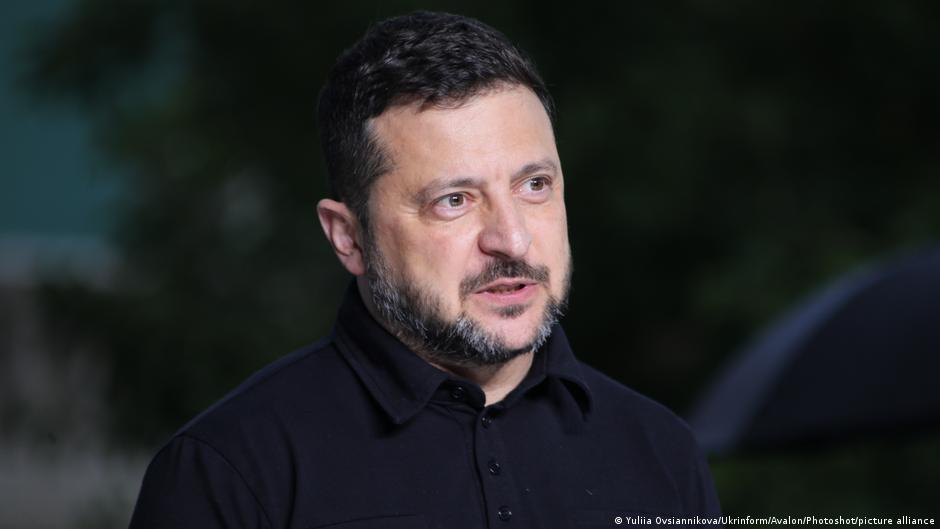
Ukrainian President Volodymyr Zelensky sharply criticized a U.S.-Russia arrangement allowing Russian diesel fuel to return to global markets, framing the decision as a strategic concession to Moscow and a direct boost to Russia’s ability to continue the war.
In remarks issued Friday, October 9, Zelensky said the White House’s decision to permit Russian petroleum products exports amounted to an “investment in war,” arguing that any easing of sanctions without a clearly defined de-escalation agreement would weaken pressure on the Kremlin at a critical moment.
“Gifts to Putin will not work for peace,” Zelensky wrote, warning that Russia would “thank” the decision on diesel with “further terror” and hostile actions.
The Ukrainian leader’s comments came after U.S. President Donald Trump announced what he described as “very successful” talks with Russian President Vladimir Putin. According to Trump, the discussions produced an agreement on supplies of Russian diesel to the United States and to the wider global market.
For Kyiv, the decision carries implications well beyond energy trading. Zelensky cast the measure as a boardroom-level signal to Russia that commercial access can be restored even as Ukraine continues to face attacks on its energy system and civilian infrastructure. His criticism suggested that Washington’s approach risks turning fuel flows into a form of leverage for Moscow rather than a path toward ending the conflict.
Sanctions Relief Without De-Escalation
Zelensky argued that any weakening of sanctions against Russia without a firm de-escalation framework represents “obvious weakness” and plays into Moscow’s interests. In his view, loosening restrictions allows Russia to fight longer, kill more, and sustain military operations while continuing to benefit from international energy revenues.
The Ukrainian president said Kyiv is prepared for reciprocal steps aimed at reducing escalation. He proposed a direct linkage between Russian attacks on Ukraine’s energy infrastructure and Ukrainian strikes on Russian oil refining capacity.
“Ukraine will not burn Russian oil refining if Russia does not destroy our energy sector,” Zelensky said, adding that Ukraine was offering the United States precisely such an arrangement.
Zelensky said he believes the United States has sufficient influence to secure that kind of compromise. His message placed Washington in the role of a decisive broker, not merely an energy-market manager. The appeal also underscored Ukraine’s concern that a fuel-supply agreement, absent enforceable limits on Russian military behavior, could undermine broader efforts to achieve a ceasefire.
The business implications are significant. A temporary reopening of Russian diesel supplies could affect global fuel availability, pricing expectations, refining margins, shipping routes, and compliance decisions for energy traders. But Zelensky’s response highlights the political risk attached to any corporate or government decision that reintroduces Russian petroleum products into sanctioned or sensitive markets.
OFAC License Opens the Door
On the same day as Trump’s announcement, the U.S. Treasury Department said the Office of Foreign Assets Control, acting on Trump’s order, was immediately issuing a temporary general license authorizing supplies of Russian diesel fuel to the global market.
The move creates a formal channel for diesel trade that had been restricted under sanctions pressure. For companies in the energy, shipping, insurance, and finance sectors, such a license can reshape risk assessments, though the source article did not provide details on the license’s duration, conditions, or compliance requirements.
Russian officials moved quickly to present the decision as a path toward expanded exports. Russian Deputy Prime Minister Alexander Novak told TASS that Russia was “immediately” beginning to lift diesel export restrictions earlier than previously planned. He also confirmed Trump’s statement that Russian diesel exports could eventually reach 3 million tons per month.
That figure, if realized, would represent a major supply-side factor for global diesel markets. Diesel is central to freight, agriculture, mining, construction, and industrial activity, making any shift in Russian export volumes relevant to companies far beyond the energy sector. The geopolitical question, however, is whether additional Russian export revenue would also strengthen the Kremlin’s war capacity.
Zelensky’s intervention sought to force that question into the center of the policy debate. Rather than treating diesel as a technical market issue, he framed the arrangement as a strategic decision by the White House with direct consequences for the battlefield and for Ukraine’s energy security.
Boardroom Risk for Energy Strategy
For American business leaders and multinational firms, the dispute illustrates the difficulty of separating energy security from geopolitical exposure. A temporary license may reduce immediate market pressure, but it also raises reputational, legal, and strategic questions for companies that may be asked to handle, finance, insure, or transport Russian diesel.
Zelensky’s warning gives corporate boards a clear political signal: transactions authorized by government license may still carry significant stakeholder risk. Investors, customers, regulators, and allied governments may scrutinize whether participation in Russian fuel flows indirectly supports Moscow’s capacity to sustain the war.
The Ukrainian president’s demand is not simply for tighter sanctions. It is for conditionality. Kyiv’s position is that any easing of pressure must be tied to concrete Russian restraint, particularly a halt to attacks on Ukraine’s energy infrastructure. Without such a reciprocal understanding, Zelensky said, easing sanctions rewards escalation rather than reducing it.
Trump, by contrast, presented the talks with Putin as successful and linked them to expanded diesel supplies for both the United States and global markets. The source article did not provide further details on how the agreement was negotiated, what safeguards may apply, or whether the diesel arrangement is connected to a broader ceasefire effort.
That gap is precisely where the corporate and diplomatic stakes now sit. If the license functions as a narrow market intervention, it may be judged by fuel prices and supply stability. If it is seen as sanctions relief without de-escalation, Zelensky’s argument is that it will be judged by what Russia does next.