Mahmoud Abbas Delays Palestinian Elections, Deepening Governance Test
The Palestinian Authority’s decision moves long-awaited parliamentary and presidential votes to September 2027, drawing criticism from Israel and within Fatah.
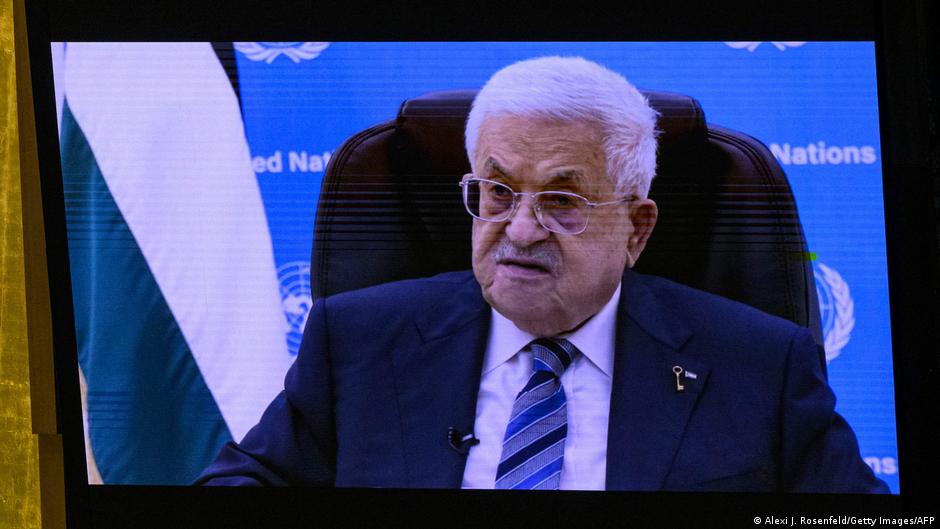
Palestinian Authority President Mahmoud Abbas has postponed elections in the Palestinian territories from late November to September 11, 2027, according to WAFA, extending a long-running governance challenge at a moment when regional diplomacy is already reshaping the postwar future of Gaza.
The decree shifts both parliamentary and presidential votes to the same date. The elections, if held, would be the first nationwide Palestinian elections in more than two decades, dpa noted. For the Palestinian Authority, the delay is not only a political scheduling decision but also a strategic move with implications for legitimacy, succession planning and the institution’s ability to position itself for a larger role in Gaza governance.
WAFA cited several reasons for the postponement across the West Bank, East Jerusalem and the Gaza Strip, including Israeli military restrictions, the expansion of Jewish settlements, attacks by armed settlers and the absence of freedom of movement. In Gaza, the agency also pointed to an unstable situation and the delayed deployment of international security forces.
Israeli Foreign Minister Gideon Saar rejected that explanation and accused the 90-year-old Abbas of misleading the international community by falsely claiming that Israel had created obstacles to voting. Saar said Abbas was trying to avoid responsibility and accountability.
Mahmoud Abbas is trying to evade responsibility and accountability, Saar said.
The criticism did not come only from Israel. Objections to the postponement were also voiced from within the Palestinian National Liberation Movement, Fatah, the movement to which Abbas belongs. That internal criticism matters because Abbas’s authority rests not merely on formal office but on the political machinery and elite alignment behind it.
A Governance Decision With Boardroom-Like Stakes
For an American business readership, the Palestinian election delay can be understood partly as a governance and continuity decision by an institution under extreme operating pressure. The Palestinian Authority is facing a test familiar to executives and boards in crisis: how to preserve control, maintain external credibility and prepare for a potential expansion of responsibilities while its mandate is openly questioned.
The timing is especially consequential because the Palestinian Authority is being discussed as part of a future administrative structure for Gaza. In mid-January, the White House said the second phase had begun of U.S. President Donald Trump’s plan to end hostilities in the Gaza Strip. Under that phase, a National Committee is expected to take over management of the region until the Palestinian Authority is ready to assume that role.
That creates a strategic tension. On one hand, the Palestinian Authority may argue that basic conditions for credible voting are not in place, particularly given the constraints cited in the West Bank, East Jerusalem and Gaza. On the other hand, delaying the first national elections in more than two decades may weaken its claim to renewed public legitimacy just as international stakeholders are looking for a governing partner capable of taking on more responsibility.
The decision also raises succession and institutional-risk questions. Abbas is 90, and a new election date in September 2027 places the next vote almost three years after the ceasefire agreement reached in October 2025 and more than two decades after the last nationwide Palestinian elections. For any political organization, that kind of timeline can harden doubts about accountability and leadership renewal.
Gaza War Context Shapes the Political Calendar
The election postponement comes against the backdrop of the crisis that erupted on October 7, 2023, when Hamas, the radical Islamist movement designated as a terrorist organization by the European Union and the United States, launched a large-scale attack on Israel. Militants fired a massive rocket barrage, entered Israeli territory and carried out the deadliest massacre of civilians in the history of the modern Israeli state, killing about 1,200 people.
Hamas militants also seized about 250 hostages and took them to the Gaza Strip. Some hostages were later exchanged or released, while others died. Israel responded by declaring war on Hamas.
In October 2025, Israeli authorities and Hamas agreed to a ceasefire under a peace plan developed by the Trump administration. The United States, Turkey, Qatar and Egypt served as guarantors of the understandings between Israel and Hamas. During the first stage, Hamas militants returned all remaining living Israeli hostages in exchange for the release of Palestinian prisoners from Israeli jails.
That diplomatic framework now intersects directly with Abbas’s political timetable. The Palestinian Authority’s future role in Gaza, the credibility of its leadership and the question of who can claim a mandate to govern are all moving together. The postponed election date therefore functions as a political signal to allies, rivals and mediators alike.
There has been some limited electoral activity. In April, the first municipal elections in 20 years were held in Deir al-Balah in the Gaza Strip. Candidates on most electoral lists were close to Fatah or were independents. But municipal voting in one Gaza city does not resolve the broader national legitimacy question now surrounding the Palestinian Authority.
For Abbas, postponement may preserve short-term institutional control during an unstable transition. For critics, it reinforces the charge that the Palestinian leadership is delaying accountability. For foreign governments involved in the next phase of Gaza policy, it complicates the assessment of whether the Palestinian Authority can become the governing vehicle envisioned in the emerging postwar framework.