Trump Says Putin Is More Invested Than Zelensky in Ukraine Peace Deal
The U.S. president’s comments place Washington’s leverage and diplomatic judgment at the center of renewed scrutiny over an energy ceasefire.
President Donald Trump said Russian President Vladimir Putin is more interested than Ukrainian President Vladimir Zelensky in reaching a peace agreement over Ukraine, a public assessment that sharpens questions about how the White House intends to manage pressure on both governments as fighting continues.
Speaking to reporters late Monday night, ahead of Tuesday, Oct. 13, Trump was asked about Russia’s violation of an energy ceasefire in the war against Ukraine. The U.S. president responded by saying that the situation first needed to be examined because, in his words, “there were violations on both sides.”
The remarks are significant not only as a diplomatic statement, but as an executive signal. Trump is framing the core obstacle less as Moscow’s continued attacks than as the need to persuade Kyiv to accept a deal. For American policymakers, defense contractors, energy executives and investors watching the war’s strategic costs, that framing matters. It indicates where the administration may apply political pressure, how it may define compliance, and what kind of settlement it may consider achievable.
“I really think Putin is more interested than Zelensky in making a deal,” Trump said in response to a reporter’s question.
The exchange began when a reporter asked Trump what evidence he saw of Putin’s willingness to compromise if Russia was continuing to attack Ukraine. Trump replied that he believed the parties would reach an agreement and reiterated that Putin, in his view, was more interested than Zelensky in concluding a deal.
Asked specifically how he intended to ensure that the Russian president would observe the energy ceasefire that Trump himself had announced, the U.S. president said he believed Putin wanted an agreement and that Zelensky needed to be persuaded to move toward one.
Boardroom Stakes Behind a Ceasefire Dispute
For Washington, the dispute over an energy ceasefire is not a narrow battlefield issue. Energy infrastructure has been one of the most economically consequential fronts of the war, affecting Ukraine’s industrial capacity, winter resilience, public finances and dependence on foreign support. Damage to power generation and transmission facilities can reverberate through manufacturing, logistics, municipal services and reconstruction planning.
That is why Trump’s comments may draw close attention in corporate and policy circles. Any shift in U.S. assumptions about which side is more committed to a settlement could influence future aid discussions, sanctions strategy, insurance risk, energy security planning and the posture of companies evaluating long-term exposure to Ukraine and Eastern Europe.
The president’s statement that violations occurred on both sides also carries operational implications. If the White House treats the ceasefire record as contested, it may avoid assigning immediate responsibility to Moscow even as Kyiv argues that Russia has failed to meet the terms announced by the United States. Such ambiguity could preserve diplomatic flexibility, but it also risks creating uncertainty about enforcement.
Zelensky has previously called on the United States to influence Russia so that Moscow begins observing the ceasefire regime in the energy sector. Speaking at the Warsaw Security Forum, the Ukrainian leader said Kyiv was waiting to see what concrete steps the Americans were prepared to take.
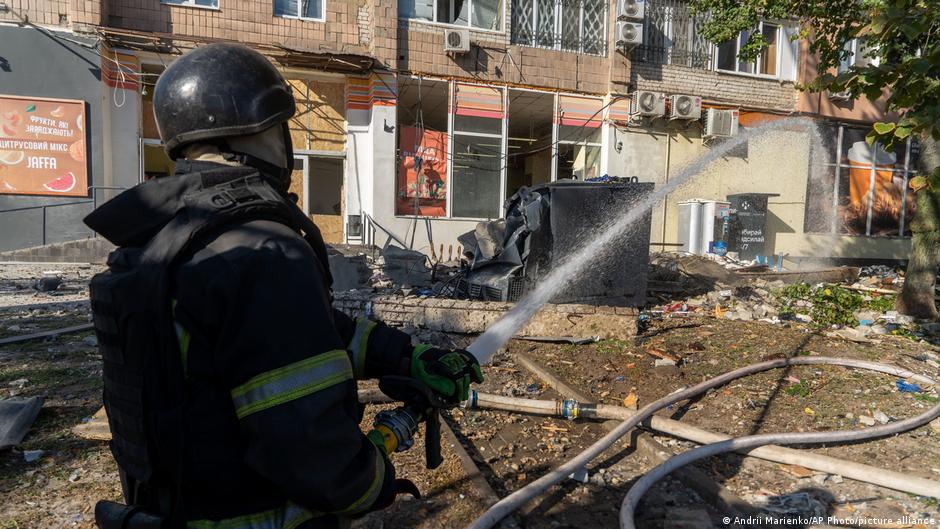
According to Zelensky, Kyiv was very surprised on Oct. 11 by social media reports that all attacks on energy facilities in Russia’s war against Ukraine would be halted immediately. He said that directly after the publication of that statement, Russia struck a thermal power plant in Kharkiv, causing additional damage to Ukraine’s energy system.
Kyiv Looks to Washington for Pressure on Moscow
Zelensky’s public messaging has placed responsibility squarely on the need for U.S. pressure. In a Telegram post on the evening of Oct. 12, he said Ukraine had supported an energy ceasefire and that its position was clear: Ukraine was ready to guarantee the energy ceasefire as announced by the U.S. president, while Russia needed to take corresponding steps.
He added that, at that point, Ukraine did not see Russia fulfilling the conditions voiced by the U.S. president. Zelensky said much depended on the U.S. position if de-escalation was to work, and that pressure needed to be applied to Russia. He also said Ukraine was continuing talks with the American side at all levels.
For the Trump administration, that creates a boardroom-style test of execution: whether a high-profile diplomatic initiative can be translated into measurable compliance. Announcing a ceasefire is one matter; defining violations, assigning responsibility and establishing consequences is another. The gap between those steps can determine whether a ceasefire becomes a confidence-building mechanism or a source of competing narratives.
Trump’s approach, as reflected in his remarks, suggests he sees dealmaking momentum as still possible despite the accusations surrounding the energy ceasefire. His confidence that the sides will reach agreement may be intended to preserve negotiations and avoid boxing in the White House before it completes its review of reported violations.
But the political and strategic risk is clear. If the administration is perceived as equating Ukrainian and Russian conduct while Russia continues attacks on Ukrainian energy assets, Kyiv may face pressure to accept terms under deteriorating infrastructure conditions. Conversely, if Washington concludes that Russia has violated the announced ceasefire and responds with pressure, the administration would need to show that its diplomatic commitments carry enforceable weight.
The immediate issue remains the same: Ukraine says it backed the energy ceasefire announced by Trump and is waiting for Russia to take corresponding steps. Trump says the facts must be studied and believes Putin wants a deal. Between those positions lies a broader question for U.S. strategy: whether the White House can turn presidential confidence in a settlement into a durable framework that both parties are willing, and able, to observe.