Moscow Victory Day Parade to Omit Military Hardware Amid Operational Concerns
For the first time in years, Moscow’s May 9 Victory Day parade will exclude ground military equipment, reflecting strategic and security considerations.
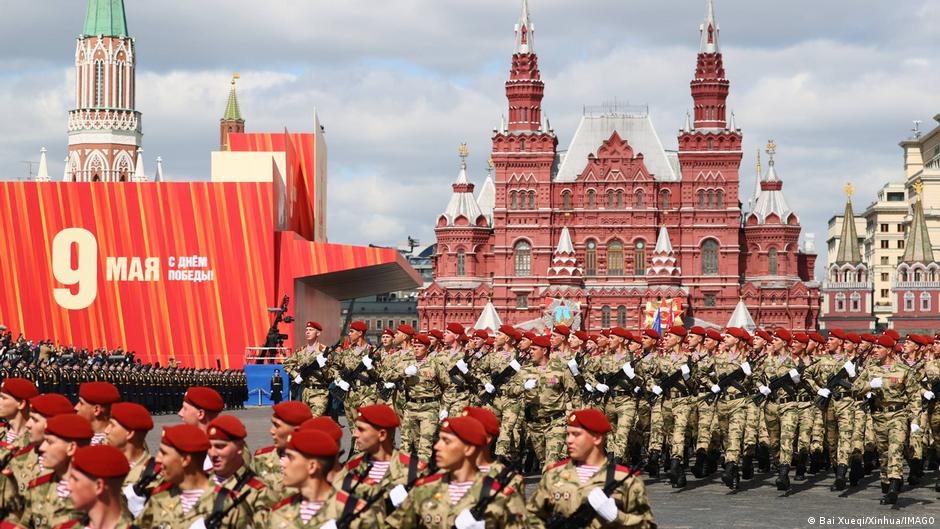
In a significant departure from tradition, the 2026 Victory Day parade in Moscow on May 9 will be held without the participation of ground military vehicles. Russia’s Ministry of Defense announced this change on April 28, citing the "current operational situation" as the reason behind the decision.
Unlike previous years, the parade will not feature the usual display of armored personnel carriers, tanks, or other military hardware rolling down Red Square. Additionally, cadets from Suvorov military schools, Nakhimov naval academies, and various cadet corps will also be absent. However, the Ministry confirmed that combat aircraft will still participate in the aerial segment of the parade.
Operational and Strategic Implications
The omission of military vehicles marks a notable shift in how Russia is presenting its military posture on one of its most important national holidays. In previous years, the parade served as a showcase of Russia’s military capability, with hundreds of mechanized units and thousands of troops demonstrating strength and readiness. Since 2008, military hardware has been a staple of the event.
Reports from military analysts and independent observers had hinted at a possibly "truncated" parade format, noting that rehearsals involving military vehicles had not taken place in Moscow this year—a break from established practice.
"The decision to exclude military equipment from the parade reflects a recalibration of Russia’s public display of military force amidst ongoing operational challenges," said an expert on Russian military affairs.
Parallel to the developments in Moscow, several Russian regions have canceled or scaled back large-scale Victory Day celebrations. Cities including Nizhny Novgorod, Saratov, and regions like Chuvashia and Kaluga have scrapped parades. Some regions—such as Voronezh, Kursk, Bryansk, and Belgorod—have also canceled the traditional celebratory fireworks, citing safety concerns.
This shift aligns with the increased security risks facing Russia domestically, following Ukrainian counterattacks targeting Russian infrastructure across various regions, including critical maritime ports on the Baltic Sea used for oil exports, and a major oil refinery in Tuapse.
Context and Historical Significance
The Victory Day parade commemorates the 1945 defeat of Nazi Germany and has profound symbolic importance in Russia. In 2025, the 80th anniversary parade featured over 10,000 troops, including contingents from North Korea, and showcased approximately 200 units of military equipment spanning historic and modern designs. High-profile attendees included Russian President Vladimir Putin, Chinese President Xi Jinping, and leaders from former Soviet republics, as well as select international guests.
President Putin has drawn explicit parallels between the World War II Soviet struggle and Russia’s ongoing conflict in Ukraine, framing the modern conflict as a continuation of the historical fight against fascism.
The reduction in the military display may signal recalibrations at the highest levels of government and military leadership regarding the messaging and optics of Russia’s military engagements amid evolving operational realities.