NATO Intercepts Russian Military Aircraft Over Baltic Sea in Strategic Airspace Operation
A coordinated NATO response involved multiple allied fighter jets intercepting Russian bombers and fighters over international waters, highlighting ongoing regional security tensions.
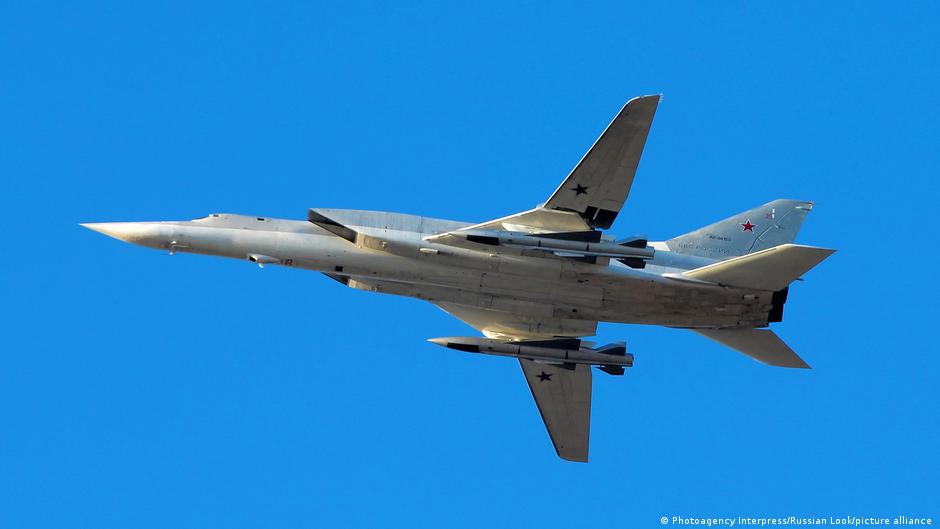
On April 20, NATO forces intercepted a contingent of Russian strategic bombers and fighter jets traversing the Baltic Sea. The Russian Ministry of Defense stated that the flight was routine and took place over neutral waters.
Multinational NATO Response and Russian Flight Details
French Rafale fighter jets, alongside aircraft from Sweden, Finland, Poland, Denmark, and Romania, intercepted Russian long-range bombers, including supersonic missile-carrying Tupolev Tu-22M3 bombers, as well as Su-30 and Su-35 fighter jets. The incident took place on Monday, April 20, according to French military command announcements the following day.
To escort the larger strategic bombers, Russia deployed two Tu-22M3 aircraft in rotation and approximately ten Su-30 and Su-35 fighters. Notably, two Rafale pilots took off from an airbase in Šiauliai, Lithuania, a departure witnessed by an Associated Press journalist.
The Russian Ministry of Defense emphasized that the flight was a planned mission over the neutral waters of the Baltic Sea, lasting over four hours for the Tu-22M3 bombers accompanied by Su-35 fighters. The statement also acknowledged that the bombers were periodically shadowed by fighter jets from foreign states during portions of their route.
According to the Russian military, all operations complied with international aviation regulations.
Regional Airspace Security and NATO Interceptions
Lithuanian defense authorities reported that from April 13 to 19, NATO pilots scrambled four times to intercept Russian aircraft violating flight protocols. Reported infractions included transponder deactivation, failure to submit flight plans, and lack of communication with air traffic controllers, all of which NATO cites as safety and security concerns.
"On certain segments of the route, the long-range bombers were accompanied by fighters from foreign countries," the Russian Ministry of Defense stated, underscoring the complex interplay of military air operations in the Baltic region.
These interceptions underscore the heightened vigilance among NATO members monitoring Russian military activity near European airspace. For corporate strategists and executives in defense-related industries, developments like these bear implications for defense procurement priorities, risk assessment, and geopolitical risk management in supply chains.
Understanding the operational patterns and responses in contested airspaces aids defense contractors and aerospace corporations in aligning their strategic initiatives with evolving security demands. The involvement of multiple NATO members in coordinated interceptions also reflects alliance cohesion and operational readiness, factors that influence defense sector investments and policy decisions.