Putin Backs US-Mediated Kyiv Talks but Rejects Front-Line Freeze
The Kremlin’s negotiating position leaves Washington and Kyiv facing a wide gap over leadership, territory and the terms of any ceasefire.
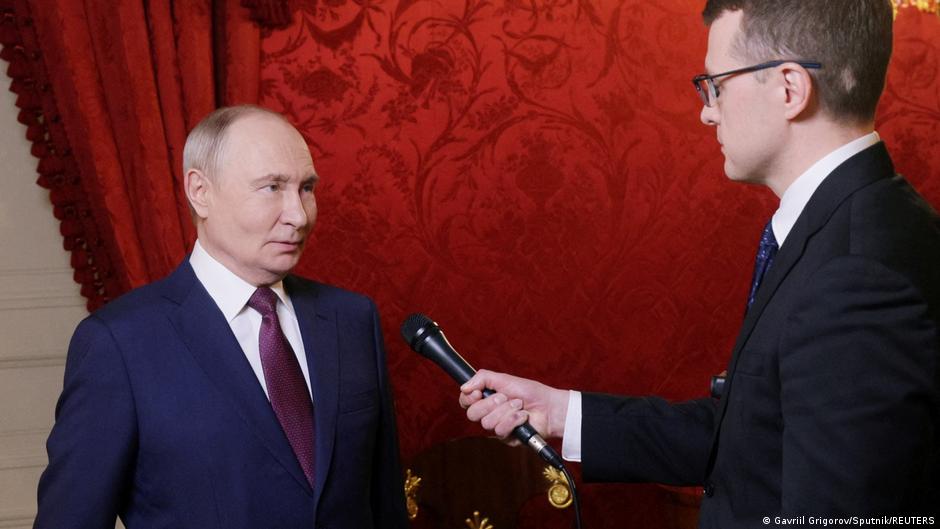
Russian President Vladimir Putin said Moscow is prepared to resume negotiations with Kyiv through US mediation, but he rejected the idea of freezing the war along the current front line, underscoring the large gap between the parties over the structure and ultimate objective of any talks.
In an interview with Pavel Zarubin, a journalist for the Russian state media group VGTRK, published Thursday, October 22, Putin said he had agreed during a meeting with US special envoy Steven Witkoff to renew dialogue with Ukraine under Washington’s mediation. Putin presented the prospective process as one focused on a final settlement rather than a temporary halt in fighting.
“The purpose of these negotiations will be to discuss the issue of ensuring the security of Ukraine and Russia after peace agreements are reached, in their final form, rather than as a result of suspending hostilities for some short period,” Putin said. “We are ready to resume these contacts to achieve this goal.”
The statement offers Washington a potential diplomatic opening while preserving Moscow’s ability to resist an interim ceasefire. From an executive-decision standpoint, that distinction is central: a short-term freeze could stabilize the current line of contact without resolving territorial disputes, while Russia’s stated preference for a final agreement would move those disputes to the center of negotiations from the outset.
Leadership Format Remains Unresolved
Moscow has not said what level of representation it would accept in renewed talks with Kyiv following Putin’s meeting with Witkoff. Ukrainian President Volodymyr Zelensky has said he is ready for a three-way meeting with Putin and US President Donald Trump to discuss ending the war.
The Kremlin has repeatedly rejected that format or attached conditions that Kyiv did not regard as a serious basis for a meeting. One such proposal was that Zelensky travel to Moscow. Previous meetings between a delegation selected by Putin and Ukrainian representatives produced no tangible progress toward ending the war.
The uncertainty over who would participate is more than a procedural issue. It determines whether the process would involve the leaders capable of making binding political decisions or remain at the delegation level, where previous contacts failed to deliver a measurable breakthrough.
Another sign of internal resistance emerged only hours after the Putin-Witkoff meeting. Russian presidential aide Yuri Ushakov said Russia was “completely dissatisfied” with proposals brought to Moscow by Trump’s negotiators. That response complicates the signal sent by Putin’s stated willingness to resume contacts and suggests that agreement on holding talks would not mean agreement on their substance.
Territory Divides the Parties
Zarubin also asked Putin about Zelensky’s statement a day earlier that Ukraine was prepared to freeze hostilities along the current line of contact. Putin rejected the premise, saying: “It is not their territory; it is the territory of historical Russia.”
Trump had reportedly supported a front-line freeze in 2025, before meeting Putin in Anchorage. That approach conflicts with Putin’s publicly stated demand that Ukraine surrender the entirety of Donbas to Russia without a fight. The competing positions leave the territorial question as a major obstacle for any US-mediated process.
Putin also claimed that Russia “does not want to fight” Ukraine and shifted responsibility for the continuation of hostilities to Kyiv. He said Moscow remained ready to seek a negotiated solution and described Russians and Ukrainians as one people.
“This is a people very close to us. The latest genetic studies show that this is one people—Russians and Ukrainians,” Putin said.
He did not explain how claims about genetics could affect national sovereignty. His language combines an offer of negotiations with a political narrative that challenges Ukraine’s separate national identity, adding another fundamental dispute to a process already divided over territory, security and representation.
Military Activity Tests the Diplomatic Message
The intensity of Russian attacks on Ukraine did not decline after Putin’s meeting with Witkoff. On the day Zarubin’s interview was published, Ukrainian authorities reported multiple Russian attacks on civilian sites, including a clothing market in Lozova in the Kharkiv region, Kyiv’s historic center, and roads and bridges across several regions.
Two people were killed and 34 were wounded in the strike on Lozova, according to the Ukrainian side. The continued attacks create a stark operating context for Washington’s mediation effort: the Kremlin is expressing readiness for talks while rejecting a front-line freeze and maintaining military pressure. For decision-makers assessing the credibility of a renewed negotiating channel, the gap between diplomatic language and battlefield activity remains the central issue.