Russia Opens Three-Day Duma Vote With Occupied Regions in the Count
The parliamentary election structure, restrictions on opposition parties and unverifiable voting procedures point to a tightly managed political exercise.
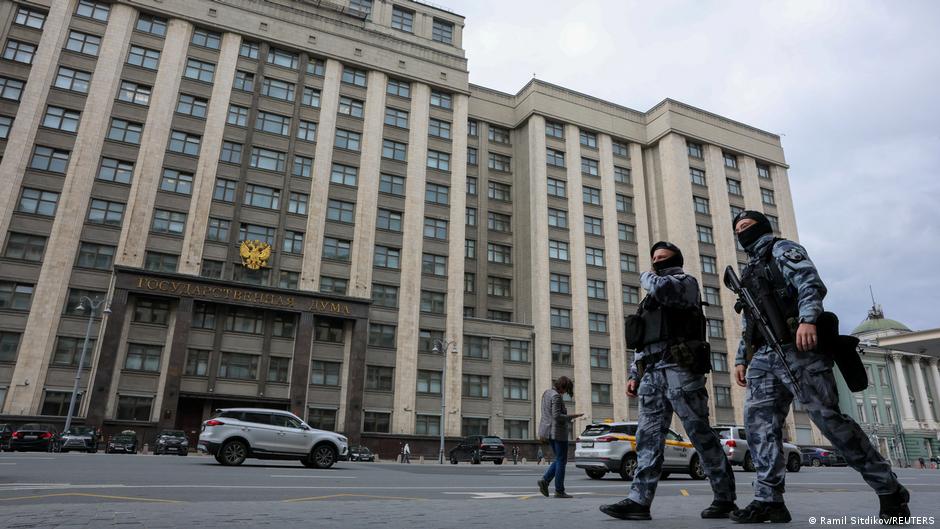
Russia formally opened three days of voting for the State Duma on Friday, September 18, at 8:00 a.m., beginning a parliamentary election that is being conducted across the country and, for the first time in this cycle, extended to occupied territories of Ukraine.
The first polling stations opened in Kamchatka and Chukotka, with voting scheduled to continue through September 20. Regional polling places are expected to remain open until 8:00 p.m. local time. Early voting had already taken place, including among participants in Russia’s full-scale invasion of Ukraine and residents of Russian-occupied regions, according to representatives of various Russian structures. Those early voting procedures ran from late August through September 17.
For the Kremlin and Russia’s governing institutions, the vote is not simply a parliamentary exercise. It is also a test of how the state manages political participation, information control and the appearance of institutional continuity during a continuing war. The formal mechanics of the election remain familiar: half of the 450 seats in the new Duma are to be filled through single-member districts, which are designed to allow voters to choose individual candidates, while the remaining 225 seats are to be distributed through party lists.
Ten parties are listed for the party-list portion of the election. The liberal party Yabloko, which had consistently criticized the war in Ukraine, was earlier allowed to participate but was later removed from the party lists on formal grounds. Individual Yabloko members remain present in some regions as candidates in single-member races.
A Managed Field of Political Competition
None of the ten parties represented in the 2026 Duma election has condemned the ongoing war in Ukraine. That fact sharply limits the range of political positions available to voters through the party-list portion of the ballot and underscores the degree to which the competitive field has been narrowed before votes are counted.
Yabloko’s removal is especially significant because it reduces formal party-level representation for an antiwar position while preserving only scattered individual candidacies in district races. Some Yabloko-affiliated candidates later faced pressure and removal from races on various grounds, often linked to old photographs and social media posts, including references to Alexei Navalny.
For an American business readership, the implications extend beyond electoral arithmetic. Russia’s parliament is a critical part of the state apparatus that approves budgets, codifies wartime priorities and reinforces the legal framework under which domestic companies, state-owned enterprises and foreign-exposed businesses operate. A Duma elected under constrained political conditions is likely to offer little institutional resistance to executive priorities, particularly on defense spending, occupied territories, information policy and the regulation of political dissent.
That dynamic matters for investors, multinational companies still assessing Russia-related exposure, sanctions compliance teams and boards monitoring geopolitical risk. The tighter the political system becomes, the more corporate decision-making in Russia is shaped by executive power rather than legislative debate. In practice, that can increase policy predictability in one sense while raising legal, reputational and operational risks in another.
Occupied Territories and Verification Concerns
The most consequential expansion of this year’s vote is its inclusion of occupied Ukrainian territories. Observers have noted that even putting aside the question of the legitimacy of holding such a process in those regions, Russia’s Central Election Commission organized voting there in a way that makes results almost impossible to verify.
Authorities did not publish data on members of regional election commissions or the addresses of polling places. Open video monitoring was not organized at those sites. Portable ballot boxes were permitted. The Central Election Commission also allowed local election commissions, when necessary, to print ballots on site and not immediately transfer them to higher-level bodies after the count.
Observers say the voting process in occupied regions was arranged in a way that makes the results practically impossible to verify.
Those procedures carry broader governance implications. In corporate terms, an election process with limited transparency is a signal about the state’s tolerance for opaque administration where strategic objectives are involved. For companies, banks and compliance officers, the inclusion of occupied territories also reinforces the importance of jurisdictional risk: documentation, counterparties, assets and transactions connected to such regions can present heightened legal exposure under Western sanctions and international law considerations.
Information Control Before the Ballot
Pro-government media outlets in Russia began circulating videos ahead of the election whose central message was that footage purporting to show fraud or ballot stuffing at polling stations could be generated by artificial intelligence. Ella Pamfilova, chair of Russia’s Central Election Commission, also claimed that such technologies could allegedly “substitute the picture” from polling places during a live broadcast.
The messaging creates a preemptive frame for any video evidence that may emerge from polling stations. Rather than only contesting allegations after the fact, authorities and aligned media have introduced the idea that visual documentation itself may be unreliable because of AI. That approach reflects a broader strategic communications problem now facing governments, corporations and media organizations: artificial intelligence can be invoked both as a genuine concern and as a tool to cast doubt on inconvenient evidence.
For boardrooms, the lesson is not limited to Russian politics. Companies operating in contested information environments must now plan for situations in which video, images and livestreams are challenged in real time. Election-related claims about AI-generated fakes illustrate how quickly institutional trust can become a battleground, with implications for crisis communications, evidence preservation and public accountability.
Opposition Strategy and the Limits of Leverage
Shortly before the vote, opposition figures Yulia Navalnaya and Maxim Katz urged Russians to support the strongest single-member candidates who are not members of the ruling United Russia party. Yabloko criticized that strategy and instead advised voters to spoil their ballots.
The disagreement reflects the limited tools available to opposition-minded voters inside Russia’s current political system. One approach seeks to use the single-member district system tactically against United Russia candidates. The other rejects participation in a process viewed as structurally compromised. Neither strategy changes the underlying fact that the party-list field excludes a coherent antiwar alternative.
As voting continues through September 20, the likely importance of the election lies less in whether the Duma’s broad political direction changes than in how the state demonstrates control over the process. The structure of the ballot, the treatment of antiwar candidates, the voting arrangements in occupied territories and the preemptive warnings about AI-generated fraud claims together point to an election designed to reinforce executive authority during wartime.
For companies and investors evaluating Russia-related risk, the election offers another indicator of where decision-making power resides. The Kremlin-aligned system is moving through a formal democratic procedure, but the practical business signal is one of centralized control, limited institutional challenge and continuing political alignment around the war.