Russian Overnight Strikes Hit Kyiv, Odesa and Sumy, Injuring Children
The attacks damaged warehouses, housing, offices and university property, underscoring the continuing operational risks facing Ukrainian cities.
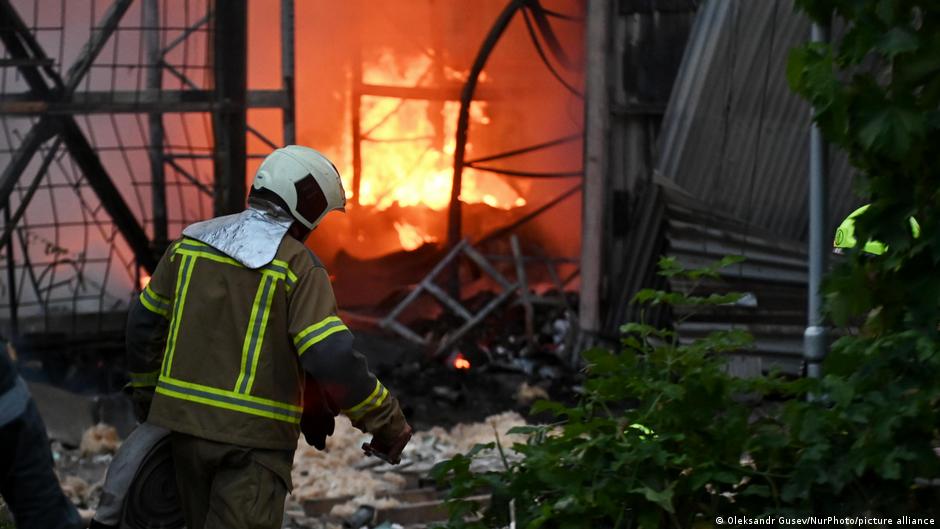
Russia carried out a large overnight missile attack on Kyiv early Thursday, September 17, injuring at least 12 people, including two children, according to Ukrainian officials. The strikes also hit Odesa, where three people were reported wounded, among them a four-year-old child. In Sumy, one person was killed and nine others were injured, including two children, following Russian airstrikes the previous evening.
For Ukraine’s civic leaders, emergency services and business community, the attacks were another reminder that the war’s front line extends well beyond military positions. The reported damage in Kyiv included warehouse premises, residential buildings, an office building and the facade and glazing of a university building. In Odesa, officials said a multi-story building was damaged. In Sumy, private homes, outbuildings and civilian cars were destroyed or damaged.
Kyiv Mayor Vitali Klitschko said on Telegram that at least 12 people were injured in the attack on the Ukrainian capital, including children aged 10 and 12. He said nine of the injured were in hospitals. Earlier, the Kyiv City Military Administration said the 10-year-old child wounded in the Russian attack was a girl.
“Nine of the injured are in hospitals,” Klitschko wrote, according to the post cited in the source report.
The Ukrainian Air Force had reported overnight on Telegram that missiles were moving toward Kyiv. By morning, local authorities said warehouse facilities had been damaged in the Solomianskyi and Dniprovskyi districts of the capital. The city administration also said a residential building was damaged in the Dniprovskyi district.
Urban Infrastructure Under Renewed Pressure
The pattern of damage described by Ukrainian officials shows how attacks on major cities affect not only households but also the physical networks that allow urban economies to function. Warehouses, office buildings, universities, residential blocks and vehicles are part of the same civic and commercial ecosystem. When windows are blown out, facades are damaged and storage sites are struck, the consequences can cascade through business continuity planning, insurance exposure, logistics schedules and workforce safety decisions.
Klitschko said the Dniprovskyi district saw damage to the glazing and facade of a three-story office building. Windows were also blown out in several residential buildings. In the Sviatoshynskyi district, according to Klitschko, a non-residential building was damaged.
Ukraine’s State Emergency Service separately reported damage in Kyiv’s Holosiivskyi district, where the facade and glazing of a four-story university building were affected. The name of the educational institution was not specified. According to the report, there were no deaths or injuries as a result of that incident.
For executives and institutional managers operating in Kyiv, the locations and types of reported damage matter. Warehousing capacity is tied to supply chains and inventories. Office buildings are tied to continuity of management, back-office work and client operations. Universities are significant employers and anchor institutions, supporting research, training and urban services. Even when casualties are avoided at a specific site, repairs, inspections and temporary closures can impose costs and force rapid decisions by administrators, tenants and public authorities.
The latest reports do not provide financial estimates for the damage. They do, however, point to the kind of dispersed urban disruption that has become a central feature of wartime risk management in Ukraine. Companies and public bodies must weigh staff safety, shelter protocols, remote work capacity, emergency power and the resilience of premises that were not designed to operate under repeated attack.
Odesa and Sumy Report Civilian Casualties
In Odesa, the head of the city military administration, Serhiy Lysak, said that at least three people were injured in the Russian attack on the city, including a four-year-old child. “All are receiving the necessary medical assistance,” the post said, according to the source report. Lysak had earlier said that a multi-story building in Odesa was damaged as a result of the Russian attack.
Odesa’s role as a major Black Sea city gives any attack on its urban fabric broader significance for business and governance, even when official reports focus on immediate casualty counts and structural damage rather than economic impact. Residential high-rises, municipal services and emergency response capacity are all part of the environment in which employers, workers and local authorities make daily decisions under wartime conditions.
In Sumy, Ukraine’s State Emergency Service said the previous evening that one person was killed and nine more were injured, including two children, as a result of Russian airstrikes. The service said guided aerial bomb attacks destroyed and damaged private homes, outbuildings and civilian vehicles.
“Private residential houses, outbuildings and civilian cars were destroyed and damaged,” the emergency service said in the post cited by the source report.
The Sumy report highlights a different but related pressure point: damage to household assets and local transport. For families, the loss of homes, auxiliary buildings and vehicles can mean immediate displacement, interruption of work and reduced mobility. For local authorities, it adds to the burden of emergency housing, medical care, debris removal and documentation of damages.
The casualty figures reported across the three cities and regions were stark: 12 injured in Kyiv, including two children; three injured in Odesa, including a four-year-old child; and one dead and nine injured in Sumy, including two children. Ukrainian officials did not report deaths in Kyiv or Odesa in the cited accounts.
For corporate leaders, boards and investors tracking Ukraine-related exposure, the attacks reinforce the challenge of operating in an environment where physical security, employee welfare and infrastructure reliability are inseparable from strategy. The reported damage was not limited to one type of asset or one city. It touched residential property, educational infrastructure, offices, warehouses, vehicles and other civilian structures.
That mix creates boardroom questions that go beyond immediate repair costs. Management teams with staff, suppliers or counterparties in affected areas must consider whether contingency plans are current, whether facilities can reopen safely, whether employees need support, and whether critical operations can shift quickly if buildings or transport links are disrupted. Public institutions face similar calculations, with the added responsibility of maintaining services under emergency conditions.
The overnight and evening attacks, as described by Ukrainian officials, therefore carry both human and operational consequences. Children were among the wounded in Kyiv, Odesa and Sumy. Civilian infrastructure was damaged across multiple districts and cities. And for those responsible for running organizations in Ukraine, the reports offer another case study in how military strikes on urban areas can reshape daily business risk without warning.