German Youth Protests Turn Violent, Raising Risks for Business Leaders
Unrest across major German cities is sharpening corporate concerns over security, labor expectations and pressure on public spending.
Youth demonstrations across Germany’s largest cities descended into disorder on Saturday evening, October 31, confronting business leaders with immediate security concerns and a broader set of questions about the economic pressures facing younger workers and consumers.
The protests were organized by Gen-Z regelt, or “Generation Z Decides,” and took place in more than 30 German cities. Organizers said over 100,000 people participated nationwide. Their demands included better education, action against the rising cost of living, stronger climate protection, easier access to psychotherapy and addiction treatment, and opposition to compulsory military service and cuts in social spending.
Those priorities touch several issues already shaping corporate strategy in Germany: the availability of skilled labor, employee expectations for mental-health support, the cost of the energy transition and the political limits on fiscal restraint. But violence in Frankfurt, Berlin, Cologne, Hamburg, Stuttgart and Bremen shifted the immediate focus from policy demands to public safety and operational disruption.
Retailers and city centers bear the immediate impact
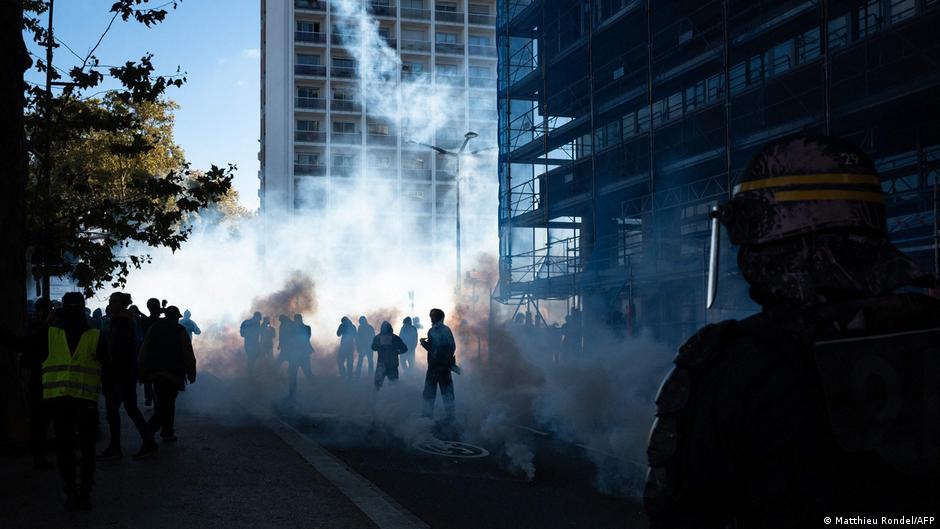
In Frankfurt, demonstrations that began peacefully with between 8,000 and 9,000 participants deteriorated into looting and attacks on police. Some protesters smashed storefronts, while Molotov cocktails were thrown at officers. A group of aggressive demonstrators entered a gun shop as well as a Snipes clothing and sneaker store. Authorities confiscated two weapons from those who attacked the gun shop.
Hesse Interior Minister Roman Poseck said the disorder was driven by “about 100 violence-prone left-wing extremists” who had mixed with the demonstrators. Police checked the identification of approximately another 100 people and detained more than 30.
By late evening, law enforcement had brought the unrest under control using water cannons, armored police vehicles, a helicopter and drones. Parts of central Frankfurt were closed, creating the kind of sudden access restrictions that can interrupt retail trade, transportation and staffing in a major commercial district.
“We will thoroughly analyze the aggressors’ actions, the composition of the offending groups and the sequence of events, and then draw the appropriate conclusions,” Hesse Premier Boris Rhein said.
Rhein added that people behaving like the perpetrators in central Frankfurt had placed themselves outside society. His promise of a detailed review signals that local authorities may reassess policing, crowd management and protections for businesses during future demonstrations.
Corporate risk extends beyond Frankfurt
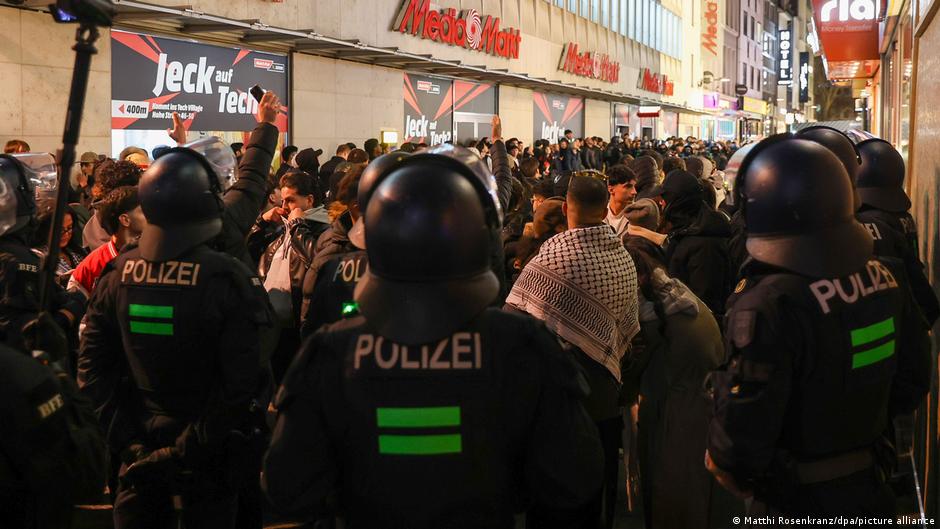
In Berlin, one of two major demonstrations turned violent. The gathering drew about 3,500 people, predominantly members of far-left groups. Police said some participants threw firecrackers and bottles at officers, launched fireworks, damaged property and violated weapons laws. Authorities detained 56 people, while 27 police officers sustained minor injuries.
In Cologne, police prohibited protesters from holding a march and allowed only a stationary gathering. The decision followed violations involving face coverings and pyrotechnics, including devices thrown at police. Officers used water cannons near the end of the event.
In Hamburg, some protesters built and burned barricades and threw bottles and stones at police. Demonstrations ended in similar disorder in Stuttgart and Bremen. The geographic spread means companies cannot treat the disruption as an isolated municipal issue. Retail chains, transport operators, property owners and employers with offices in central business districts may need to review site-security plans and procedures for employees traveling during large public gatherings.
The unrest also creates a communications challenge for executives. The demonstrations combined a broad youth-led policy agenda with violence attributed in Frankfurt to a comparatively small group of extremists. Companies responding publicly will have to distinguish between concerns affecting younger employees and consumers and the criminal conduct that overtook parts of the protests.
Boardrooms face the underlying economic message
For corporate boards, the protests point to pressures that reach beyond physical security. Demands related to education, living costs and mental-health services reflect concerns with direct implications for recruitment, retention and workforce productivity. Calls for stronger climate action may add to scrutiny of corporate transition plans, while opposition to social-spending cuts and compulsory military service could intensify political debate over Germany’s fiscal and labor priorities.
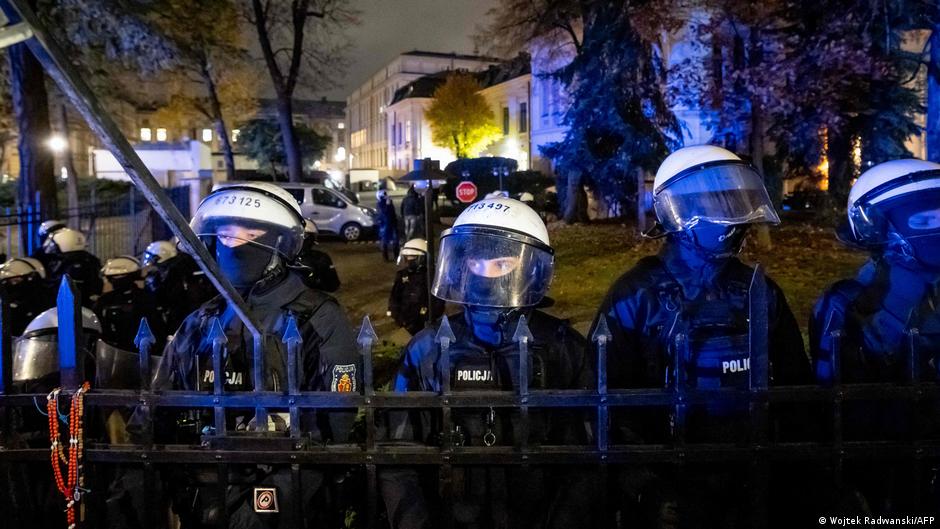
The October 31 demonstrations were part of a wider wave of youth protests across Europe. Recent actions in France also deteriorated into riots and clashes with police in several cities, while Belgium has experienced demonstrations as well.
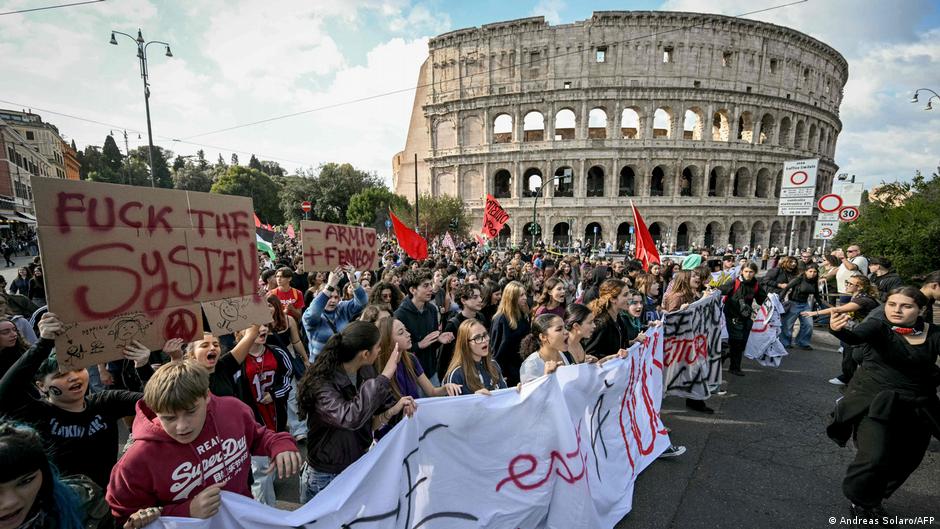
Italy faced particularly large protests on October 30, with organizers claiming participation of more than one million people. After severe rioting in Milan, Italian authorities ordered the deployment of 500 military personnel to maintain order.
For companies operating across Europe, the pattern raises the prospect of recurring disruption rather than a single weekend of unrest. The boardroom implications include reviewing business-continuity planning, monitoring employee sentiment and assessing whether corporate positions on wages, education, climate and well-being remain credible to a generation increasingly willing to mobilize in public.