Russian Strikes Kill Four in Ukraine, Hitting Homes and Urban Infrastructure
The latest attacks across Kherson, Odesa, Sumy and the Kyiv region show continued pressure on civilian infrastructure and emergency response systems.
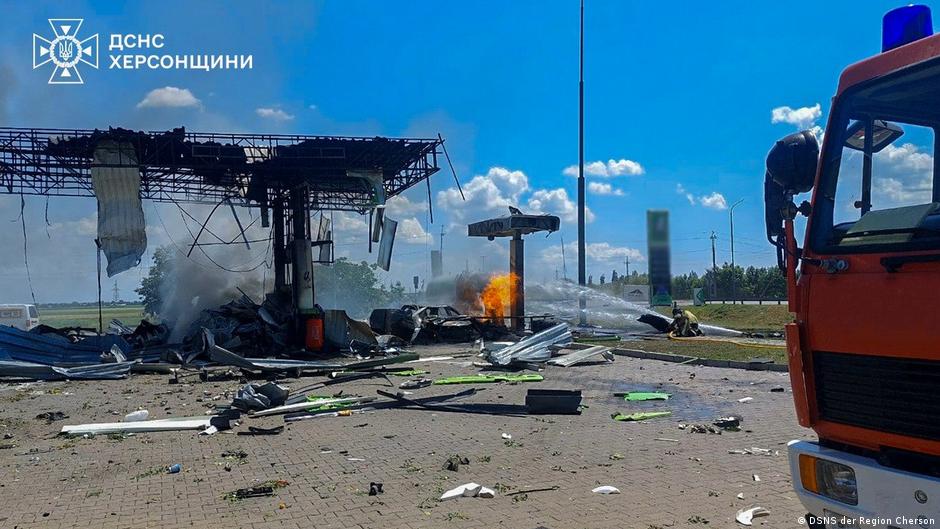
Four people were reported killed in Ukraine after a new wave of Russian attacks struck residential areas, administrative property, medical grounds and warehouse facilities, underscoring the operational and economic toll of a conflict that continues to place civilian infrastructure at the center of daily risk.
Two people died near Kherson after a Russian drone attack, while at least two others were killed in Sumy after what local reports described as a guided aerial bomb strike on a residential high-rise. In Odesa, Russian forces struck the same administrative building twice, including a second attack while emergency services were already working at the scene.
The incidents, reported by regional officials and emergency services, occurred on Friday, September 18, and into the night of September 19. They point to a pattern that carries significance beyond the battlefield: repeated strikes on urban assets, emergency response capacity and logistics-linked facilities complicate local governance, raise reconstruction costs and deepen operational uncertainty for institutions and businesses trying to function in wartime Ukraine.
Kherson Drone Strike Kills Two Men
In the Kherson region, two people were killed by a Russian drone strike in the settlement of Tekstylne on Friday evening. Oleksandr Prokudin, head of the regional military administration, said the incident took place at about 6 p.m.
“As a result of the enemy drone strike, two men received injuries incompatible with life,” Prokudin wrote on Telegram.
Throughout the evening, Prokudin repeatedly reported air raid alerts in the region, including warnings linked to suspected launches of guided aerial bombs from the Russian side. The warnings came amid a broader pattern of attacks in and around Kherson, a region that has faced persistent shelling and drone activity.
Also on September 18, one of Kherson’s city hospitals was attacked. According to the report, a drone dropped explosives on the grounds of the medical facility. No casualties were reported in that incident.
For local authorities, attacks on medical sites and populated settlements create cascading administrative challenges. Hospitals must remain operational under the threat of renewed strikes, while municipal and regional officials are forced to manage evacuation, emergency care, infrastructure repair and public communication simultaneously. For companies and humanitarian operators, such conditions increase the cost and complexity of maintaining staff, supply chains and service delivery in affected regions.
Odesa Building Hit Twice as Emergency Crews Responded
Ukraine’s State Emergency Service in the Odesa region reported the consequences of another Russian attack on September 18. A strike hit an 11-story administrative building, causing a fire.
Some time later, while emergency services were working at the scene, the same building was attacked again. Ten people were reported injured, including two rescuers.
The double strike is particularly consequential for public agencies and private organizations operating in urban centers. A first attack damages property and disrupts activity; a second attack during emergency response can put trained personnel at risk and slow recovery operations. From a business and governance perspective, this compounds the damage by threatening the very systems designed to stabilize a crisis.
Odesa was attacked again during the night of September 19. After an air raid alert was announced in the city and reports emerged of Russian small missiles approaching, local residents posted footage on social media showing a fire that had started in a residential building within city limits. Initial details of that incident were not provided.
Odesa’s strategic and commercial significance makes damage in the city especially important. Though the reported attacks described an administrative building and a residential fire, repeated strikes on the city contribute to broader uncertainty around staffing, insurance, transport planning and municipal resilience. The pressure is not confined to any single damaged structure; it spreads across the assumptions that businesses, public agencies and residents use to plan daily operations.
Sumy Residential Block Partially Collapses
The city of Sumy also came under Russian strikes on the evening of September 18. One munition hit a multi-story residential building, with reports indicating it was a guided aerial bomb. The explosion damaged several apartments, and the building partially collapsed.
According to preliminary data from local authorities, at least two people were killed in the strike and seven others were injured.
Residential destruction of this kind has direct human consequences, but it also carries longer-term institutional and economic implications. Damaged apartment blocks require emergency housing, structural assessment, debris removal and public funding decisions. Local governments must decide how to allocate limited resources across urgent rescue work, temporary shelter and longer-term reconstruction, all while facing the possibility of further attacks.
For businesses, especially employers with personnel in affected cities, the destruction of housing stock can affect workforce availability and retention. Employees may be displaced, transport networks may be disrupted, and local demand can shift sharply as communities move from normal consumption toward emergency needs.
Kyiv Region Reports Warehouse Damage
The military administration of the Kyiv region also reported consequences from Russian strikes on the evening of September 18. Timur Tkachenko, head of the regional military administration, said two men were injured in the Bucha district after a strike on warehouse premises.
Warehouse facilities were also damaged in the Boryspil district of the region, according to the reported information.
Damage to warehouses is notable because such facilities often sit at the intersection of commercial logistics, municipal supply and humanitarian distribution. Even when casualty numbers are lower than in residential strikes, attacks on storage sites can disrupt goods movement, inventory management and regional recovery capacity. In wartime conditions, the loss or temporary shutdown of warehouses can affect everything from construction materials and food supplies to emergency equipment.
The latest reported attacks across Kherson, Odesa, Sumy and the Kyiv region show how Russia’s strikes continue to impose costs on multiple layers of Ukrainian society. The immediate toll is measured in deaths and injuries. The secondary impact falls on emergency crews, hospitals, housing, administrative buildings and logistics facilities, forcing local leaders into repeated crisis-management decisions.
For executives, investors and policy analysts watching Ukraine, the significance lies in the durability of these pressures. Corporate strategy in and around Ukraine must account not only for headline battlefield developments, but also for the recurring risk to urban infrastructure, workforce stability, public services and supply networks. Each attack creates a localized emergency, but together they shape the operating environment in which Ukrainian institutions and businesses must make decisions.