UK and Dutch Aid Packages Put Ukraine Investment Strategy in Focus
New financing from London and The Hague combines urgent defense support with export guarantees and longer-term reconstruction funding.
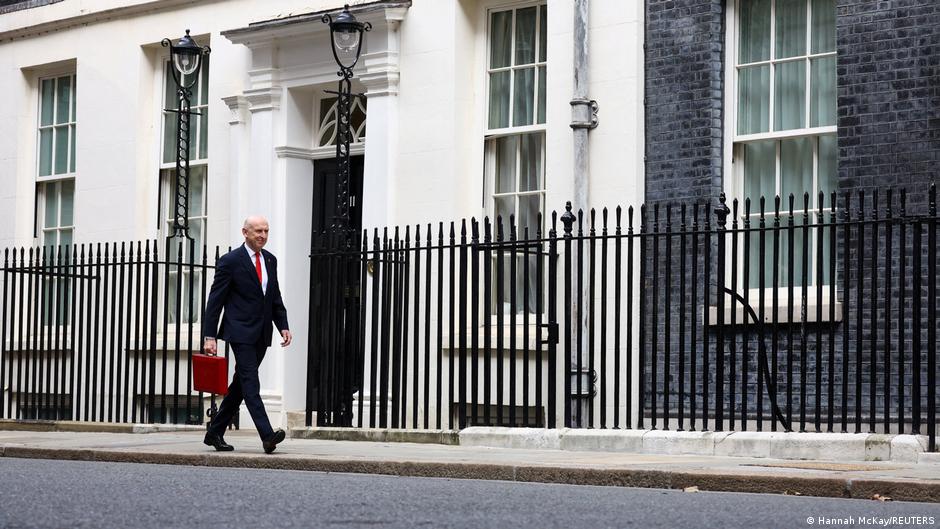
Britain and the Netherlands have unveiled major new support packages for Ukraine, pairing emergency military assistance with financial instruments that could shape corporate participation in the country’s reconstruction. The commitments highlight how European governments are increasingly combining immediate security priorities with export finance, industrial procurement and incentives for private investment.
London will provide Ukraine with an additional £10 billion, equivalent to about €12 billion, British Finance Minister John Healey told the House of Commons. The package includes loans, export finance guarantees and £500 million for emergency military assistance during the coming winter.
A British government spokesperson quoted by Reuters said the £500 million allocation was intended to address gaps in Ukraine’s air defenses that require urgent attention. For defense suppliers and companies operating in strategically sensitive sectors, the structure of the broader package is significant: export guarantees can reduce transaction risk and make it easier for businesses to supply equipment, services and capital-intensive projects in a wartime market.
Government backing lowers barriers for corporate participation
The British decision places public financing behind both immediate procurement and longer-term commercial engagement. Loans and export finance guarantees can provide businesses with greater confidence when assessing exposure to Ukraine, where infrastructure damage, security threats and financing constraints complicate conventional investment decisions.
Healey said that he and British Prime Minister Andy Burnham spoke with Ukrainian President Volodymyr Zelensky before the parliamentary announcement. According to Healey, Zelensky responded to news of the additional £10 billion by saying, “You made my day.”
Zelensky separately described the new British financial and military assistance on Telegram as a “really powerful and timely step.” He said the announcement came when Moscow “must see and feel that Ukraine will not be left alone with the problems that Russia is so eager to scale up.”
“Every step to strengthen Ukraine brings Russia closer to understanding that it needs to end this war,” Zelensky said.
The Ukrainian president added that sanctions policy was another subject of his discussion with Burnham. He said Britain would continue to take a principled position on sanctions, calling its approach an important example for the rest of the world. The commitment signals continued compliance and supply-chain implications for companies exposed to Russia, particularly in defense manufacturing, finance and cross-border trade.
On October 27, the Russian Foreign Ministry said that Moscow had placed seven representatives of British defense plants on its entry-ban list in response to what it called London’s hostile anti-Russian policy. The move illustrates the personal and operational risks facing executives at companies involved in defense production and Ukraine-related procurement.
Dutch funding links reconstruction to domestic industry
The Netherlands is pursuing a parallel strategy that combines winter military support with a multiyear reconstruction program. Dutch Prime Minister Rob Jetten announced €500 million in military assistance after meeting Zelensky in The Hague on October 28. Reuters reported that the funding would support deliveries of drones and other materials needed to strengthen Ukraine’s defenses during the approaching winter.
The Dutch government will also allocate €1.2 billion in nonmilitary assistance over the next three years. Of that amount, €380 million is designated for reconstruction in 2027, followed by €410 million in each of 2028 and 2029.
Part of the funding is expected to flow through vehicles that help Dutch companies invest in Ukraine’s recovery. That design gives the package a clear business-policy dimension: public funds are not limited to direct aid but are also intended to mobilize corporate capabilities and reduce the obstacles confronting Dutch investors.
Additional resources will support urgent repairs to Ukraine’s energy infrastructure and purchases of machine tools for industry. Those priorities point to potential demand across power equipment, engineering, industrial automation and advanced manufacturing. They also indicate that European policymakers view the restoration of productive capacity as part of Ukraine’s security and economic resilience, rather than as a postwar task that can be deferred.
Zelensky said on X that he and Jetten also met Ukrainian and Dutch companies working in defense, energy and software. Following the meeting, their teams were instructed to develop a special air-defense initiative named Bliksem.
The corporate meetings and the Bliksem assignment suggest that procurement, technology partnerships and joint project development will play a central role in the next phase of European support. Boards considering participation will still have to weigh security, compliance and execution risks. Yet the British and Dutch packages show governments using guarantees, dedicated funds and direct engagement with industry to make those decisions more feasible.
Taken together, the commitments establish a two-track framework: urgent military spending aimed at protecting Ukraine through the winter, and longer-horizon financing intended to attract companies into reconstruction and industrial recovery. For European executives, the policy direction is becoming clearer even as operating conditions remain difficult: Ukraine support is increasingly being organized as a sustained program of defense procurement, infrastructure investment and government-backed commercial engagement.