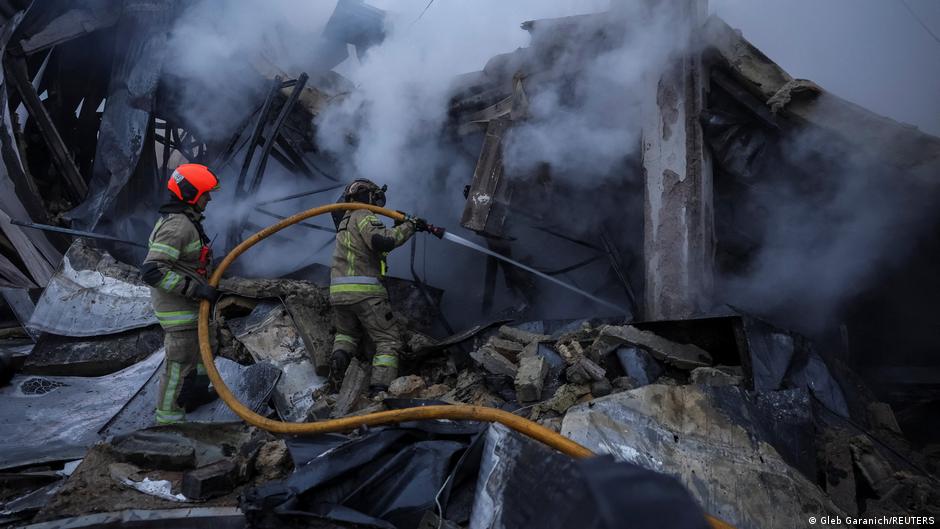
Russian Drone Strike Hits Kharkiv Homes and Industrial Building
Four people, including a four-year-old boy, were injured as fires struck residential properties and a production facility in Kharkiv.
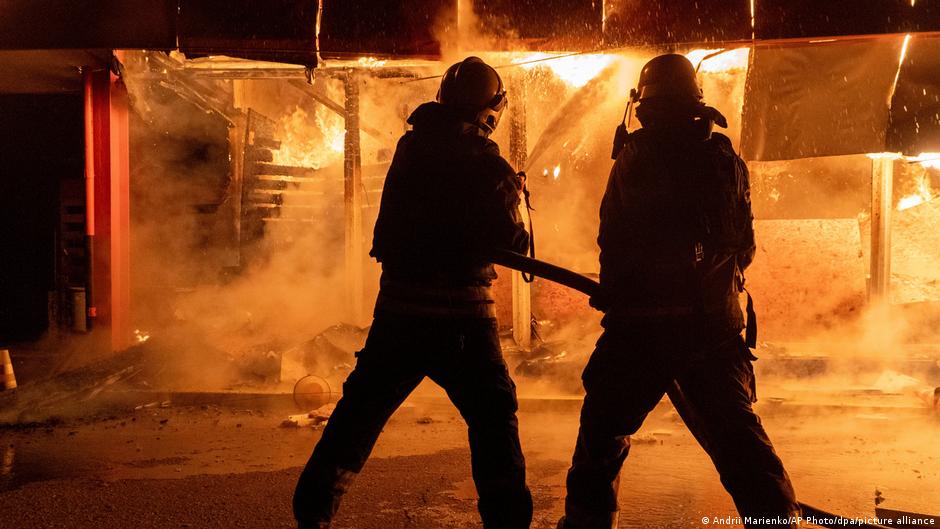
A Russian drone struck a residential building in Kharkiv overnight on Wednesday, October 28, injuring four people, including a four-year-old boy, as the attack also caused a fire at a two-story production building, according to Ukrainian regional and municipal authorities.
The damage in Kharkiv’s Osnovianskyi district extended across residential and industrial property, underscoring the overlapping human and commercial risks facing companies operating in Ukraine’s major urban centers. The affected sites included a two-story production building, a two-story apartment building and a single-story home, Kharkiv Regional Military Administration head Oleh Syniehubov said on Telegram.
Syniehubov later identified the injured as women aged 32 and 65, a 56-year-old man and the four-year-old boy. Three of the four required hospitalization, he said. The authorities did not provide further details about their conditions or identify the production operation affected by the fire.
Industrial and residential exposure converge
The strike illustrates the compressed risk environment confronting executives responsible for personnel, property and operating continuity in Ukraine. In Kharkiv, an industrial asset and nearby homes were affected during the same attack, leaving corporate leaders with decisions that cannot be separated neatly into workplace security and employee welfare.
No estimate of the property damage, production losses or potential business interruption was immediately provided. Authorities also did not say whether the industrial building was operating at the time of the fire, what it produced or how many people worked there. Those unanswered questions are central to any assessment of the attack’s commercial impact.
For management teams and boards, incidents involving both production facilities and housing can carry consequences beyond direct physical damage. Companies must account for whether employees can safely reach work, whether nearby utilities and transport links remain available, and whether damaged residential areas create additional support needs for staff. The latest Kharkiv attack offers no company-specific data, but it demonstrates how quickly a security event can reach multiple parts of an organization’s operating environment.
Kharkiv Mayor Ihor Terekhov separately reported that a Russian unmanned aerial vehicle had hit a residential building. His initial account indicated that people might be trapped inside.
“A hit on an apartment building. According to available information, people are trapped inside,” Terekhov wrote.
The subsequent regional update confirmed the four injuries and three hospitalizations. Officials did not say in the reported statements how many people had been trapped, whether all residents had been accounted for, or how extensively the apartment building was damaged.
Broader threat warnings complicate planning
The Kharkiv strike occurred as Ukraine’s Air Force issued warnings about several forms of aerial attack. It initially warned of a possible ballistic weapons launch from the direction of Bryansk toward Kyiv, then later canceled that threat warning.
At the same time, posts on the Ukrainian Air Force’s Telegram channel said attacks involving jet-powered drones and guided aerial bombs continued toward the Kharkiv and Dnipropetrovsk regions, as well as Kyiv and the surrounding region. The reports point to a threat picture spanning several important population and business centers rather than a single isolated location.
That geographic spread has boardroom implications for companies with facilities, suppliers, customers or employees across Ukraine. A warning that is later lifted may still trigger temporary protective measures, while attacks continuing in several directions can force managers to evaluate multiple sites at once. The source reports did not describe any corporate response, shutdown or evacuation, but the sequence shows the conditions under which such decisions may have to be made.
Executives overseeing Ukrainian operations face a practical distinction between a warning and confirmed physical damage. In Kyiv, the reported ballistic threat was canceled. In Kharkiv, authorities documented fires at industrial and residential buildings and confirmed casualties. Crisis protocols must be capable of responding to both rapidly changing alerts and realized attacks, while boards need reliable reporting that separates preliminary warnings from verified operational consequences.
The immediate priority in Kharkiv remained the people injured and those potentially caught in the apartment building. Yet the fire at the production property adds another layer to the event: the possibility that an attack centered on an urban neighborhood can simultaneously disrupt local economic activity. Until authorities disclose the building’s function and the extent of damage, the full operational effect cannot be measured.
The overnight attack therefore presents two connected tests for decision-makers: protecting employees and residents during an active threat, and determining whether damaged facilities can resume safe operations afterward. With attacks involving drones and guided bombs reported in several directions, corporate contingency planning remains tied directly to the evolving security situation.