Trump Team Weighs Lifting Sanctions on Russian Direct Investment Fund
The review could enable Russian diesel shipments while reopening questions about corporate risk, governance and US policy toward Moscow.
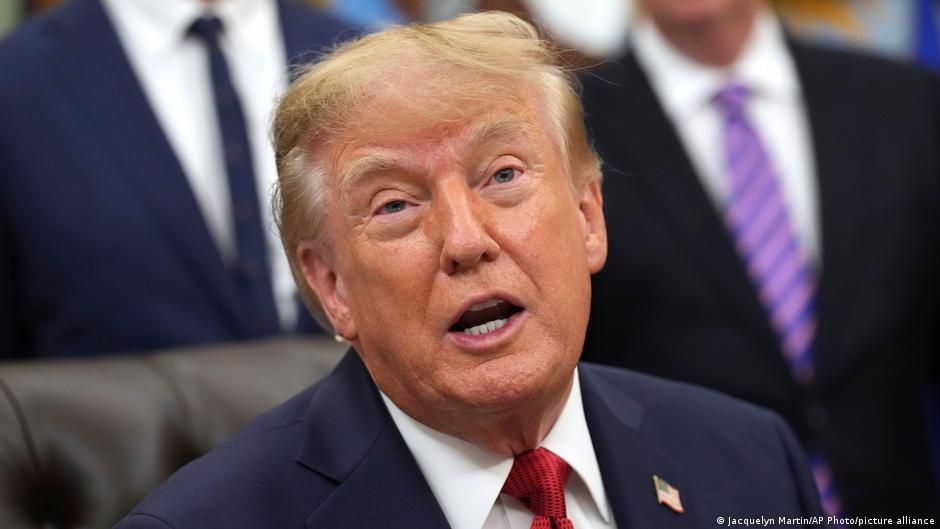
The Trump administration is considering lifting US sanctions on the Russian Direct Investment Fund, a potential policy shift that could allow the sovereign investment vehicle to participate in supplying Russian diesel fuel to the United States, The New York Times reported on Tuesday, October 27.
Citing people familiar with US-Russian negotiations, the newspaper said Moscow is pressing Washington to remove restrictions on the fund, known as RDIF. The request connects sanctions policy directly with a proposed energy arrangement that President Donald Trump has presented as a way to reduce diesel prices in the United States and worldwide.
For American executives, boards and compliance teams, the review carries implications beyond a single fuel transaction. Removing sanctions from RDIF could reopen a channel for Russian-American investment proposals, while forcing companies to reassess counterparty exposure, reputational risk and the possibility that US policy could change again. During President Joseph Biden's administration, US authorities described RDIF as President Vladimir Putin's “slush fund.”
The sanctions review places an energy-supply proposal alongside broader questions about how Washington may recalibrate commercial engagement with Moscow.
Treasury review tests the case for continued restrictions
According to one of the newspaper's sources, the US Treasury Department is reviewing RDIF's application through its standard procedures. Under that process, the Russian fund would have to demonstrate that the grounds on which the sanctions were imposed no longer apply.
The New York Times said the previously unreported consideration of further sanctions relief showed how the Kremlin was using the recent wave of diplomacy surrounding the war in Ukraine to advance an agenda that appeared to have little connection with securing peace.
The procedural framing is important for corporate decision-makers. A formal delisting would not automatically eliminate every legal or political risk associated with transactions involving Russian entities. Companies considering purchases, financing, logistics or joint projects would still need to examine other sanctions, export controls, beneficial ownership issues and contractual protections. Boards would also have to consider whether a policy reversal could survive future political or regulatory changes.
Dmitriev links diplomacy with prospective business deals
RDIF is led by Kirill Dmitriev, a key participant in Russian-American talks, including discussions concerning the war in Ukraine. He has promoted Kremlin proposals for possible joint business projects between Russia and the United States and has met repeatedly with representatives of the current US administration.
That role gives the sanctions question a boardroom dimension: RDIF is not merely an investment institution seeking regulatory relief, but also a vehicle associated with Moscow's attempt to place commercial incentives within the diplomatic relationship. Any renewed access to US counterparties could create opportunities for selected businesses while raising scrutiny from investors, employees and regulators.
Established in 2011 to attract foreign investment into Russia, RDIF has participated in projects including Sputnik V, Russia's vaccine developed during the COVID-19 pandemic. The Biden administration sanctioned the fund four days after Russia's full-scale invasion of Ukraine.
At the time, the Treasury Department said that although RDIF was formally a sovereign wealth fund, it was widely viewed as Putin's slush fund and as a prominent example of the kleptocracy characteristic of Russia's system of government.
Diesel agreement provides the immediate commercial rationale
Trump said on Truth Social on October 9 that he had held “very successful” negotiations with Putin, producing an agreement to supply Russian diesel to the United States and the global market. According to Trump, Russia would immediately deliver more than 300,000 metric tons of diesel to US and global markets, followed by another 500,000 metric tons during November and 1 million metric tons immediately afterward.
Trump also said Moscow could provide an additional 3 million metric tons within a short period, depending on the condition of Russian oil refineries. He argued that Russian energy supplies, together with what he called US “full control” of the Strait of Hormuz, would cause diesel prices to fall rapidly and substantially for Americans and consumers worldwide.
On the same day, the Treasury Department announced that its Office of Foreign Assets Control, acting at the White House's direction, was immediately issuing a temporary general license authorizing Russian diesel supplies to the global market. Putin later formally confirmed both the telephone conversation with Trump and the agreements concerning deliveries of Russian petroleum products to world markets.
The temporary license and the possible removal of RDIF sanctions represent separate but commercially connected decisions. The first enables specified near-term fuel flows; the second could give a Russian state investment fund a more durable role in structuring or supporting trade and prospective ventures.
For US companies, the central strategic question is whether the administration is pursuing a limited intervention to increase diesel supply or building a broader framework for renewed commercial engagement with Russia. Until Treasury completes its review, executives face an unusual combination of potential opportunity and high policy uncertainty—conditions that generally demand enhanced diligence, explicit board oversight and contingency planning before capital is committed.