Russian Missile Strikes on Kyiv Deepen Operational Risks for Business
The attacks killed at least one person in Kyiv and two in Kharkiv, highlighting renewed risks to employees, facilities and corporate continuity plans.
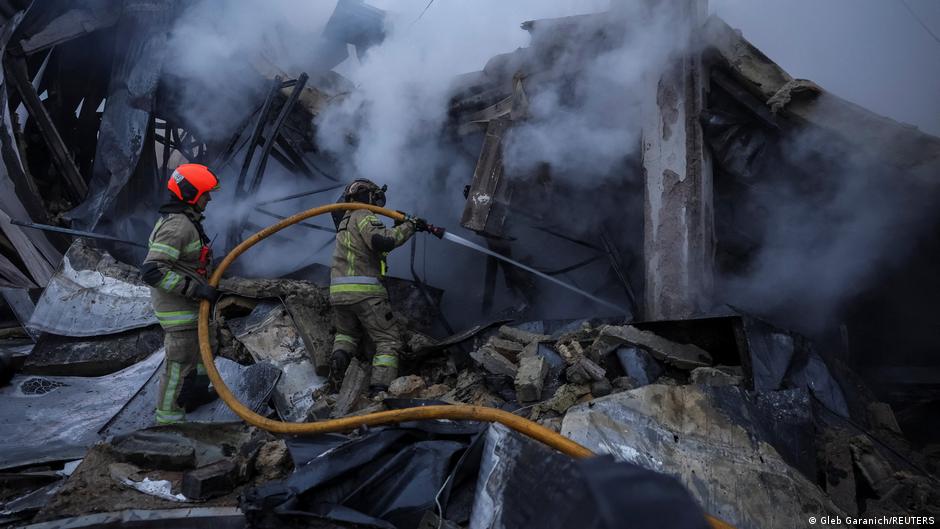
Russian forces launched a series of ballistic missile strikes on Kyiv late Monday, October 26, killing at least one person and injuring no fewer than 10 others, according to city authorities. Nine of the wounded were hospitalized, with three reported to be in serious condition.
The attack, which Ukrainian officials said involved missiles launched from Bryansk, struck several parts of the capital shortly before 11 p.m. local time. The damage affected residential and nonresidential areas, as well as locations near public infrastructure, creating immediate risks for residents and complicating the operating environment for employers, universities, health care providers and other institutions across the city.
For executives responsible for operations in Ukraine, the strikes underscore the need to treat physical security and business continuity as board-level concerns. The reported impact near a metro station, a university dormitory and a medical facility illustrates how attacks can affect the infrastructure that employees and organizations rely on even when a company’s own offices or production sites are not directly hit.
Damage Across Two Kyiv Districts
Kyiv Mayor Vitali Klitschko said Russian attacks affected two districts of the capital. In the Desnianskyi district, a strike was recorded near one of the city’s metro stations and close to a dormitory belonging to a university. The Kyiv City Military Administration separately reported that a residential building in the district had been damaged.
Preliminary information indicated that people might be trapped inside the damaged residential building. The full consequences of the strikes were still being assessed at the time of publication, while the attack remained in progress.
In the Dniprovskyi district, a projectile struck a building located in a nonresidential development area. Windows were also blown out in two departments of a medical institution in the district. Klitschko said neither patients nor medical personnel were injured there.
Nine injured people were hospitalized in Kyiv, and three of them were reported to be in serious condition.
The combination of damage to housing, transit-adjacent areas and institutional facilities presents a broad operational challenge. Companies with staff in Kyiv may need to account not only for direct damage but also for interruptions to commuting, medical access, employee availability and communications. Those considerations can affect decisions about staffing levels, remote work, office use and the geographic distribution of critical functions.
Attacks Continued as Authorities Assessed the Impact
At the time the initial reports were published, attacks on Kyiv were continuing, including with the use of jet-powered drones. That continuing threat meant officials had not yet completed a full assessment of casualties or property damage.
For corporate leaders and boards, an attack that unfolds across multiple phases can make conventional incident-response timelines less reliable. Decisions on reopening facilities, moving personnel or assessing physical assets may have to remain provisional until air-raid threats end and local authorities establish that affected areas can be accessed safely.
The strikes also demonstrate the interconnected nature of urban business risk. Damage to a residential building can prevent employees from reporting to work, while an incident near a metro station can disrupt mobility. Damage at a university can affect students, faculty and institutional operations, and broken windows at a hospital can place additional pressure on essential services even when no patients or staff members are physically harmed.
Fatal Strike Reported in Kharkiv
Russian forces also attacked Kharkiv several hours before the Kyiv strikes. Kharkiv Mayor Ihor Terekhov said two people were killed and four were wounded in shelling of the city’s Novobavarskyi district.
Apartment buildings, private homes and vehicles were damaged in Kharkiv, according to the mayor. The reported destruction adds another layer of risk for companies operating across more than one Ukrainian city, particularly those whose continuity plans depend on shifting people or work between locations during an emergency.
The attacks leave executives facing decisions that extend beyond immediate crisis management. Leadership teams may need to review whether employee-accounting procedures function during late-night strikes, whether backup sites are sufficiently separated and whether managers have clear authority to suspend on-site activity. Boards, in turn, may seek evidence that emergency plans cover infrastructure failures and risks to workers’ homes as well as direct damage to corporate property.
The human toll remained the central consequence: at least one person was killed in Kyiv, at least 10 were injured there and three of the wounded were in serious condition. In Kharkiv, two people were killed and four were injured. With attacks continuing when the first assessments were issued, authorities were still working to establish the complete impact.