Lula Wins Brazil Runoff as Bolsonaro Seeks to Void Election Result
The contested outcome raises fresh questions for corporate leaders navigating Brazil’s economic instability and political transition.
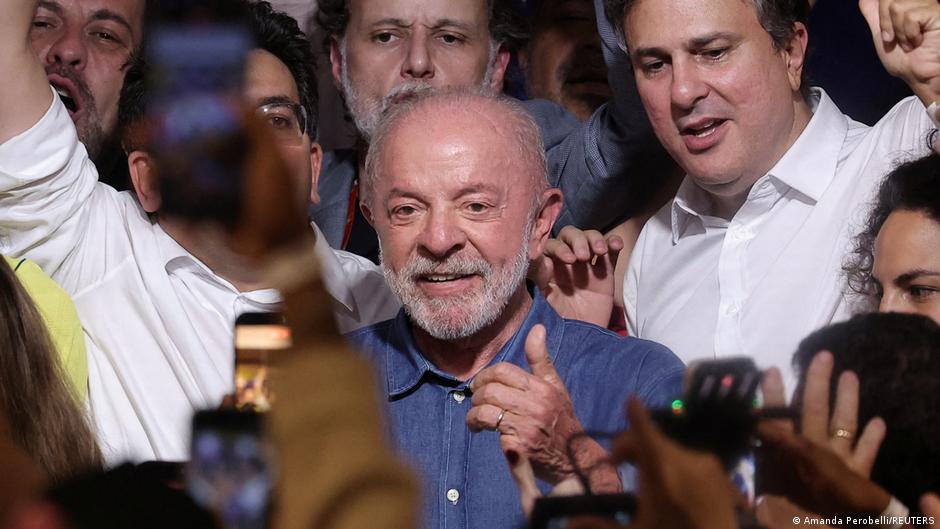
Brazilian President Luiz Inácio Lula da Silva has secured another term in office after winning a closely fought presidential runoff, while his opponent, Senator Flávio Bolsonaro, has refused to concede and called for the result to be annulled.
Official results from the vote held on Sunday, October 25, showed the 80-year-old center-left incumbent receiving 51.8% of ballots. Bolsonaro, a right-wing populist and the son of former far-right President Jair Bolsonaro, won 48.2%.
The result marked the first time in Brazil’s history that a presidential candidate who finished second in the opening round went on to win the election. It will also return Lula to the presidency for a fourth, nonconsecutive term, extending the career of one of Latin America’s most consequential political figures.
For executives and boards with operations or investments in Brazil, Lula’s victory provides an apparent answer to the question of who will lead the country, but Bolsonaro’s challenge introduces uncertainty around the transition. The dispute comes as companies are already contending with economic instability, public concern over living costs and rising crime, and a political environment shaped by corruption scandals and allegations of interference by the United States.
A Narrow Result and a Disputed Extension
Bolsonaro cited the extension of voting hours in demanding that the election be invalidated. Earlier, however, both Lula and Bolsonaro had requested that polling stations remain open longer because public transportation problems and adverse weather conditions were making it difficult for some voters to reach voting locations in parts of Brazil.
Supreme Court Justice Cristiano Zanin ultimately ordered voting to continue for an additional two hours. The decision was issued only three minutes before polling stations had been scheduled to close.
The two-hour extension, approved moments before the planned closing time, has become the central issue in Bolsonaro’s effort to overturn the outcome.
Bolsonaro’s refusal to acknowledge defeat shifts immediate attention from the official margin to Brazil’s institutions and their handling of the challenge. Corporate decision-makers typically rely on political transitions to clarify the direction of government, but a contested result can complicate near-term planning even when official figures identify a winner.
The source account does not specify what formal legal steps Bolsonaro intends to pursue beyond calling for annulment. Nor does it indicate that the official result has been suspended. Lula therefore remains the declared victor on the reported count, with a 3.6-percentage-point advantage.
Business Leaders Face a Complicated Political Backdrop
Lula’s reelection campaign unfolded amid voter anxiety about the cost of living and increasing crime. Those concerns made his path to another term difficult and remain significant for the administration as it prepares to govern. They also have direct implications for business leaders assessing consumer demand, labor conditions, operating security and the broader outlook for Brazil’s economy.
The election campaign was also conducted against a backdrop of corruption controversies and economic volatility. For boards overseeing Brazilian exposure, the close result underscores the depth of political division and the limited room the next administration may have to address public priorities without resistance.
Companies will now be watching how Lula translates his electoral mandate into executive decisions and whether the challenge from Bolsonaro affects the timing or credibility of the transition. The official result gives Lula a majority, but the relatively narrow split between the candidates indicates that nearly half of participating voters backed a sharply different political course.
Allegations of U.S. interference added another layer of tension to the campaign. The source provides no further details about those accusations, but their presence in the political debate could influence how Brazil’s next government frames its foreign relationships and how multinational companies interpret the country’s policy environment.
Celebrations Contrast With Institutional Uncertainty
Public reaction to Lula’s victory was immediate. Fireworks and the sound of vuvuzelas filled Rio de Janeiro after the results were reported. In São Paulo, thousands of people dressed in red, the color associated with Lula’s Workers’ Party, took to the streets to celebrate.
Those scenes reflected the enthusiasm of Lula’s supporters, but they stood in contrast to Bolsonaro’s rejection of the outcome. The divergence leaves Brazil with both a declared winner and an opponent seeking to erase the vote on procedural grounds.
For the corporate sector, the central boardroom issue is no longer simply which candidate prevailed. It is whether the post-election dispute will be resolved clearly enough to allow management teams to make decisions with confidence. Lula’s fourth presidency is set to begin under pressure from household affordability concerns, crime, corruption controversies and an unstable economy. Bolsonaro’s annulment demand adds an immediate institutional test before the returning president can fully turn to that governing agenda.