Bulgaria Presidential Vote Heads to Runoff With Business Risks in Focus
A low-turnout first round sets up a November 1 contest shaped by Ukraine policy, institutional authority and corporate uncertainty.
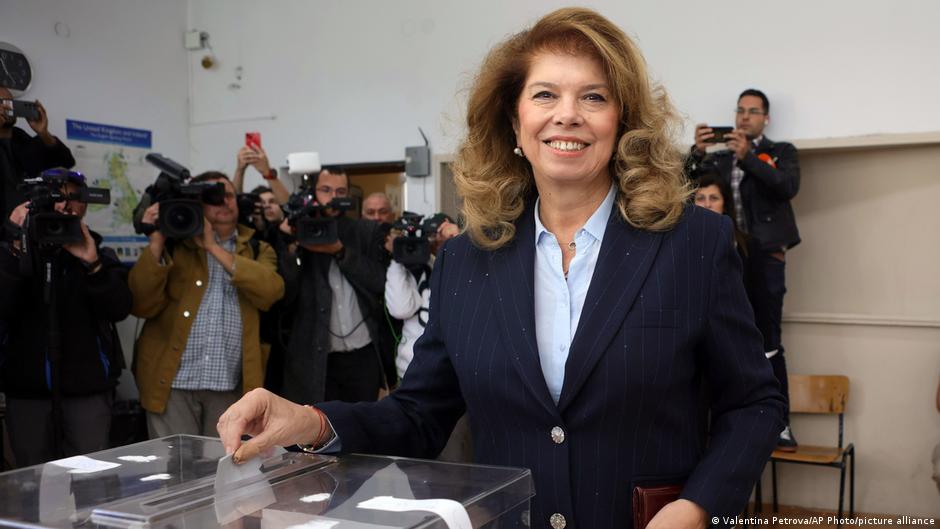
Bulgaria’s presidential election is heading to a second round after no candidate secured the required absolute majority in the first ballot, setting up a contest with implications for corporate planning, foreign investment and the country’s strategic posture near the war in Ukraine.
With 95.3% of ballots processed, incumbent President Iliyana Yotova received 34.6% of the vote, according to data from Bulgaria’s Central Election Commission. Pro-Western former prime minister Andrey Gyurov placed second with 32%, leaving the two leading candidates separated by only 2.6 percentage points.
Voter turnout was just 22.2%, far below the level of more than 50% required for the election to be settled. A runoff is expected on November 1. The weak participation rate adds another variable for political leaders, corporate executives and investors assessing the likely direction of Bulgarian policy: the second-round result may depend less on broad shifts in public opinion than on which campaign can mobilize previously inactive voters.
Strategic uncertainty reaches the boardroom
For businesses operating in Bulgaria, the election matters despite the presidency’s formally limited powers. The office represents the country internationally, subject to certain exceptions, and the president serves as commander in chief. The president also signs decrees appointing the prosecutor general and the heads of the highest courts, appoints an acting prime minister from a constitutionally defined group of eligible officials and can veto legislation adopted by parliament.
Those authorities give the office influence over institutional stability, judicial leadership and periods of government transition. Each can affect the operating environment for companies, including perceptions of regulatory predictability, governance standards and Bulgaria’s approach to international partnerships. The veto power also gives the president a role in legislative disputes that may carry consequences for corporate strategy, even though parliament remains the primary lawmaking institution.
The approaching runoff has acquired additional foreign-policy significance because Bulgaria is close to the theater of military operations in Ukraine. In October alone, four merchant ships off Bulgaria’s Black Sea coast were reportedly struck by drones. A Starlink station near Sofia was also damaged in an arson attack.
Yotova and Bulgaria’s government, led by Rumen Radev, responded cautiously to the incidents. They did not offer an unambiguous assessment or identify those responsible. That restraint became part of the election campaign and raises questions for businesses that depend on Black Sea transportation, communications infrastructure and stable regional security conditions.
The runoff presents voters with a choice between two different approaches to Ukraine, while companies must evaluate how either outcome could affect Bulgaria’s external alignment and risk profile.
Ukraine policy separates the finalists
The early stage of the presidential campaign featured few rallies, no televised debates and numerous personal attacks directed at the two principal candidates. In the final weeks, however, their differences over support for Ukraine moved to the center of the contest.
Yotova favors a diplomatic conclusion to the war. She also sought to assure voters that Bulgarian troops would not be sent to Ukraine, although such a deployment had not been the subject of broad public debate. Her position signals a more restrained approach to direct military involvement and may appeal to voters concerned about escalation.
Gyurov has previously expressed support for Ukraine. While serving as head of government, he signed a security cooperation agreement with Kyiv. His record places him more clearly in the pro-Western camp and indicates a willingness to deepen Bulgaria’s security relationship with Ukraine.
For corporate leaders, the distinction is relevant beyond defense policy. Bulgaria’s position toward Ukraine can influence relationships with Western partners, the management of regional security threats and perceptions of political risk. The recent incidents involving merchant vessels and the damaged Starlink station underscore how military and hybrid-security concerns can intersect with commercial shipping, technology systems and infrastructure protection.
Turnout becomes the decisive operational challenge
The close first-round result gives both campaigns a narrow strategic objective: expand participation without alienating existing supporters. With Yotova at 34.6% and Gyurov at 32%, neither enters the runoff with a commanding advantage. Their organizations will need to convert foreign-policy differences into a compelling reason for voters to return to the polls.
The low turnout also limits the strength of any claim to a broad mandate. Even the eventual winner may need to navigate a politically fragmented environment while using the presidency’s selective but consequential powers. For boards and executives, that suggests continued attention to institutional appointments, potential legislative vetoes and the possibility of an acting-premier appointment during a future government transition.
The November 1 runoff is therefore more than a ceremonial contest. It will determine who represents Bulgaria internationally, commands its armed forces and exercises influence over senior judicial appointments and legislation. Against a backdrop of war-related incidents near Bulgarian territory, the outcome will also provide a signal about how the country intends to balance diplomatic caution, Western security cooperation and domestic resistance to deeper involvement in Ukraine.