Sanctioned Tanker’s Distress Call Tests Russia’s Shadow Fleet Model
The MYRA incident exposes the operational and governance risks surrounding opaque shipping networks used to move sanctioned oil.
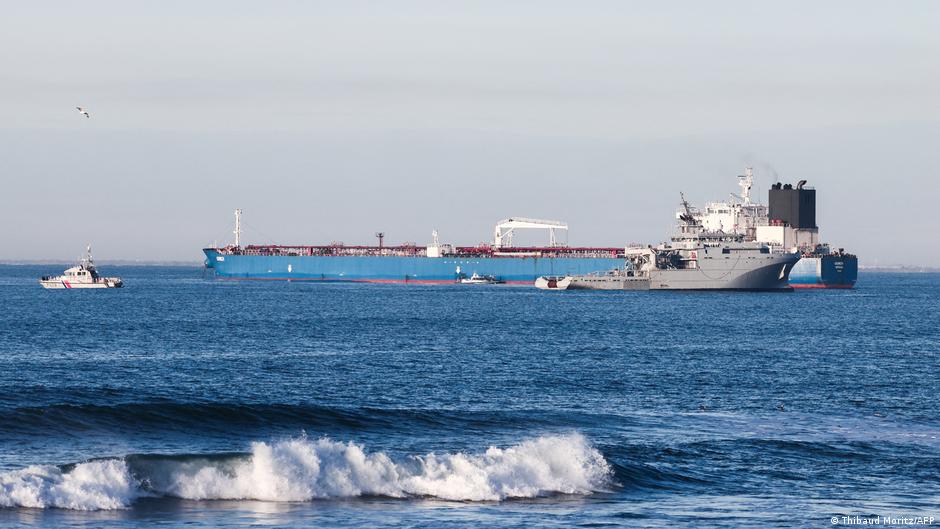
A US-, European Union- and UK-sanctioned oil tanker linked by Ukrainian intelligence to Russia’s so-called shadow fleet issued a distress signal in the North Atlantic, highlighting the operational risks surrounding the opaque corporate networks that transport sanctioned energy.
The tanker MYRA sent the alert while sailing off Ireland’s northwestern coast, the maritime monitoring project SeaNews reported on Saturday, October 24. The signal was transmitted through the Inmarsat-C satellite communications system, and the UK Coastguard is coordinating the response.
Despite the distress call and extreme weather, the 75,000-ton vessel continued moving at about 9 knots, or approximately 17 kilometers per hour, according to SeaNews. The tanker had departed from Russia’s Ust-Luga port. At the time of the alert, waves in the area reportedly reached 8.8 meters and wind gusts were about 130 kilometers per hour. The vessel was estimated to be approximately 348 kilometers from the coast.
Operational exposure behind opaque ownership structures
The incident carries implications beyond the immediate maritime rescue effort. Russia’s shadow-fleet strategy relies on vessels, operators and corporate structures that Ukrainian and Western authorities say are used to maintain oil exports despite sanctions. A casualty involving one of these ships can bring renewed attention to ownership, management, insurance, maintenance and emergency-response arrangements that may otherwise remain difficult for regulators and commercial counterparties to assess.
According to War & Sanctions, a database maintained by the Main Intelligence Directorate of Ukraine’s Defense Ministry, MYRA has been used to export Russian oil and petroleum products to third countries while circumventing sanctions. The Ukrainian agency links the tanker to Fractal Marine DMCC, a company registered in the United Arab Emirates that it describes as one of the leading operators of Russia’s shadow fleet.
The distress call places the commercial resilience of sanctions-evading shipping networks alongside their maritime safety and governance risks.
Ukrainian intelligence says MYRA has repeatedly called at the Russian ports of Ust-Luga and Primorsk. It has also visited ports in Senegal, Turkey, Brazil, Estonia and Denmark, illustrating the broad geographic reach attributed to the vessel’s trading activity.
The War & Sanctions database records a widening sequence of restrictions against MYRA. The United States added the vessel to its sanctions list on July 30, 2025, followed by the European Union on October 24, 2025. Switzerland and Ukraine imposed sanctions on December 13, 2025. The United Kingdom listed the tanker on February 24, 2026, and Canada followed on March 25, 2026.
Iran connection raises wider compliance questions
Ukraine’s intelligence service further alleges that MYRA forms part of a shipping network controlled by Mohammad Hossein Shamkhani. He is the son of Ali Shamkhani, the former secretary of Iran’s Supreme National Security Council and an adviser to the country’s supreme leader. Ali Shamkhani was killed in a joint US-Israeli operation in February 2026.
According to the Ukrainian account, the younger Shamkhani controls a network of tankers, operators and shell companies involved in money laundering and in transporting Russian and Iranian oil, including cargoes destined for China. These claims have not been presented in the source material as findings by a court, and they remain allegations by Ukrainian intelligence.
For shipping executives, commodity traders, banks and corporate boards, the episode underscores the challenge of evaluating counterparties when vessels are connected to layered international structures. The reported involvement of a UAE-registered operator, repeated Russian port calls and trading links spanning several continents create potential exposure across multiple sanctions and compliance regimes.
The distress signal also illustrates how a single operational emergency can become a corporate-governance event. Boards overseeing maritime, energy or trade-finance businesses may face questions about beneficial-ownership checks, vessel-screening procedures, insurance verification and contingency planning when dealing with ships that have changed operators or appear on multiple national sanctions lists.
MYRA’s continued movement after issuing the alert leaves the vessel’s immediate condition unclear from the available report. The UK Coastguard’s coordination of the operation places the response in the hands of a Western maritime authority even as the tanker remains subject to restrictions imposed by the United Kingdom and several allied jurisdictions.
Whatever the outcome of the emergency, the episode offers a visible test of the shadow fleet’s operating model. Networks designed to reduce transparency and preserve sanctioned trade can disperse corporate responsibility, but severe weather and maritime distress force operators, authorities and service providers into direct contact. That dynamic can expose the practical limits of structures built to keep ownership, financing and commercial control out of view.