US-Brokered Oleshky Truce Puts Humanitarian Plan to an Operational Test
The limited ceasefire creates a tightly managed evacuation window while exposing the parties and US mediators to major execution risks.
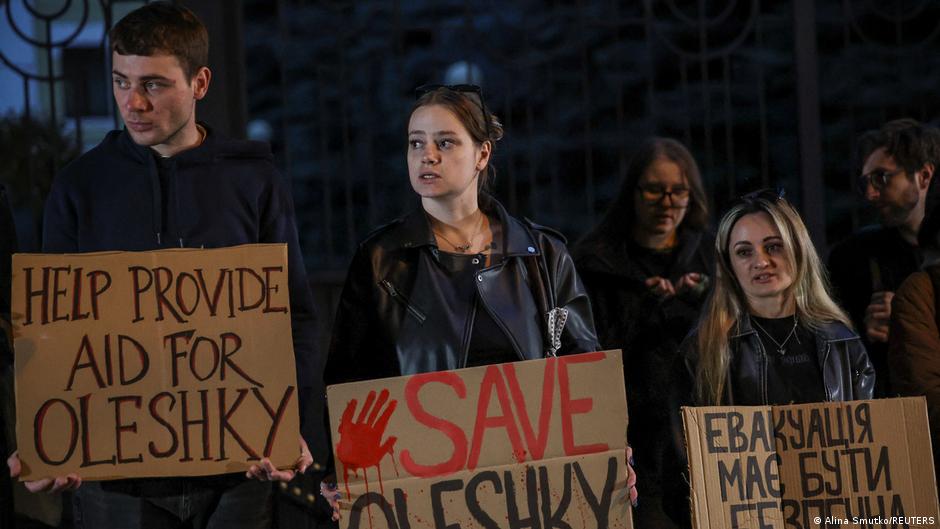
A bilateral ceasefire took effect at 3 a.m. Kyiv time on Oct. 27 around Oleshky, a Russian-occupied city in Ukraine’s Kherson region, creating a temporary operating window for humanitarian aid and preparations to evacuate civilians. Ukraine’s General Staff and Russia’s Defense Ministry both confirmed the arrangement, an unusual instance of publicly aligned messaging between the warring parties.
Russia’s Defense Ministry said its armed forces had stopped firing on the Kherson front from 4 a.m. Moscow time and introduced a “regime of silence” in preparation for the humanitarian operation. Ukraine’s military said its ceasefire applied only within a designated area and exclusively supported the delivery of assistance to residents and preparations for their unrestricted departure from Oleshky, known in Russian as Alyoshki.
“The priority for Ukraine is to save the trapped residents and help them reach territory under its control,” Ukrainian President Volodymyr Zelensky said.
For Washington, the agreement is a test of whether narrowly defined humanitarian diplomacy can be converted into a functioning field operation. The White House announced the temporary truce on Oct. 23, saying Moscow and Kyiv would stop firing to permit aid deliveries and prepare the evacuation of civilians through a specially organized safe corridor. The US administration said the team of first lady Melania Trump played a central role in securing the arrangement.
A tightly sequenced operating plan
The plan separates the ceasefire’s opening from the launch of the humanitarian mission. Zelensky said in an interview with TSN.Tyzhden presenter Alla Mazur that the “regime of silence” would begin on Oct. 27, while the humanitarian mission would become operational on Oct. 29. Under the agreement, Russia is expected to clear mines from roads, while Ukraine is preparing to evacuate residents who have been unable to leave.
That sequence places responsibility for execution across organizations that remain active military adversaries. Road clearance, aid distribution, household visits, transportation and documentation must operate without an ordinary joint command structure. The arrangement therefore resembles a high-risk, time-sensitive project in which each side controls a critical dependency and any breakdown could stop the entire process.
Melania Trump said civilian representatives of Russia and Ukraine would jointly visit Oleshky residents in their homes to determine what assistance they require. People choosing to evacuate would receive support and transportation to their preferred destination. She acknowledged that some residents may choose Russia and others Ukraine.
Personnel from an “independent American media organization” will accompany the representatives and document the visits, according to the first lady. Their presence adds an external monitoring element, but it also raises the reputational stakes. Images and accounts from the operation could influence international perceptions of whether the parties honored the agreement and whether civilians were offered genuine freedom of choice.
Security and reputational exposure
Zelensky warned that Russian forces could take steps intended to discredit the process. He said Moscow might try to persuade residents to move to the Russian side and use the evacuation to produce propaganda material. Ukraine’s General Staff, meanwhile, pledged to do everything possible to assist Oleshky residents and implement the decisions needed to protect and rescue Ukrainian citizens.
The competing narratives show why the mission’s governance matters as much as its logistics. Washington’s mediation has produced a defined operational framework, but the credibility of that framework depends on consistent compliance, transparent observation and the safe movement of residents. A successful evacuation could demonstrate that limited, issue-specific agreements remain possible. Failure or manipulation could damage confidence in similar arrangements and expose the American intermediaries to criticism.
Oleshky sits on the Russian-occupied eastern bank of the Dnipro River, only nine kilometers from the Ukrainian-controlled regional capital, Kherson. About 24,000 people lived there before Russia’s full-scale war against Ukraine. Current estimates put the remaining population at 1,700 to 2,000, including at least several dozen children.
The city was almost entirely flooded after Russia destroyed the Kakhovka hydroelectric dam in June 2023. The flooding compounded damage to infrastructure and access to drinking water. Oleshky has also been under blockade for several months, while the surrounding territory is heavily mined, making departure in any direction potentially deadly.
Ukrainian forces previously reported delivering food and medicine with heavy drones, while Moscow also said it had supplied the city. Pope Leo XIV was among those who appealed to the Russian president for a ceasefire in Oleshky. The temporary truce now shifts attention from diplomatic announcements to measurable delivery: mines must be cleared, assistance must reach households, transportation must be available and civilians must be allowed to choose where they go.