U.S.-Denmark Greenland Deal Signals New Arctic Security Strategy
Trump says Washington has secured an open-ended role in Greenland’s security, though Copenhagen and Nuuk described the pact as still expected.
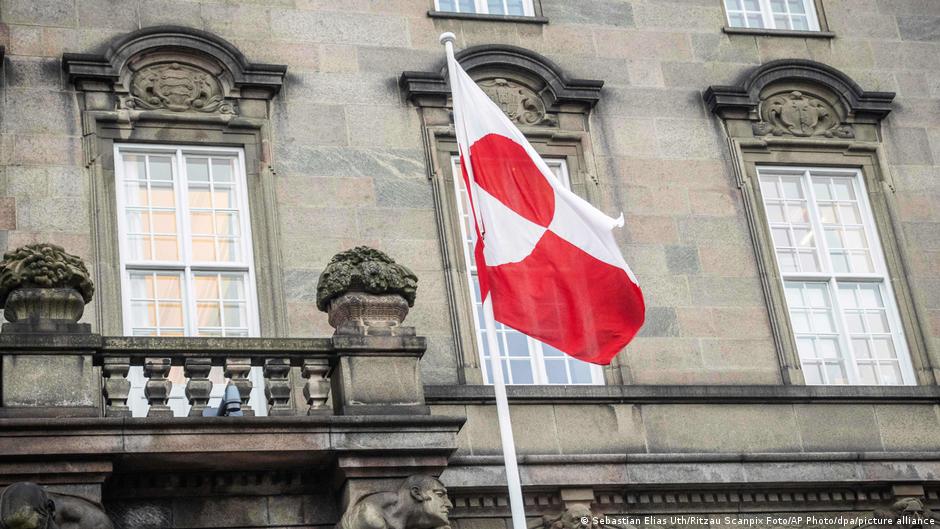
President Donald Trump said the United States has reached an agreement with Denmark and Greenland to expand the American military presence on the island, framing the arrangement as a long-sought strategic breakthrough in the Arctic. The announcement, made Friday evening, September 18, on Truth Social, was quickly welcomed by officials in Copenhagen and Nuuk, though their own statement described the arrangement as an expected agreement rather than a completed one.
Trump wrote that the accord would give the United States “permanent control over security and all other needs in Greenland,” language that points to a sweeping U.S. role in a territory that remains part of the Kingdom of Denmark but has its own autonomous government. According to Trump, Washington received an indefinite right to “do everything necessary in Greenland to ensure and protect the security” of both the island and the United States.
The president also said that adversaries of the United States would be prevented from building military bases in Greenland or making “sensitive investments” in the Danish autonomous region without U.S. approval. He asserted that the deal would “cost nothing” for the United States, an element that his administration is likely to emphasize as it sells the arrangement to domestic audiences focused on federal spending and strategic return.
Boardroom stakes in the Arctic
For American business leaders and investors, the announcement carries implications beyond the military footprint itself. Greenland occupies a critical position between North America and Europe, and its growing relevance has been shaped by Arctic shipping routes, North Atlantic security concerns and competition over minerals. Trump has long linked the island to U.S. security, while officials close to him have repeatedly noted Greenland’s wealth in rare earth resources.
That combination of defense strategy and resource potential makes the emerging framework significant for corporate planning. If the U.S. role described by Trump is formalized, companies tied to defense infrastructure, logistics, Arctic communications, port services and mineral supply chains could see Greenland move higher on strategic maps. At the same time, any arrangement that gives Washington a gatekeeping role over “sensitive investments” would introduce a new layer of political scrutiny for foreign capital entering the region.
Trump said the United States would immediately begin expanding its military presence in several parts of Greenland. He praised himself for securing an agreement that, in his telling, predecessors had been unable to conclude for 100 years, adding that its results would be “highly appreciated by the American people.”
“The agreement ensures and strengthens the security of Greenland, the Kingdom of Denmark, the United States and the Western alliance,” Greenland Prime Minister Jens-Frederik Nielsen said.
Danish Prime Minister Mette Frederiksen said the understandings would benefit NATO by strengthening “our common security in the Arctic and in the North Atlantic region.” Copenhagen and Nuuk also stressed that the arrangement recognizes Denmark’s “sovereignty and territorial integrity” and “the right of the people of Greenland to self-determination.”
That language appears designed to address one of the most sensitive governance issues surrounding any U.S. role in Greenland: how to expand American security capacity without suggesting a transfer of sovereignty or overriding Greenlandic political rights. For executives and boards assessing the region, that distinction matters. A security arrangement that preserves Danish sovereignty and Greenlandic self-determination would carry different legal and reputational risks than a deal perceived as coercive or extractive.
An agreement, or an agreement still pending?
The clearest uncertainty is procedural. While Trump presented the matter as a concluded deal, the statement issued by Nuuk and Copenhagen was titled as a press release about an “expected agreement” with the United States. That wording may indicate that the underlying documents have not yet been signed.
The distinction is not cosmetic. During Trump’s presidency, negotiations between Washington and other countries have repeatedly collapsed at the last moment, followed by accusations that the White House tried to change deal terms at the “last minute.” Until the documents are signed, the operational details, legal authority and implementation timeline remain open questions.
Secretary of State Marco Rubio, in comments to Fox News Digital, called the Greenland deal a “huge victory” for the United States and Americans. He said the agreement “forever guarantees U.S. security interests in the Arctic at no cost to American taxpayers.” Rubio also suggested the deal was made possible by Denmark and Greenland’s recognition of their own defense limitations.
“Denmark and Greenland understand that they do not have the necessary financial resources to defend Greenland in the event of an attack or threat. The United States has the necessary resources for this,” Rubio was quoted as saying by Fox News.
For Washington, the prospective agreement could mark the end of years of Trump’s demands for greater control over Greenland, an island located off the coast of North America but governed within the Danish realm. During his first term, Trump said he wanted to buy Greenland. After returning to the White House, he increased pressure on Denmark and its European allies, even threatening them with large customs tariffs.
The current arrangement, if finalized, would give the administration a way to claim strategic control without a formal purchase. That may be the politically useful compromise: military access and investment oversight for Washington, continued sovereignty language for Copenhagen, and explicit recognition of Greenland’s place in international cooperation for Nuuk. For corporate decision-makers, the key question now is whether the deal becomes a signed framework with enforceable rules or remains another high-profile announcement awaiting the fine print.