Canada Army Training Fire Kills Four, Raising Command Oversight Questions
The decision to continue an exercise as a wildfire approached is set to intensify scrutiny of military risk controls and leadership accountability.
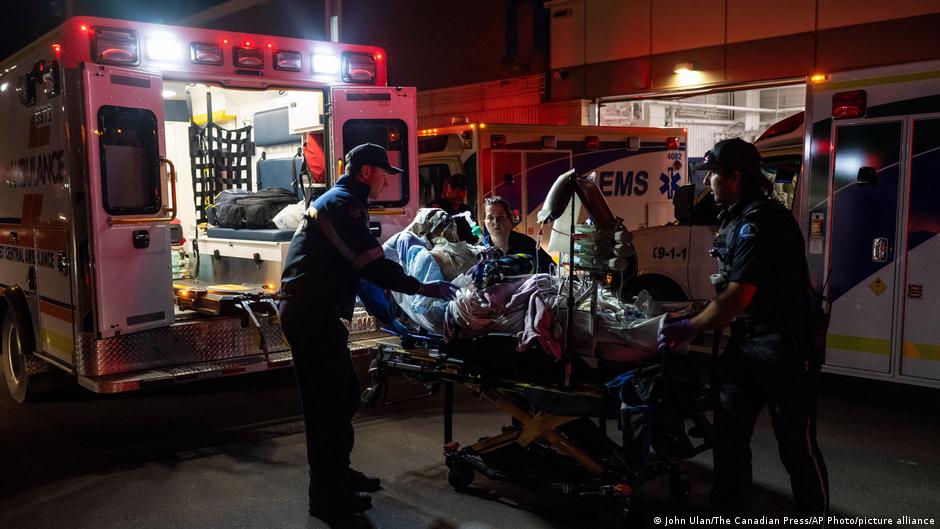
At least four Canadian Army service members were killed and dozens were injured after a wildfire swept toward troops participating in an exercise at Canadian Forces Base Wainwright in Alberta, placing an immediate focus on the command decisions and risk-management procedures that preceded the disaster.
Prime Minister Mark Carney confirmed the deaths at a news conference in Ottawa on Sunday, October 18. The families of those killed had been notified, he said. Nineteen people injured in the fire were in critical condition, while approximately 20 others sustained less severe injuries, according to authorities.
“It is with profound sorrow that I must confirm that, at this time, four service members have died and their families have been notified,” Carney said. “Dozens of others suffered serious injuries. This is one of the worst tragedies the Canadian Armed Forces have faced on Canadian soil in peacetime.”
The wildfire began during the afternoon of October 18. Military leadership decided not to halt the exercise, according to the account provided by authorities. Strong winds subsequently drove the flames rapidly across the prairie toward the soldiers. Generals said the fire covered one kilometer in 36 seconds.
Command decisions move to the center of the response
For senior military leaders and civilian officials, the central governance issue is likely to be how the decision to continue training was made as the wildfire developed. The known facts do not establish why commanders chose to proceed, what information was available to them at the time, or whether established emergency thresholds were reached. Those unanswered questions will nevertheless shape scrutiny of the Army’s operational judgment.
The episode presents a leadership challenge familiar to executives overseeing hazardous operations: determining when mission objectives must yield to rapidly changing safety conditions. In military training, commanders must prepare personnel for demanding environments, but they also remain responsible for assessing risks that can move faster than standard reporting and approval processes.
The reported speed of the flames illustrates the severity of that problem. A fire advancing one kilometer in 36 seconds leaves little time for evacuation once troops are directly threatened. That timeline is likely to make the earlier stages of the incident especially important, including how weather conditions, fire behavior and the location of personnel were evaluated before the situation became acute.
Any formal examination would need to distinguish between a reasonable decision overwhelmed by an extraordinary shift in conditions and a preventable failure of planning, communication or escalation. The available account does not resolve that question. It does, however, establish that the exercise continued after the wildfire had begun and that strong winds later caused the fire to spread quickly toward the soldiers.
Institutional consequences may extend beyond the base
The immediate priorities are the treatment of the wounded, support for the families of those killed and a full accounting of personnel affected by the fire. With 19 people reported in critical condition, the human consequences could continue to develop.
Beyond the emergency response, the scale of the casualties is likely to test confidence in the Canadian Armed Forces’ internal controls. Carney’s description of the incident as one of the country’s worst peacetime military tragedies gives it national significance and raises the stakes for transparent explanations from both uniformed leadership and the government.
From a corporate-governance perspective, the military chain of command functions differently from a company board, but the oversight questions are comparable. Leaders must establish who held decision authority, whether warnings reached the appropriate level, how risks were documented and whether personnel had workable evacuation options. Senior officials will also need to consider whether existing policies adequately address fast-moving wildfires during field exercises.
The disaster could prompt a broader review of training continuity rules at Wainwright and elsewhere, particularly when environmental threats emerge during live operations. Such a review would not require assuming misconduct. Its purpose would be to determine whether commanders had sufficiently clear criteria for suspending activity and whether those criteria reflected the speed at which prairie fires can intensify.
The reputational implications are also substantial. Military institutions depend on public trust and on service members’ confidence that training risks are necessary, understood and competently managed. When an exercise produces mass casualties in peacetime, senior leaders face pressure to demonstrate both accountability for the specific event and readiness to correct any systemic weakness it reveals.
For the government, the response will require coordination between political leadership and the armed forces without prejudging the conduct of individual commanders. The facts released so far point to a catastrophic collision between an ongoing exercise and an accelerating wildfire. The unresolved boardroom-level question is whether the institution’s decision systems recognized the danger early enough—and, if they did, why training was not stopped before the fire reached the troops.