China Warns U.S. Against Space War Preparations After Weapons Disclosure
Beijing’s response to a U.S. Space Force statement highlights how orbital capabilities are becoming a sharper factor in defense strategy.
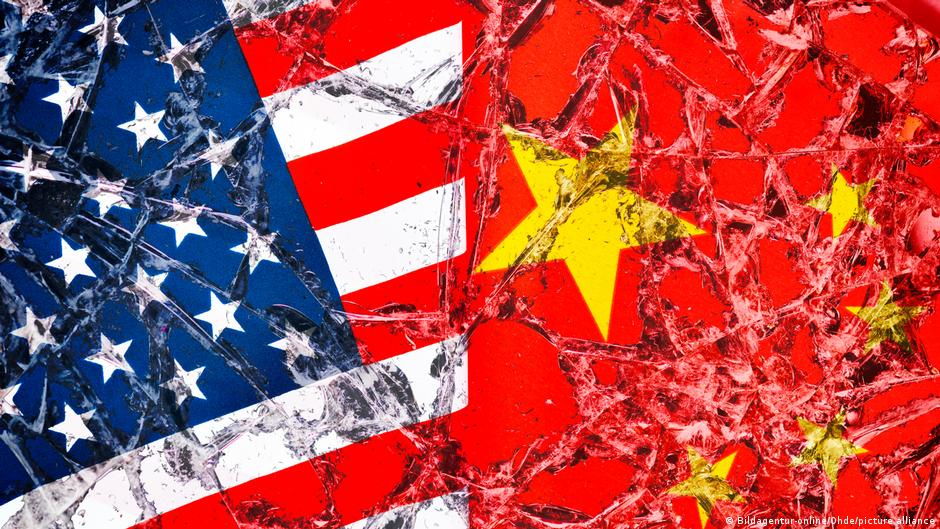
China has urged the United States to stop preparing for potential warfare in space after Washington publicly confirmed for the first time that it has weapons systems deployed in orbit with both defensive and offensive potential.
The statement from Beijing followed comments by U.S. Air Force Secretary Troy Meink, who said on September 14 that the United States has space control assets located in orbit. Those assets, operated by the U.S. Space Force, are capable of protecting a joint fighting force from hostile actions, he said, without providing details about the weapons themselves.
For defense executives, satellite operators and policymakers, the exchange marks a significant moment in the accelerating militarization of space. What was once treated largely as a domain for communications, surveillance, navigation and scientific exploration is increasingly being described by governments as a contested operational environment with direct implications for future conflicts.
“We urge the American side to stop building up military capabilities and preparing for war in space,” Chinese Foreign Ministry spokesperson Guo Jiakun said at a briefing.
Boardroom Stakes In Orbit
The Chinese Foreign Ministry said on Tuesday, September 15, that countries should avoid the militarization of space, the transformation of space into a battlefield and an arms race in outer space. The warning was aimed directly at the United States after the U.S. Space Force statement referred to threats in space from both China and Russia.
The business implications are substantial. Modern defense contractors, aerospace manufacturers, satellite operators and communications companies are increasingly operating in a market where national security demand is shaping technology road maps. Space capabilities are not only a matter of military planning; they affect corporate capital allocation, research priorities, supply chains and risk management for companies tied to launch systems, sensors, secure communications and satellite resilience.
The U.S. Space Force statement said space control includes capabilities necessary to ensure control and protection of space and that such capabilities can be used for both offensive and defensive purposes. It also referred to kinetic and non-kinetic means, indicating a range of possible systems without identifying specific weapons or platforms.
That language matters. For corporate boards and investors in the defense and aerospace sectors, the distinction between defensive support and offensive capability can influence compliance exposure, export-control questions, procurement opportunities and reputational risk. Companies supplying components or services to national space programs may face closer scrutiny as space systems become more explicitly connected to warfighting doctrines.
China And Russia Cited As Threats
The U.S. statement specifically mentioned China and Russia. It said China is developing and operating capabilities for actions in space and counterspace defense systems as part of its military modernization strategy. Russia, the statement said, views space as a theater of military operations and assumes that dominance in space will become a decisive factor in future conflicts.
That framing reflects a broader shift in U.S. strategic planning. During his first presidential term, Donald Trump established the United States Space Force in 2019 as a separate branch of the armed forces, citing potential threats from Russia and China. The move created an institutional structure for space-centered military planning and procurement, and it has since contributed to a clearer defense market around orbital security, surveillance and resilience.
For American business leaders in the sector, the confirmation of orbital weapons systems may be read less as a surprise than as an official signal. Public acknowledgment can alter procurement visibility, reinforce congressional attention and create a clearer demand environment for technologies that help protect satellites and preserve operational continuity in space. It can also increase pressure on companies to demonstrate that their systems can withstand jamming, cyberattacks, physical interference and other threats.
Historically, the greatest concern around weapons in space centered on the possibility of nuclear arms being deployed beyond Earth. The 1967 Outer Space Treaty prohibits such placement. The United States, Russia and China are among the parties to the treaty, which calls for outer space exploration to be conducted exclusively for peaceful purposes. However, the treaty does not apply to conventional weapons placed on satellites or spacecraft.
That legal gap is now becoming strategically important. As military dependence on satellites deepens, governments are studying options that fall outside the treaty’s nuclear prohibition. The risks are no longer limited to spectacular weapons scenarios. Interference with satellites, hacking and jamming have become increasingly important forms of action in the current environment.
Russia, in particular, is suspected of developing weapons against Starlink satellites used by the Ukrainian military. Russia, the United States, China and India are also studying capabilities outside the treaty framework, including strikes on adversaries’ satellites that play important roles in military communications, observation and navigation, according to AFP.
For boards overseeing companies in satellite communications, launch services, cybersecurity and defense electronics, the message is direct: space is no longer merely an enabling layer for terrestrial business and military activity. It is becoming a strategic arena in its own right, with regulatory, operational and geopolitical risks converging. Beijing’s warning to Washington underscores that orbital assets are now part of the executive agenda, not just the military one.