Memorial Campaign Expands Abroad as Russia Restricts Public Commemorations
The Return of the Names initiative reached 101 cities worldwide as decentralized organizers adapted to tighter restrictions in Russia.
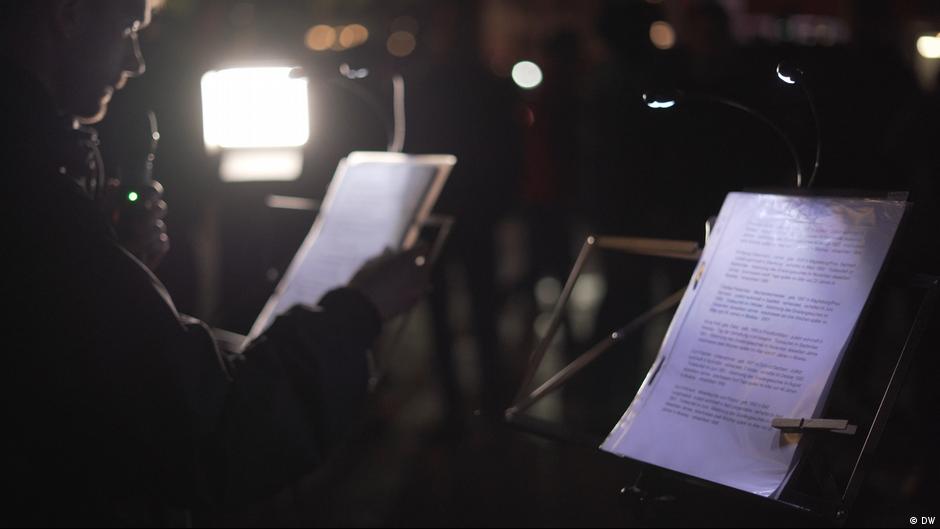
The annual Return of the Names campaign commemorating victims of Stalin-era repression was held across multiple countries on Thursday, Oct. 29, ahead of Russia’s Day of Remembrance for Victims of Political Repression. The event’s website listed 101 participating cities where commemorations took place either that day or earlier.
The international footprint illustrates how a civic initiative can survive the elimination of its founding institution by shifting toward a decentralized operating model. International Memorial first organized the campaign in 2007, but Russian authorities ordered the organization’s liquidation in 2021. Public events in Russia have not been approved since 2020, initially under measures presented as necessary to combat the coronavirus pandemic.
For executives, boards and institutions operating across jurisdictions, the campaign’s evolution offers a case study in organizational continuity under political and regulatory pressure. With its original institutional center removed, Return of the Names has continued through local associations, independent participants, online broadcasts and events outside Russia.
A decentralized international network
Germany accounted for 15 participating cities this year, according to the event’s published list. They included Berlin, Munich, Hamburg, Cologne, Bonn, Düsseldorf, Bremen and Bielefeld, as well as other locations.
In Paris, the commemoration was organized by the Memorial France association and held at a monument honoring Parisians who died in the fighting of the First World War on Boulevard de Ménilmontant. The choice of a prominent public memorial placed the Soviet repression remembrance campaign within a broader European culture of institutional commemoration.
Return of the Names is conducted both in person and remotely, with organizers also providing online broadcasts. That hybrid structure has allowed the campaign to retain a public presence even where conventional gatherings face restrictions. The initiative’s website said Return of the Names was held in 150 cities in 2025, compared with 101 cities listed for the current year.
“The campaign did not disappear: it continued in other countries, while people in Russia still find ways to honor the dead,” RFI said.
The contraction in the reported city count from 150 in 2025 to 101 this year does not by itself establish a broader trend. However, it highlights the operational challenge facing a network that depends on local organizers, partner groups and digital coordination rather than a single legally recognized international organization.
Private initiatives return inside Russia
For the first time since Memorial was banned, independent commemorations for victims of repression took place in Russia this year, according to an investigation by the online publication The Insider. Events were held in the Irkutsk region, Kirov and Veliky Novgorod.
Similar commemorations were scheduled for Oct. 30 in St. Petersburg; Kopeysk, in the Chelyabinsk region; and Tolyatti, in the Samara region. These local activities indicate that organizers are pursuing smaller, autonomous formats after several years in which the main Return of the Names event was not authorized.
RFI said pressure on independent historical-memory initiatives intensified after International Memorial was liquidated in 2021. From an organizational perspective, that pressure has transferred responsibility from a recognized central institution to individuals and smaller groups, increasing the importance of informal coordination and creating greater legal and reputational exposure for participants.
In Moscow, diplomats from Sweden, the Czech Republic, the Netherlands, Poland and other countries visited the Solovetsky Stone on Lubyanka Square. RusNews reported that no representative of the U.S. Embassy attended this year. The differing diplomatic presence underscores how participation in commemorative events can function as a visible institutional decision, carrying implications beyond ceremonial protocol.
Institutional legacy after liquidation
International Memorial launched Return of the Names on Oct. 29, 2007. At the inaugural event beside the Solovetsky Stone in Moscow, participants read aloud the names of people executed or otherwise subjected to repression by the Soviet state.
The format has remained deliberately simple: individuals publicly restore the identities of victims by reading their names. Yet the campaign’s continued operation now depends on a substantially different organizational architecture from the one that supported its creation.
For corporate leaders and boards assessing operations in politically sensitive markets, the campaign demonstrates that dissolving a legal entity does not necessarily end the activity or public constituency associated with it. Networks can migrate across borders, adopt digital distribution and empower local participants. At the same time, decentralization may weaken consistency, reduce measurable reach and shift risk toward smaller organizations and individuals.
Return of the Names therefore represents more than an annual act of remembrance. Its presence in 101 cities shows how a mission-driven initiative can preserve its core purpose after losing its founding institution, even as its scale, governance and domestic operating environment remain under sustained pressure.