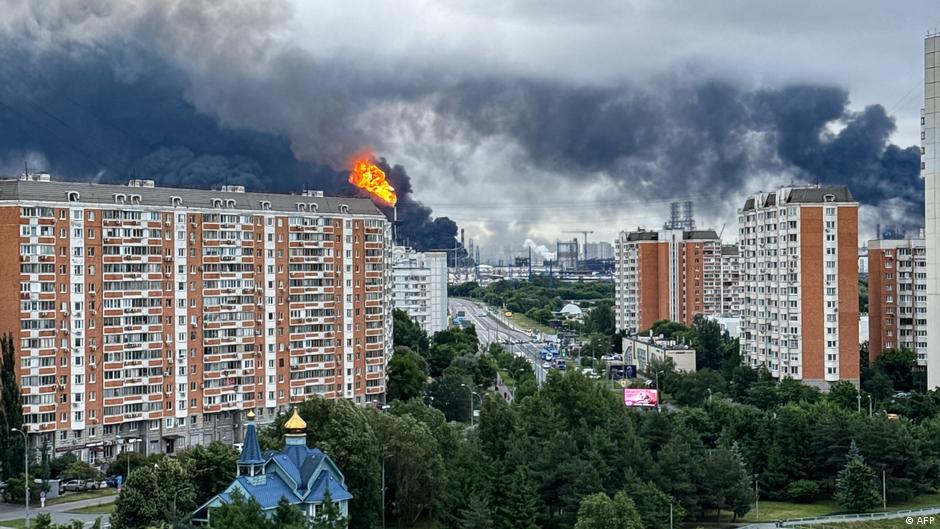
Russian Strikes Hit Ukrainian Transport, Retail and Industrial Sites
Attacks across Ukrainian cities killed at least 20 people and damaged railway, warehouse, production and commercial infrastructure.
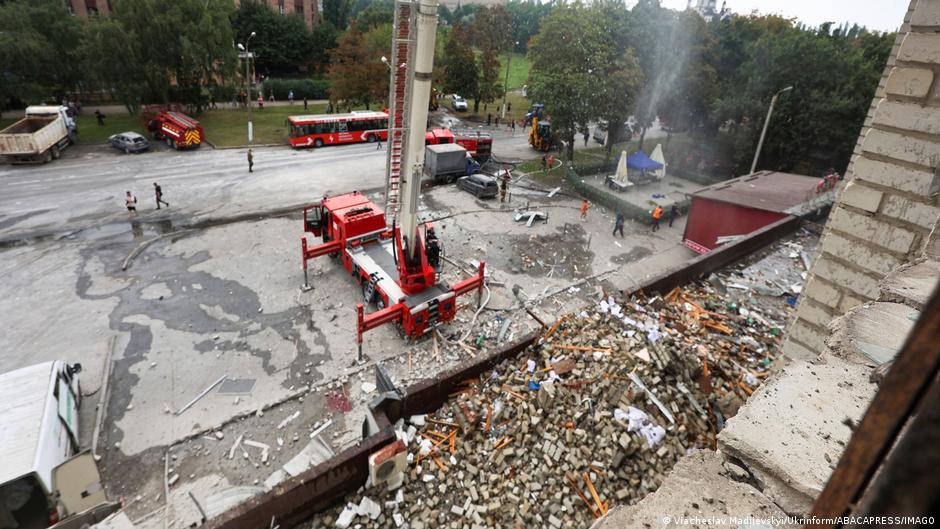
Russian strikes across Ukraine on October 29 killed at least 20 people and damaged transport, warehouse, industrial and retail assets, confronting local authorities and infrastructure operators with another round of emergency closures, repairs and operational disruption.
The deadliest reported attack hit a railway station in Dnipro, where a drone strike killed at least 14 people and injured 14 others. The incident placed critical passenger infrastructure at the center of the latest wave of attacks, although the source did not specify the extent of damage to station facilities or rail operations.
In central Chernihiv, two 15-year-old girls were killed when a Russian strike used a Banderol, also known as the S8000, a compact hybrid combining features of a cruise missile and a jet-powered attack drone. At least 25 people were injured, including four children: a 10-month-old girl, a 10-year-old girl, and boys aged 16 and 17.
Vyacheslav Chaus, head of the regional military administration, said eight people remained hospitalized. Two of the children, a brother and sister, were in serious condition. Other victims received medical assistance at the scene or were being treated as outpatients.
“It was a strike on an ordinary street. Homes, shops and cars were damaged—there was no military purpose,” Ukraine’s State Emergency Service said in a Telegram statement.
Chernihiv declared October 30 a day of mourning. Beyond the human toll, damage to shops, housing and vehicles underscores the continuing exposure of neighborhood commerce and privately held assets to attacks away from clearly defined military facilities.
Transport and commercial assets sustain damage
In Kremenchuk, three residents were killed and another 25 people were injured in a Russian attack, according to Ukraine’s emergency service. The report did not provide additional detail about the affected properties.
In Zaporizhzhia, two men, aged 41 and 66, were injured and received medical treatment. Four passenger cars and an outdoor area caught fire, while a warehouse building, four cars and four buses were damaged, the emergency service said. The combination of warehouse and vehicle damage points to immediate asset-recovery and logistics challenges for the organizations responsible for the affected property.
Later on October 29, a Russian missile struck Kharkiv’s Slobidskyi district, according to the emergency service. Fires broke out in a production building and on adjoining land, affecting a total area of 400 square meters. At another location, remnants of various materials burned across 80 square meters, and two trucks were damaged.
Authorities did not say why the explosion caused the fire or identify what had been stored in the production building. Kharkiv Mayor Ihor Terekhov said the district had been struck with a Banderol munition. The lack of detail about the site’s contents leaves the full operational and financial impact unclear, including the potential effect on production, inventory and vehicle availability.
Warehouses and retail property hit in Kyiv
Kyiv Mayor Vitali Klitschko said the capital became the target of a Russian ballistic-missile attack on the evening of October 29. Warehouse buildings were hit in the Darnytskyi district, starting a fire.
In the Dniprovskyi district, missile debris burned in the courtyard of a residential complex. Klitschko said blast waves shattered windows in one residential building. At another address in the same district, windows and cars parked in a residential courtyard were damaged. He later said a shop building near the residential complex where debris fell had been partially destroyed.
Kyiv’s city military administration reported that one person was killed in the attack. The damage across warehouses, a shop, residential property and vehicles illustrates how a single attack can create simultaneous demands on emergency services, municipal authorities, property managers and commercial operators.
Warnings point to continued operational risk
Earlier on October 29, Ukrainian President Volodymyr Zelenskyy said in his daily address that intelligence indicated Russia was preparing to attack Ukraine again with ballistic missiles. The warning adds to the security calculations facing businesses and public-sector operators responsible for staff safety, continuity planning and physical assets in major cities.
Russia’s Defense Ministry offered a separate account of its operations that evening. In a Telegram statement, it said Russian forces had used drones to strike Ukrainian port infrastructure and vessels operating in the interests of Ukraine’s armed forces. It also reported a strike on a temporary Ukrainian troop deployment point in the Kharkiv direction and said Russian forces had identified and destroyed enemy FPV-drone control points in the Dnipropetrovsk direction.
The ministry’s statement did not address the civilian casualties and property damage reported by Ukrainian officials in Chernihiv, Dnipro, Kremenchuk, Zaporizhzhia, Kharkiv and Kyiv. For executives and public administrators overseeing Ukrainian operations, the breadth of the reported damage—from railway and port-related infrastructure to warehouses, production premises, buses and shops—reinforces the challenge of protecting personnel while maintaining transport, supply and commercial activity during continued attacks.