Fed Raises Key Rate for First Time in Three Years as Inflation Pressure Builds
The unanimous FOMC move puts Chair Kevin Warsh at the center of a high-stakes policy fight with direct implications for credit, housing and corporate planning.
The U.S. Federal Reserve raised the federal funds rate by 25 basis points to a range of 3.75% to 4% annually, marking the central bank’s first rate increase in three years and signaling a sharper turn in its campaign against inflation. The Fed announced the decision on the evening of Wednesday, September 16, framing the move as necessary to counter inflation that officials said has remained too high for too long.
For American companies, the decision resets the cost-of-capital conversation just as executives and boards have been weighing expansion plans, refinancing schedules, hiring targets and the durability of consumer demand. A quarter-point move may look modest in isolation, but after a period in which the Fed had repeatedly lowered rates, it carries strategic weight. The rate had been cut three times in 2024 and three more times in 2025, according to Interfax, before this week’s reversal.
The decision was unanimous. All 12 members of the Federal Open Market Committee voted in favor of raising the key rate, underscoring that the central bank’s leadership has consolidated around inflation control despite political pressure and market sensitivity.
A Boardroom Signal on Inflation
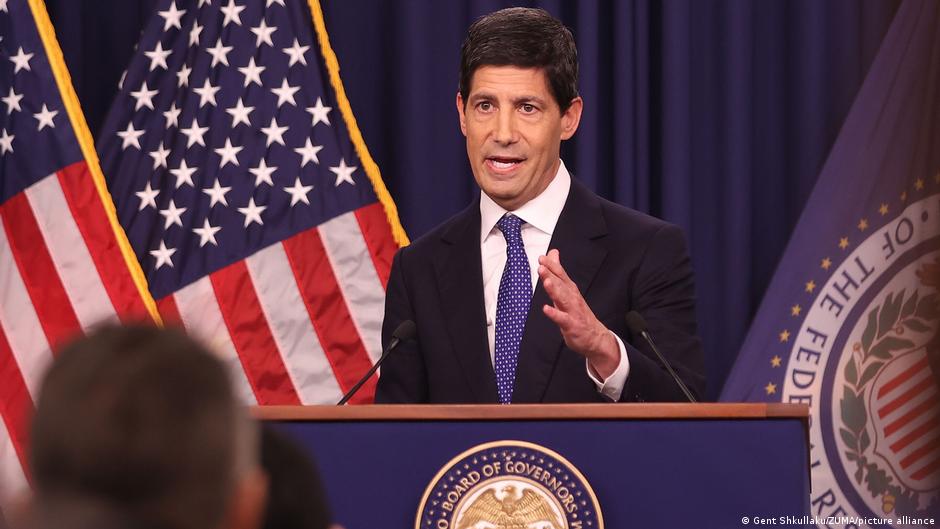
Fed Chair Kevin Warsh used his September 16 press conference to emphasize that price stability remains the central bank’s immediate priority. His remarks were a direct message not only to financial markets, but also to corporate leaders who have been operating in an environment of elevated input costs, higher energy prices and uncertain demand forecasts.
“Our main focus within our mandate is on ensuring price stability,” Warsh said. “Simply put, inflation is too high, and this has been going on for too long. That is a fact.”
The Fed’s mandate differs from that of the European Central Bank in Frankfurt am Main. The U.S. central bank is charged with two objectives: securing price stability and supporting a strong labor market, AFP noted. That dual mandate complicates executive decision-making across the economy. A policy path aimed at cooling inflation can also make financing more expensive and potentially restrain hiring, investment and dealmaking.
Warsh said inflation in the United States has exceeded the Fed’s 2.0% target for five years. In July and August of the current year, the inflation rate stood at 3.4%. Those figures give the Fed’s leadership a quantitative basis for tightening policy, even as the broader political environment grows more confrontational.
Warsh’s Corporate Background Meets Central Bank Constraints
The decision also places Warsh’s own professional profile under scrutiny. He was nominated to lead the Fed by U.S. President Donald Trump and took office in mid-May. From 2006 to 2011, Warsh served on the Fed’s Board of Governors. Before that, he worked as a banker at Morgan Stanley, specializing in mergers and acquisitions. He also advised Trump on economic policy.
That background matters for corporate America. Warsh entered the chairmanship with a resume familiar to boardrooms: investment banking, deal strategy and direct exposure to business-cycle decision-making. Yet the rate increase shows how quickly institutional obligations can override expectations formed in political or corporate circles. AFP reported that Trump had expected Warsh, as Fed chair, to preserve a low interest-rate environment, including because lower rates would make real estate loans more affordable.
Instead, the Fed is responding to a changed macroeconomic setting. According to AFP, the war waged by the United States and Israel against Iran since the end of February has led to a sharp rise in energy prices, which in turn has fueled inflation. That pressure gives companies a difficult combination: more expensive inputs, potentially higher borrowing costs and a central bank less willing to tolerate inflation above target.
For corporate boards, the implications are immediate. Debt-funded acquisitions, share repurchase plans, capital expenditures and real estate exposure all become more sensitive to interest-rate assumptions. Companies that benefited from the earlier easing cycle may now face pressure to revisit forecasts and stress-test balance sheets against a higher-for-longer scenario. Financial officers will likely need to reassess refinancing windows, while directors may ask whether planned investments still meet return thresholds under a 3.75% to 4% policy-rate range.
Political Friction Adds Governance Risk
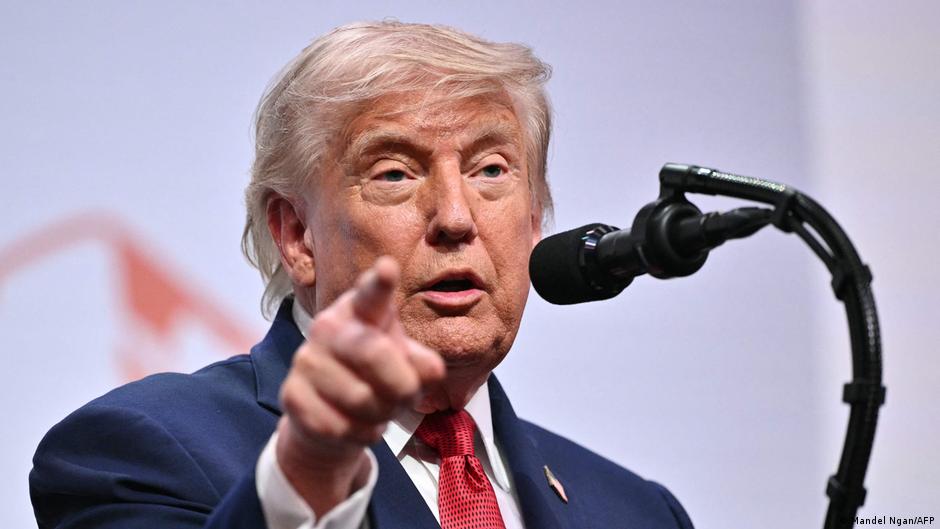
The rate increase also intensified the confrontation between the White House and the central bank. Trump sharply criticized the FOMC decision, saying it was driven by “political motives.” Speaking to journalists in North Carolina on September 16, he drew a distinction between Warsh personally and the Fed’s broader leadership structure.
“Kevin Warsh is a good man,” Trump said. “However, no matter how well he does his job, he has to deal with hostile leadership.”
Trump went further, saying FOMC members were raising the key rate “to cause as much harm as possible to Trump” and that they were doing so for political reasons. The comments expose another layer of uncertainty for markets and companies: the possibility that monetary policy decisions will be interpreted through a political lens even when the central bank presents them as a response to inflation data.
For executives, the dispute is more than Washington theater. Central-bank credibility affects rate expectations, bond yields, mortgage markets and investor confidence. A public clash between the president and the Fed can complicate corporate messaging, especially for banks, homebuilders, energy-intensive manufacturers and consumer-facing businesses sensitive to credit conditions.
The Fed’s unanimous vote suggests that, at least for now, monetary policymakers are prepared to absorb political criticism in order to defend the inflation target. The strategic question for American business is whether this move is a one-time adjustment or the start of a more restrictive policy phase. Warsh’s emphasis on five years of above-target inflation points to a central bank unwilling to declare victory prematurely.
That leaves boardrooms with a clear signal: assumptions built around falling rates may no longer hold. The Fed has shifted from easing to tightening, and the consequences will move through corporate financing, housing affordability, energy costs and investment planning in the months ahead.