Trump Threatens EU Trade Halt Over Plans to Deepen Canada Partnership
The president’s warning turns a proposed EU-Canada association into a test of U.S. tariff strategy and corporate exposure.
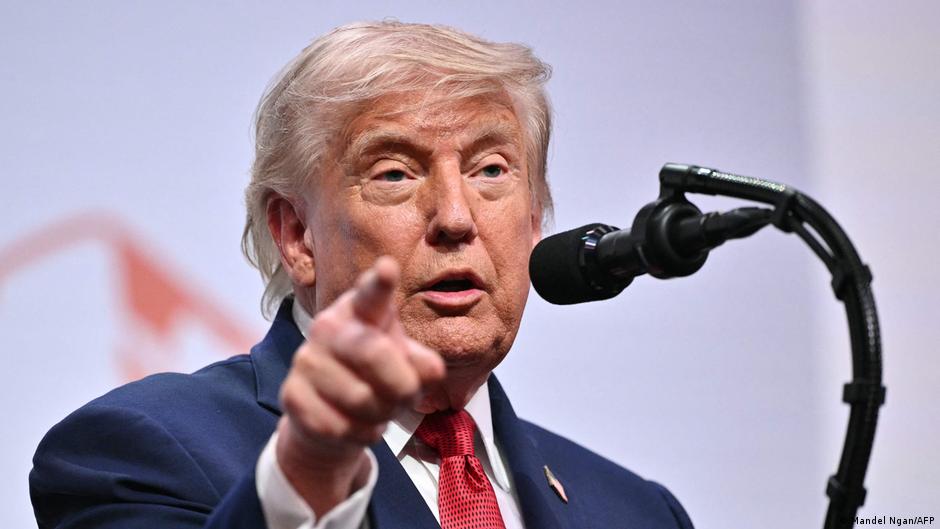
President Donald Trump signaled he is prepared to sharply escalate trade pressure on the European Union if Brussels moves ahead with plans to bring Canada into a closer institutional partnership, casting a diplomatic initiative as a potential trigger for new tariffs or even a halt in trade with Europe.
Speaking on Wednesday, September 16, during a campaign event in North Carolina, Trump was asked to respond to European Commission President Ursula von der Leyen’s proposal to make Canada the EU’s “first associate member.” The president called the idea “ridiculous” and said his response would depend on whether he viewed the move as hostile to the United States.
“If they do that and I consider it even in the slightest degree an unfriendly act, I will impose very high tariffs or stop trade with Europe,” Trump said.
He added that the outcome would turn on intent. “If the intentions are good, everything is fine. If the intentions are bad, we will impose very high tariffs on Europe, that is one of the possibilities,” he said.
For companies with exposure to transatlantic supply chains, the remarks introduce another layer of uncertainty into an already volatile trade environment. Trump’s comments suggest that corporate planning may need to account not only for conventional trade disputes over tariffs and market access, but also for political reactions to third-party alliances among U.S. partners.
A Strategic Partnership Becomes A Trade Risk
Von der Leyen outlined the EU’s ambitions earlier on September 16 in the European Parliament, where she appeared in the presence of Canadian Prime Minister Mark Carney. She said the European Union wanted to take its relationship with Canada to “the highest possible level” and that she intended to work with Carney so that “Canada becomes the first associate member of the EU.”
The European Commission chief did not provide details on what such a partnership would contain. She did, however, point to cooperation in technology and the defense industry, two sectors that carry major strategic and commercial implications for multinational companies, government contractors, and investors assessing industrial policy across North America and Europe.
Von der Leyen also stressed that closer cooperation between Canada and the EU “will not be directed against others” and would instead aim to make both sides stronger. That assurance is unlikely to remove the issue from the center of boardroom risk discussions, because Trump framed the matter through the lens of intent and potential retaliation.
The president’s language leaves executives facing an unusually subjective policy marker: whether Washington decides an EU-Canada arrangement is friendly, neutral, or adverse to U.S. interests. That kind of discretion can complicate forecasting for companies that rely on stable customs treatment, predictable procurement rules, or cross-border component flows.
Procurement, Tariffs And Corporate Exposure
The White House separately said Trump signed a memorandum on September 16 that would bar Canadian goods from participating in federal public procurement. According to the release, Washington is taking the measures in response to Canada’s actions, which it said had “unjustifiably introduced new barriers” for American companies seeking access to the public procurement market.
That procurement move matters well beyond diplomatic signaling. Federal purchasing rules can shape revenue opportunities for manufacturers, infrastructure suppliers, technology vendors, and firms that sell into government-linked supply chains. A ban on Canadian goods in federal procurement could force companies to revisit sourcing decisions, contract eligibility, and compliance procedures tied to public-sector sales.
The administration’s pressure campaign against Canada had already intensified. From September 15, the U.S. administration introduced additional 50 percent tariffs on cheese, steel, aluminum, paper, furniture, lighting fixtures, and other goods from Canada. Trump administration officials said the step was a direct response to new tariffs introduced by Ottawa.
Canada’s own tariffs on U.S. exports worth about $20 billion also took effect on September 15. Those measures were a response to U.S. tariffs of 50 percent on Canadian goods worth $20 billion that entered into force on August 22. The sequence of retaliatory measures has created a rolling escalation that companies must track across product categories, origin rules, contract pricing, and customer demand.
Canada exited trade negotiations with the United States on August 21, further reducing the near-term visibility for businesses hoping for a negotiated off-ramp. For executives, the breakdown in talks means the dispute is no longer simply a bargaining phase with a likely quick settlement. It has become a live operating risk.
Boardroom Implications Of A Wider Alliance
The potential EU-Canada association adds a broader strategic dimension to the conflict. Canada and the European Union are both contending with what AFP described as the unpredictable trade and foreign policy of President Trump. That is why, the agency noted, both Canada and the EU are looking at new alliances.
For American companies, that search for alternative alliances may carry mixed implications. On one hand, closer EU-Canada ties could create new commercial channels in technology, defense, procurement, and industrial collaboration. On the other hand, Trump’s threat to retaliate against Europe suggests that firms operating across the U.S., Canada, and EU markets could be caught between competing policy blocs.
The industries named or implied in the dispute are not marginal. Steel and aluminum feed into construction, vehicles, machinery, energy projects, and defense production. Paper, furniture, and lighting affect retail, commercial real estate, office supply chains, and public procurement. Cheese and other food products touch agricultural exporters, distributors, and consumer goods companies. Technology and defense cooperation, meanwhile, sit at the center of national security policy and long-term capital allocation.
Trump’s comments also put boards in a difficult governance position. Directors and executives must consider whether geopolitical decisions by allied governments could trigger tariff exposure without much warning. That can affect scenario planning, supplier diversification, pricing strategy, and disclosures about trade risk.
The immediate policy path remains unclear because von der Leyen did not define the mechanics of Canada’s proposed associate status, and Trump did not specify what threshold would lead him to conclude that the EU’s intentions were “bad.” But the business message is clear enough: cross-border strategy is becoming more contingent on political interpretation, and partnerships once treated as diplomatic architecture can quickly become material corporate risk.