House Advances Graham Sanctions Bill With Major Tariff Powers for Trump
A narrow procedural vote opened debate on a bill that would let President Donald Trump impose steep tariffs tied to Russian energy purchases.
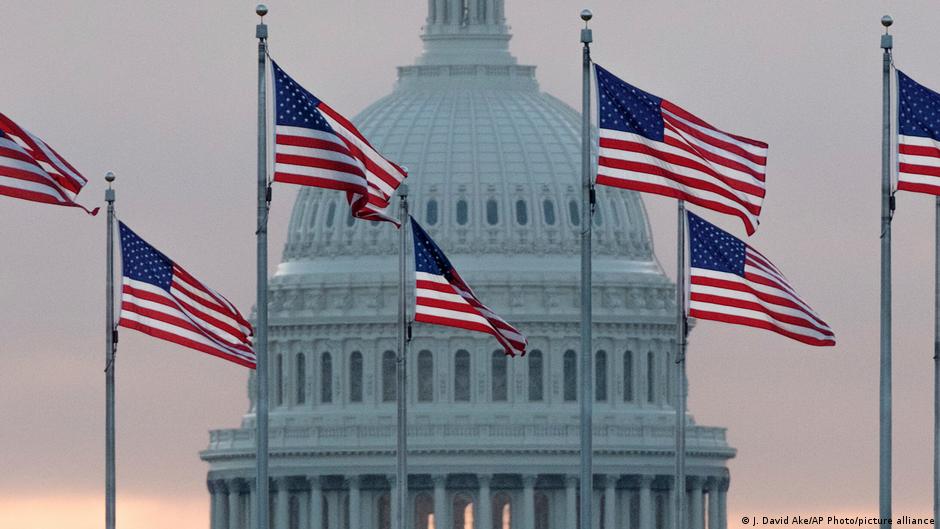
The U.S. House of Representatives voted Tuesday, September 15, to begin consideration of legislation associated with the late Senator Lindsey Graham that would give President Donald Trump authority to impose tariffs on countries buying Russian energy resources while extending existing U.S. sanctions against Iran.
The successful procedural vote does not enact the measure, but it clears the way for lawmakers to debate the bill on its merits. For corporate leaders and investors, the vote marks a meaningful step toward a sanctions and trade framework that could affect energy sourcing, commodity pricing, import costs and the compliance calculations of companies operating across global supply chains.
Media outlets have referred to the legislation as the “Graham bill,” in memory of Graham, who helped develop and actively promote the proposal. The measure is often described as a package of “hellish” sanctions against Russia because of the scale of the tariff authority it would place in the hands of the White House.
A Narrow Vote With Strategic Consequences
According to The Hill, the House rule governing consideration of the bill was approved after two Democrats broke with their party’s position and supported the resolution. The final vote was 214 in favor and 211 against.
That margin underscores the bill’s political volatility. The procedural victory gives Republican leaders and supporters of the measure momentum, but it also signals that the underlying legislation could remain contentious as lawmakers weigh trade policy, Ukraine support, presidential authority and the effect of tariffs on U.S. consumers.
For American business, the boardroom implications are unusually direct. The bill would allow Trump to impose tariffs of 100 percent on the five largest buyers of Russian oil and gas, as well as on five countries helping Russia evade energy sanctions. Such authority would not only increase pressure on Moscow’s trading partners but could also create new exposure for U.S. firms dependent on inputs, suppliers or customers in countries targeted under the measure.
The proposal therefore sits at the intersection of geopolitics and corporate planning. Energy companies, manufacturers, logistics firms, retailers and financial institutions would all need to assess how quickly tariff decisions could be made and whether existing contracts, sourcing strategies and country-risk models are robust enough for a sharper sanctions environment.
Supporters Frame the Bill as a Signal to Moscow and Beijing
At a House Rules Committee hearing on Monday, September 14, Republican Representative Michael McCaul of Texas described the next day’s vote as “exceptionally important” as a message to Russian President Vladimir Putin about U.S. support for Ukraine and as a warning to Chinese President Xi Jinping against any attempt to show aggression toward Taiwan.
Supporters cast the vote as a geopolitical signal: continued U.S. backing for Ukraine and a broader warning against aggression in Taiwan.
That framing gives the measure a wider strategic function than a Russia sanctions bill alone. By linking Ukraine, Russia, China and Taiwan in the legislative debate, backers are positioning the proposal as part of a broader U.S. deterrence posture. For multinational companies, that matters because sanctions policy and tariff authority are increasingly being used as tools of national security strategy, not merely as responses to isolated events.
The result is a more complex operating environment for executives. Corporate strategy teams may need to treat tariff risk as an executive-level issue alongside regulatory compliance, market access and supply resilience. A 100 percent tariff threat against major Russian energy buyers could force companies to revisit vendor geography, shipping routes, financing exposure and customer concentration in affected markets.
Democrats Warn of Price Pressures and Expanded Executive Power
Democratic critics argue that the bill would sharply expand Trump’s tariff powers without requiring mandatory sanctions against Russia. Representatives Don Beyer, Gregory Meeks and Richard Neal warned that the proposal would raise prices for Americans and, over the long term, weaken support for Ukraine.
Their objection reflects a familiar business concern: tariffs designed for strategic leverage can also act as cost shocks. If imposed broadly or abruptly, new duties could move through supply chains and reach consumers through higher prices. That risk is particularly sensitive at a time when tariff authority is being debated not only as a foreign-policy instrument but also as a test of how much discretion Congress is prepared to delegate to the executive branch.
For boards, the governance question is likely to be as important as the trade question. A law giving the president broad discretion to impose steep tariffs on energy-linked countries could create a policy environment in which exposure changes quickly. Companies may need clearer reporting to directors on sanctions exposure, tariff sensitivity, and contingency planning for suppliers connected to Russian oil and gas markets.
The bill’s combination of Russia-related tariff powers and an extension of existing U.S. sanctions against Iran also reinforces a broader compliance trend. Firms with international operations face increasingly overlapping sanctions regimes, where one legislative vehicle can affect multiple geopolitical theaters and multiple categories of commercial risk.
Next Step: A Full House Vote
A vote by the full House of Representatives is expected before the end of the current week. If the “hellish” sanctions package receives support at that stage as well, the bill will be sent to Trump for signature. Trump has previously said he supports the initiative.
For now, the most important development is procedural but consequential: the House has opened the door to substantive debate. That gives executives a narrow window to evaluate potential exposure before the legislation moves further. The practical questions are already clear: which countries could be targeted, how quickly tariffs could be imposed, how companies would document compliance, and whether price increases could be absorbed or passed on.
The bill is therefore more than a sanctions proposal. It is a test of how Washington may combine trade penalties, energy policy and geopolitical deterrence into a single executive tool. If enacted, it could place tariff decisions with major commercial consequences squarely in the White House’s hands, forcing companies to adapt their global strategies to a faster and more politically charged sanctions landscape.