Russian Drone Strikes Hit Kyiv Fuel Stations and Warehouses, Killing One
The attacks on logistics, port and transport infrastructure underscored how Russia’s drone campaign is targeting assets central to Ukraine’s civilian and commercial networks.
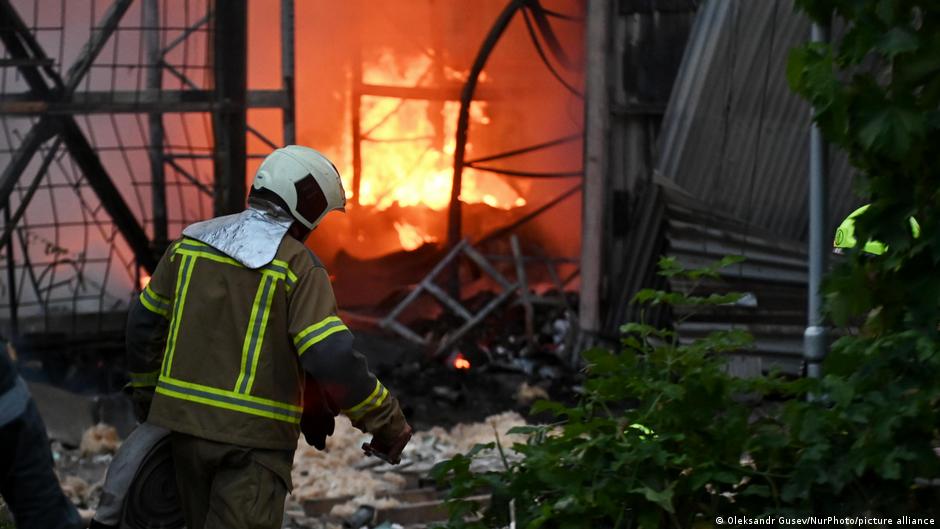
Russian drone strikes hit fuel stations and warehouse facilities in Kyiv, injuring seven people and later killing one of those hospitalized, according to authorities in the Ukrainian capital. The attacks, reported on Tuesday morning, September 15, also extended to Odesa and Zaporizhzhia regions, where officials said civilian, logistics, port, transport and infrastructure sites came under assault.
Kyiv Mayor Vitali Klitschko said Russian unmanned aerial vehicles struck gas stations in the Darnytskyi and Holosiivskyi districts of the capital. Seven people were injured in the strikes and all were taken to hospitals, he said. Two were in serious condition. Klitschko later added that one of the people brought to a medical facility had died.
The Kyiv City Military Administration also reported a Russian strike on warehouse premises in the Obolonskyi district in the north of Kyiv. An air alert was declared in Kyiv and the surrounding region, with authorities assigning a yellow level of danger.
Commercial Assets Remain in the Line of Fire
For business leaders, insurers and logistics operators watching Ukraine’s operating environment, the latest reported strikes show the continuing exposure of facilities that sit at the intersection of civilian services and wartime supply chains. Fuel stations, warehouses, ports and transport infrastructure are not only public-facing assets; they are also essential nodes in the movement of goods, energy and emergency services across a country under sustained attack.
The strike pattern described by Ukrainian officials suggests pressure on assets that companies and public agencies rely on for continuity. Damage to fuel stations can disrupt local mobility and emergency response. Warehouse attacks can interrupt inventory storage and distribution. Port and transport infrastructure damage can affect regional trade flows and the movement of cargo. Even where the immediate casualty toll is limited, the operational implications can spread across supply chains, municipal services and private-sector risk planning.
In Odesa region, officials said Russian forces carried out a massive attack on civilian infrastructure. Odesa’s location and its role in maritime and logistics activity have made damage to port and transport assets especially consequential for Ukraine’s commercial resilience.
“Residential buildings, logistics facilities, port and transport infrastructure came under attack,” Odesa regional military administration head Oleh Kiper wrote on Telegram.
Kiper said roofs, facades and windows of private homes were damaged, along with dozens of garages and vehicles. His statement placed logistics and port infrastructure alongside residential property among the sites affected, reinforcing the dual civilian and economic character of the damage reported by regional authorities.
Zaporizhzhia Reports Fatal Strike on Infrastructure Site
In Zaporizhzhia region, authorities said an infrastructure facility was hit by drones launched by Russia. Emergency services were extinguishing a fire at the scene, according to regional officials. One person was killed and another was injured in the attack, the regional administration said.
The Ukrainian Air Force said Russia attacked Ukraine with 200 strike drones of the Shahed and Gerbera types, as well as Parodiya decoy drones. According to preliminary data cited by the Air Force, Ukrainian air-defense units shot down or suppressed 187 Russian drones. Strikes by aerial attack assets were recorded at seven locations, while debris from downed drones fell in three places.
Those figures point to the scale of the overnight pressure on Ukraine’s air defenses and the strategic problem facing executives with exposure to the country: even high interception rates do not fully eliminate operational risk. A small number of drones reaching targets can still create casualties, fires, property damage and transport disruption. For boards overseeing Ukrainian operations, suppliers or shipping routes, the relevant issue is not only the headline number of drones launched, but also the specific assets hit and the knock-on effects for personnel safety, insurance coverage, inventory planning and delivery schedules.
Russia’s Defense Ministry, whose government is in the fifth year of its full-scale war against Ukraine, asserted that the strikes were carried out against “logistics centers and ports of Ukraine, as well as sea vessels involved in the interests of the Armed Forces of Ukraine.” Ukrainian officials, by contrast, reported damage to civilian infrastructure, residential buildings, private homes, vehicles and commercial logistics assets.
The conflicting descriptions are part of a wider information environment in which military claims, civil-defense reports and local damage assessments shape how companies evaluate exposure. For international firms, lenders and commodity traders, the practical consequences are concrete: fuel distribution, warehousing capacity, road and port access, and employee safety all remain vulnerable to drone attacks. Each strike on logistics or transport infrastructure can force revised routing, contingency storage, security reviews and higher operating costs.
The Kyiv strikes also carry symbolic and managerial weight because the capital is a major administrative and commercial center. Attacks on gas stations in multiple districts and on warehouses in the north of the city create immediate emergency-response demands while reminding local businesses that critical services remain exposed far from the front line. In that sense, the reported Russian drone campaign is not only a battlefield event but a recurring corporate risk factor for any organization operating in or adjacent to Ukraine’s economy.