Flávio Bolsonaro Leads Brazil Vote, Setting Up High-Stakes Runoff With Lula
The senator’s first-round edge places Brazil’s political risk, investment climate and institutional stability at the center of the Oct. 25 runoff.
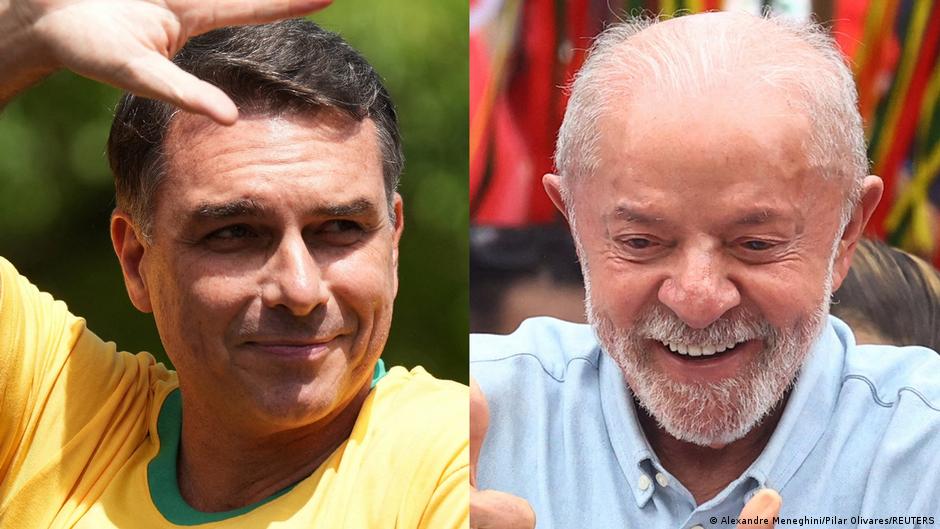
Brazil’s presidential election is headed to a second round after neither leading candidate cleared the 50% threshold, setting up a closely watched runoff between incumbent President Luiz Inácio Lula da Silva and Senator Flávio Bolsonaro, the eldest son of former President Jair Bolsonaro.
With 99.99% of first-round ballots counted, Flávio Bolsonaro emerged as the front-runner with 47.03% of the vote, according to data from Brazil’s electoral authorities published overnight on Monday, Oct. 5. Lula followed narrowly with 45.16%. Turnout stood at 78.92%, underscoring the scale of voter engagement in a contest that now moves into a decisive final phase.
The runoff is scheduled for Oct. 25. For corporate leaders, investors and boards with exposure to Latin America’s largest economy, the result introduces a fresh period of strategic uncertainty. The margin between the two candidates is narrow enough to keep markets, industry groups and foreign partners focused on coalition-building, policy signals and the candidates’ handling of institutional risk.
A Runoff With Boardroom Consequences
Brazil has repeatedly required second-round presidential votes since the early 2000s, making the runoff format familiar to political observers. This contest, however, carries particular weight because it revives a direct confrontation between Lula and the Bolsonaro political brand. In 2022, Lula defeated Jair Bolsonaro, Flávio’s father, in a second-round vote. The elder Bolsonaro refused to recognize the result, and his supporters took to the streets in protest.
That history matters for businesses because political legitimacy, administrative continuity and the credibility of public institutions all shape the operating environment. Brazil is a major market for energy, agriculture, finance, mining, retail and infrastructure. Executive teams assessing capital allocation in the country will now be watching not only campaign pledges but also the tone each camp adopts toward the electoral process.
With no candidate crossing the 50% mark, Brazil’s presidential election now turns on a second-round vote set for Oct. 25.
Flávio Bolsonaro’s rise to first place in the opening round gives his campaign momentum, but it also places renewed scrutiny on the Bolsonaro family’s political and legal legacy. Jair Bolsonaro was later sentenced to a lengthy prison term for an attempted coup, according to the source account. That background is likely to remain central to the runoff narrative as Lula’s campaign seeks to frame the choice around democratic institutions and political stability.
Strategy, Security and Legal Overhang
Flávio Bolsonaro, 45, campaigned in part on promises to fight crime, an issue with direct relevance for companies operating across Brazil’s logistics corridors, urban centers and consumer markets. Security policy can influence insurance costs, supply-chain planning, retail investment and the confidence of foreign executives traveling or deploying staff in the country.
At the same time, Flávio Bolsonaro has faced past allegations of corruption and unlawful appropriation of funds. In 2019, cases were opened against him involving alleged payments linked to nonexistent people listed among his subordinates, as well as suspicious transfers to his bank account. The existence of those allegations creates a reputational and governance overhang that may shape how institutional investors and multinational corporations interpret a potential Bolsonaro administration.
The political exposure extends beyond Flávio. In June 2026, Brazil’s Supreme Court sentenced Eduardo Bolsonaro, another son of the former president and also a political figure, to four years and two months in prison. The criminal case was linked to Eduardo’s calls for the United States to impose sanctions on Brazil over the sentence handed to his father. Eduardo lives in the United States, and the case against him was heard in absentia.
For executives, the broader family context is not merely personal biography. It speaks to how foreign policy, sanctions rhetoric and domestic legal conflict could intersect under a Bolsonaro-aligned presidency. A government associated with confrontational appeals to Washington or disputes with the judiciary could affect diplomatic predictability and the risk assessments used by banks, insurers and corporate compliance departments.
Banco Master Investigation Adds Financial-Sector Sensitivity
The campaign also intersects with a continuing investigation into Banco Master and its largest shareholder, Daniel Vorcaro. Brazilian authorities are examining alleged fraudulent investment raising worth tens of millions of dollars from public and private funds, based on promises of high returns that could not be fulfilled. In practical terms, the allegations point to the possible creation of a financial pyramid scheme.
Vorcaro is also known as one of the producers of a favorable biographical film about Jair Bolsonaro titled “Dark Horse.” The film’s narrative develops the former president’s claims about “stolen elections.” Media outlets have previously published correspondence between Vorcaro and Flávio Bolsonaro that may indicate the politician knew of the alleged fraudulent scheme and could have assisted in carrying it out, including through “cover” in the form of supposedly expensive film production.
Those claims, if they remain politically salient through the runoff, could influence how Brazil’s financial-sector supervision is discussed in the campaign. For banks, asset managers and pension funds, allegations involving public and private investment funds raise questions about enforcement credibility, investor protection and the relationship between political networks and financial institutions.
Lula enters the runoff as the incumbent, trailing by less than two percentage points in the first-round count provided by electoral authorities. His campaign now faces the challenge of consolidating anti-Bolsonaro voters while defending his record in office. Flávio Bolsonaro, meanwhile, must preserve his lead while broadening his appeal beyond the family’s loyal base and managing the legal and reputational controversies surrounding his name.
The next phase is therefore likely to be watched less as a standard campaign sprint and more as a test of Brazil’s political institutions and economic direction. Boardrooms will be assessing whether either candidate can reduce uncertainty, reassure investors and define a credible governing coalition before Oct. 25. Until then, Brazil’s presidential race remains a close contest with consequences that extend well beyond electoral politics.