German BSW Lawmaker Plans Belarus, Russia Visits to Rebuild Municipal Ties
Sven Hornauf’s proposed delegations highlight a contested push inside Germany to revive city-level contacts suspended after Russia’s invasion of Ukraine.
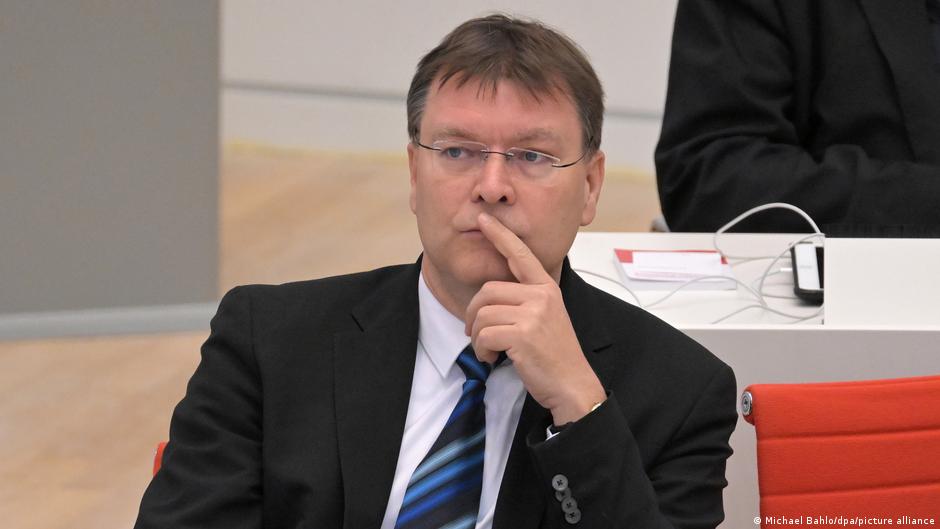
Sven Hornauf, a lawmaker from the left-populist BSW party in the Brandenburg state parliament, says he is assembling a delegation of German politicians and civil society representatives for trips to Belarus and Russia aimed at renewing contacts between sister cities.
The initiative places a regional German politician at the center of a broader debate over whether municipal diplomacy should remain frozen while the war in Ukraine continues, or whether local channels can be reopened without signaling a shift in national policy. For business and civic leaders, the plan is notable less for its immediate economic impact than for what it reveals about Germany’s fragmented post-2022 approach to engagement with Russia and Belarus.
Hornauf, a member of the Bündnis Sahra Wagenknecht, now formally known as the Alliance for Social Justice and Sensible Economic Policy, said he plans to travel by bus to Vitebsk in November with like-minded participants from various German parties. He made the comments in an interview with the regional newspaper Märkische Oderzeitung on Saturday, October 3. The following day, larger German media outlets, including the dpa news agency, Tagesspiegel and Die Welt, reported on the plans.
According to Hornauf, the goal is to restart cooperation between German towns and their sister municipalities in Belarus and Russia, and to send what he described as a signal in favor of mutual understanding between peoples. He also said he plans a visit to Russia in April 2027.
Hornauf said it was important to establish normal, regular contacts again directly at the level of people, and that the broader political climate, from whichever side, should not prevent them.
A municipal diplomacy test with national implications
The planned Belarus trip is expected to include 30 to 40 people, Hornauf said, most of whom do not belong to any political party. At the same time, he named several BSW members among the prospective participants, along with representatives of the Greens and the far-right Alternative for Germany, or AfD. The final composition of the delegation will be determined during preparatory meetings, he said.
The itinerary, as described by Hornauf, would take a delegation from his home city of Frankfurt an der Oder to Vitebsk from November 6 to November 11. Other participants in the trip intend to travel to Minsk and several other Belarusian sister cities. In each case, the stated reason for the visit is the desire to restore sister-city ties.
For executives and boards tracking political risk in Europe, the initiative underscores how non-federal actors can complicate the operating environment. Germany’s national stance toward Russia has hardened since the full-scale invasion of Ukraine, and defense planning has moved accordingly. Yet municipal networks, civic associations and regional political figures continue to operate in a space where formal policy, local history and public opinion do not always align cleanly.
Many sister-city relationships involving German, Belarusian and Russian municipalities were suspended after Russia’s full-scale invasion of Ukraine. But the picture at the local level has been more uneven than a simple cutoff. According to a 2026 survey by the Redaktionsnetzwerk Deutschland media group of about 100 German cities and communities, only one had fully terminated its partnership with a Russian sister city.
RND also reported that around 40% of the surveyed municipalities continued informal contacts with Russia after 2022, including invitations for representatives of Russian cities to visit Germany. In 42% of respondent German municipalities, officials supported resuming partnerships with Russia in the event of a peace settlement in Ukraine.
Hornauf’s political profile draws scrutiny
Hornauf’s initiative is likely to attract attention not only because of its destination, but also because of his recent political record. He made headlines in spring 2026 when he became one of the initiators of a visit by BSW members and supporters to the Russian embassy in Berlin. He has also previously faced criticism for supporting several AfD initiatives.
That background matters for how the proposed trips are likely to be read in Berlin and beyond. In a boardroom context, the optics around Russia- and Belarus-related engagement remain sensitive, even when the activity is framed as civic rather than commercial. Companies, local governments and associations operating across Germany must weigh reputational exposure, sanctions compliance, public sentiment and stakeholder expectations before attaching themselves to any channel that could be seen as normalizing relations.
Hornauf has also criticized Germany’s efforts to strengthen defense measures in response to Russia’s aggressive policy. In particular, he opposed the deployment of the U.S.-Israeli Arrow 3 missile defense system at the Bundeswehr base in Holzdorf. The missile defense system was placed on combat duty in Germany at the end of 2025.
The Arrow 3 issue illustrates the broader strategic contrast surrounding Hornauf’s position. While Germany has been investing in expanded defensive capabilities, the BSW politician is pressing for renewed people-to-people contact with Belarus and Russia. Supporters may cast such efforts as a way to preserve civic channels during geopolitical confrontation. Critics are likely to view them as politically useful to Moscow and Minsk at a time when many official links remain curtailed.
For German municipalities, the question is now less theoretical than procedural: whether suspended partnerships can be reactivated through delegations led by regional politicians, and what safeguards or political signals accompany such moves. Hornauf’s planned November trip to Belarus and his stated April 2027 plan for Russia will test how far local actors can go in reopening contacts while national and European policy remains shaped by the war in Ukraine.
The delegation’s final makeup has not yet been set, and Hornauf has said preparatory meetings will determine the participants. But the contours of the plan are already clear enough to revive a debate that many German institutions have managed rather than resolved since 2022: whether civic and municipal relationships should wait for a formal peace, or whether they should become part of the attempt to prepare for one.