Schröder’s Globus-linked Russia role draws German backlash over strategy
The former German chancellor’s move into Hyperglobus has intensified scrutiny of corporate risk, political access and Western business exposure in Russia.
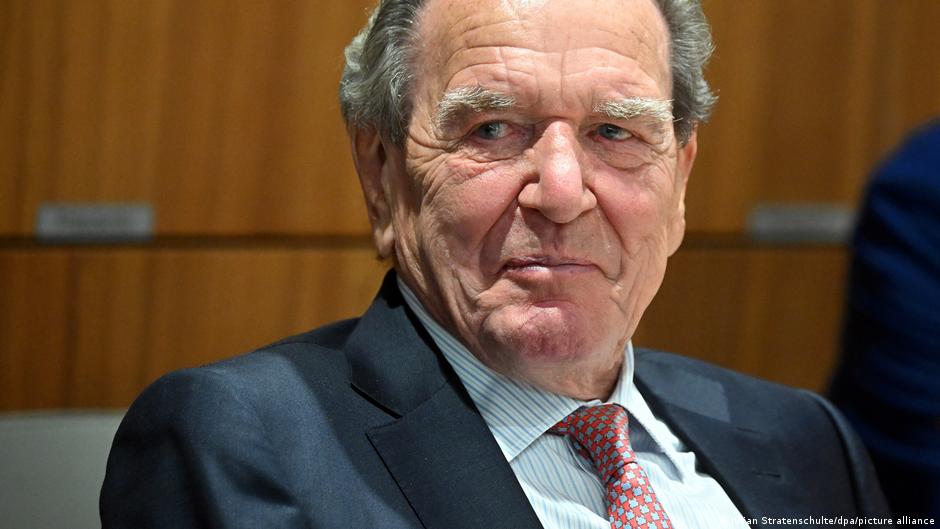
Former German Chancellor Gerhard Schröder has taken a seat on the supervisory board of Hyperglobus, the company operating the Globus hypermarket network in Russia, prompting sharp criticism from German politicians and economists and raising broader questions about the strategic choices facing German-linked businesses still exposed to the Russian market.
The appointment places Schröder in a senior oversight role at a retailer connected historically to Germany’s Globus group. According to the company’s press office, which confirmed the information to DW on Oct. 2, Schröder will become a member of Hyperglobus’s supervisory board and will oversee the retailer’s “strategic development.” The move has quickly become a flashpoint in Germany, where Schröder has long been criticized by many observers as a lobbyist for Russian corporate interests.
The controversy sharpened late Saturday, Oct. 3, when Roderich Kiesewetter, a Bundestag member and foreign policy expert for the governing Christian Democratic Union, denounced the appointment. He called Schröder’s new post a “betrayal of Europe and of his own country.” In a post on X, Kiesewetter also linked the episode to the symbolism of public contact with the former chancellor.
“Anyone who publicly and demonstratively shakes Schröder’s hand thereby wants to demonstrate their position,” Kiesewetter wrote.
That remark appeared to refer to the Sept. 28 ceremony in Karlsruhe marking the 75th anniversary of Germany’s Federal Constitutional Court. German President Frank-Walter Steinmeier attended the event and, upon entering the hall, shook hands with Schröder, who was seated in the front row as an honorary guest.
Political access as a corporate asset
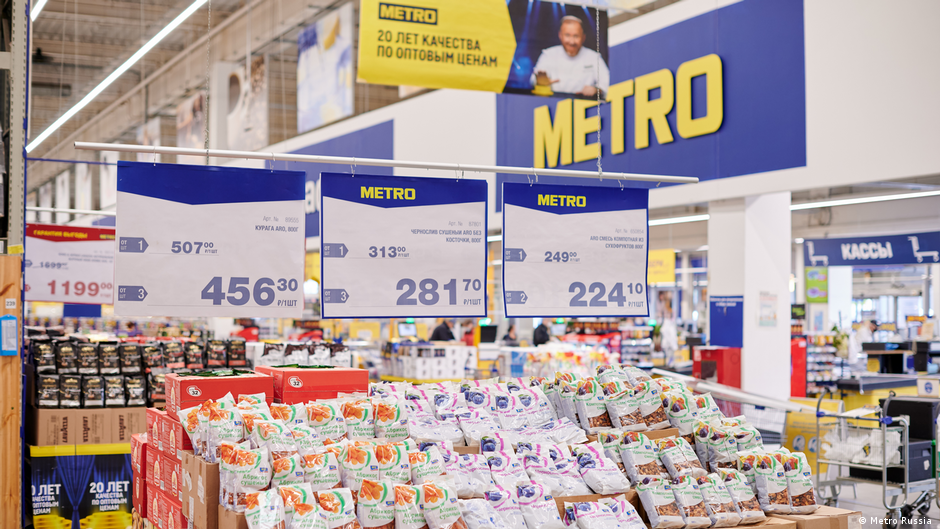
For business leaders and boards, the backlash underscores a difficult reality: in the Russian market, personal political access can be perceived not merely as reputation management but as a form of operational protection. Janis Kluge, a German economist and head of a research division at the Berlin-based German Institute for International and Security Affairs, argued that bringing Schröder into Hyperglobus’s leadership amounted to the company buying itself “lifetime insurance” against suffering the fate of German retailer Metro.
Metro’s Russian assets were transferred into temporary management by decree of Russian President Vladimir Putin. Against that backdrop, Kluge framed Schröder’s appointment as a strategic shield for Hyperglobus. “Schröder is once again monetizing his access to Putin,” Kluge wrote on X.
That assessment points to the corporate-strategy dimension of the appointment. Hyperglobus operates in an environment where foreign-linked assets can face extraordinary political and regulatory risk. The selection of a former German chancellor known for ties to Moscow may be read by critics as a governance decision designed less around retail expertise than around influence, access and perceived protection from state intervention.
The Globus group has sought to stress the separation of its Russian operations from the broader company. Isabel del Alcazar von Buchwald, a spokesperson for Globus Gruppe, told DW that since Jan. 1, 2025, the Russian business of the Globus network has been “legally and organizationally independent.” At the same time, the source article notes that the shareholders of Russia’s Hyperglobus are the same German businesspeople as those behind the rest of the group.
That structure is likely to keep scrutiny focused on board-level accountability. A formal legal and organizational separation may reduce some lines of direct control, but common ownership can still leave investors, executives and stakeholders facing questions about strategic intent, reputational exposure and the degree to which a German-rooted business remains connected to operations in Russia.
A familiar pattern for Schröder
Schröder’s critics in Germany see the Hyperglobus position as part of a longer pattern. The former chancellor previously held leadership roles at Rosneft and at the operator of Nord Stream, the gas pipeline project that became a central symbol of Germany’s energy relationship with Russia. Many observers in Germany have for years regarded him as a lobbyist for Russian companies.
Thomas Jäger, a political science professor at the University of Cologne, described the Hyperglobus role in those terms. “Schröder has a new lobbying assignment. In Russia. Where else?” he wrote on X. Jäger also questioned whether Steinmeier had known about the position when he greeted Schröder days earlier at the Karlsruhe ceremony, noting that Schröder was the only person singled out in that way.
The public criticism has not been limited to foreign policy specialists. Jan Schnellenbach, a German economist and professor of microeconomics at Brandenburg University of Technology in Cottbus, accused the former chancellor of “shamelessness.” Referring to prior statements that Schröder was too ill to appear before a German court, Schnellenbach wrote on X: “Were we not told that he was too sick to stand before a German court? Do Russian funds have healing powers?”
For corporate boards, the episode illustrates how executive appointments can carry consequences far beyond conventional governance. In a politically sensitive market, a supervisory board seat can signal alignment, risk tolerance and the company’s understanding of how power operates. In this case, critics argue that the signal is especially stark: a German former head of government being brought into the leadership of a Russia-based retailer at a time when German political and business ties to Russia remain intensely contested.
The immediate business rationale has been framed by Hyperglobus around strategic development. Yet the reaction in Germany suggests that Schröder’s value is being interpreted through another lens: his long-standing network in Russia and his perceived proximity to Putin. That interpretation may be precisely why the appointment has triggered such a strong response from politicians, economists and policy experts.
Whether the role ultimately provides Hyperglobus with stability, reputational damage or both, it has already revived a central boardroom question for companies linked to Russia: how far should executives and owners go to preserve assets in a market where political patronage can appear as important as operational performance?