Foreign Retailers in Russia Face Temporary Control and Governance Pressure
Assets tied to Auchan, Leroy Merlin, Metro and other retailers have come under temporary management as owners lose operational access.
Foreign retailers that built significant operating platforms in Russia are facing a widening challenge: the loss of control over local assets, the imposition of temporary management, and a search for ways to preserve influence in a market where ownership rights have become increasingly exposed to state intervention.
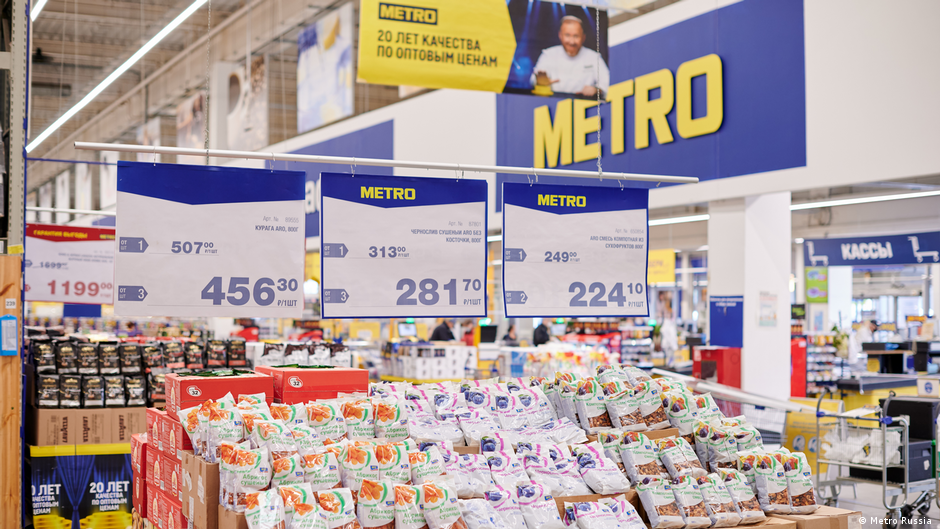
The pressure now reaches across several prominent Western retail groups. Temporary management has been introduced over assets associated with France’s Auchan and Leroy Merlin, Germany’s Metro, and other companies. In practical terms, that means foreign owners have been deprived of access to parts of their Russian businesses, even where the underlying corporate structures remain formally linked to international brands or former parent companies.
For executives and boards, the developments raise a hard strategic question: whether the Russian operations of foreign retailers can still be treated as manageable overseas assets, or whether they have effectively become stranded businesses subject to decisions made outside the control of their owners.
Temporary Management Becomes a Boardroom Risk
The central issue is not simply reputational exposure or the difficulty of operating in Russia after the rupture between Moscow and Western governments. The more immediate concern is control. When temporary management is imposed, owners may no longer be able to direct assets, appoint managers, protect cash flows, or execute exit plans on their own terms.
That shift changes the calculation for any multinational retailer still connected to Russian assets. In ordinary cross-border business risk, companies weigh currency volatility, consumer demand, supply chains, regulation, and sanctions compliance. In the current Russian context, the boardroom discussion has moved closer to a question of asset survivability: can a company maintain any meaningful command over property, stores, logistics, personnel, and brand-linked operations once state-backed mechanisms place them under another form of administration?
The cases of Auchan, Leroy Merlin, Metro and other foreign retail businesses suggest that exposure is not confined to one national market segment or one corporate structure. Retail is especially vulnerable because its assets are local, physical, and operationally visible. Stores, distribution networks, leases, inventories, and supplier relationships cannot be moved offshore. A retailer may own a business through a foreign holding structure, but the commercial machinery sits inside Russia.
For foreign retailers, the risk has shifted from whether they can profitably operate in Russia to whether they can retain access to the assets at all.
The implications extend beyond the companies directly named. If temporary management becomes a recurring tool in relation to foreign-owned retail assets, boards may have to reassess how they account for Russian holdings, how they communicate impairment risks, and whether governance protections that once looked adequate still have practical value.
Globus and the Search for Protection
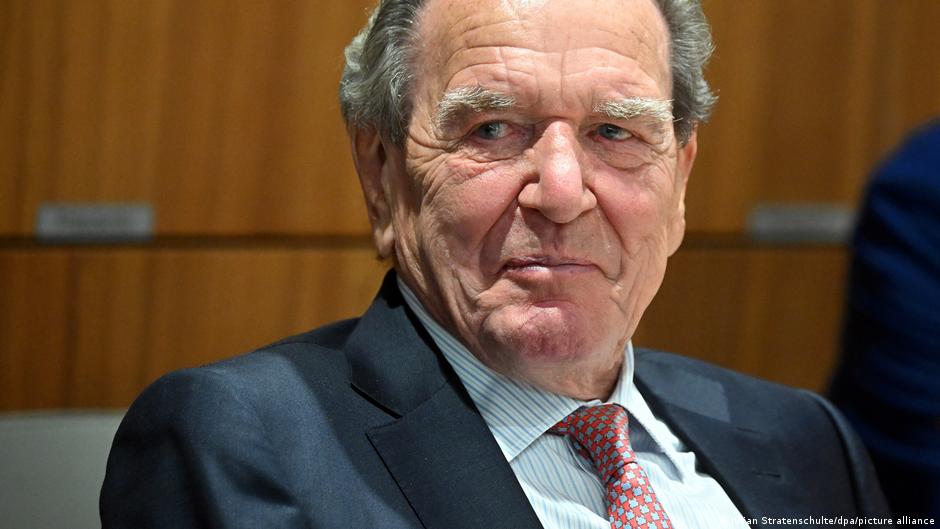
The situation around Globus adds another layer to the corporate governance picture. Former German Chancellor Gerhard Schröder has joined the supervisory board of the former Russian subsidiary of the German holding company Globus. The appointment is notable because it places a high-profile German political figure inside the governance structure of a business linked to one of the foreign retail groups navigating the Russian environment.
For management teams, such a move points to a broader search for protectors, intermediaries, or governance arrangements that may help preserve corporate continuity. It does not, by itself, resolve the central issue facing foreign retailers: local Russian assets remain subject to decisions that owners may not be able to control. But the presence of a figure such as Schröder on a supervisory board underlines how far these matters have moved beyond standard retail operations.
In a normal market, a supervisory board appointment might be read through the lens of sector expertise, financial oversight, or succession planning. In this context, it is likely to be scrutinized for what it signals about influence, access, and the attempt to stabilize a corporate position under political and legal stress.
That makes the Russian retail cases a governance story as much as an operational one. Foreign companies must consider not only whether they can keep stores open or preserve relationships with employees and suppliers, but also who can legally speak for the business, who can approve transactions, and who can represent shareholder interests when formal ownership and practical control diverge.
Nationalization Risk Hangs Over Retail Assets
The question now hanging over foreign retailers is whether temporary management is a precursor to broader nationalization or a distinct mechanism designed to limit owner control without immediately changing title. The available facts show that some assets have already been placed under temporary administration and that owners have lost access to them. They do not establish a single final outcome for all foreign retailers still tied to Russia.
For boards, however, the distinction may offer limited comfort. Whether an asset is formally nationalized or temporarily administered, the business consequence can be severe if the owner cannot manage the asset, monetize it, sell it, or supervise its leadership. Investors tend to focus on control because control determines whether a company can protect value.
The cases also complicate exit strategy. A foreign retailer that wants to leave Russia may not be able to determine the timing, buyer, valuation, or post-exit obligations if the state has inserted a management layer or restricted access. A company that wants to remain associated with an asset may face a different problem: continuing exposure without authority.
That asymmetry is especially sensitive for public companies and large privately held groups. Directors have duties to assess material risks, protect corporate property, and avoid misleading stakeholders about what the company can still control. Once a foreign business is no longer able to access its Russian assets, disclosures, internal controls, and valuation assumptions may all require close review.
For the retail industry, the message is stark. Russia was once a major market where international chains could deploy scale, procurement expertise, and store formats. It is now a jurisdiction where the fate of foreign retail assets can depend less on consumer strategy than on political decisions, temporary administration orders, and the ability to find figures willing to sit between owners and the Russian operating environment.
The fate of Metro, Globus, Auchan, Leroy Merlin and other foreign retailers in Russia remains unresolved. What is already clear is that the boardroom issue has changed. The question is no longer only how to manage a difficult market. It is whether foreign owners can still manage their Russian businesses at all.