Kolesnikova Urges EU to Pair Belarus Diplomacy With Sanctions Leverage
The former political prisoner says Washington’s talks with Minsk offer Europe a model for freeing detainees while limiting Russian influence.
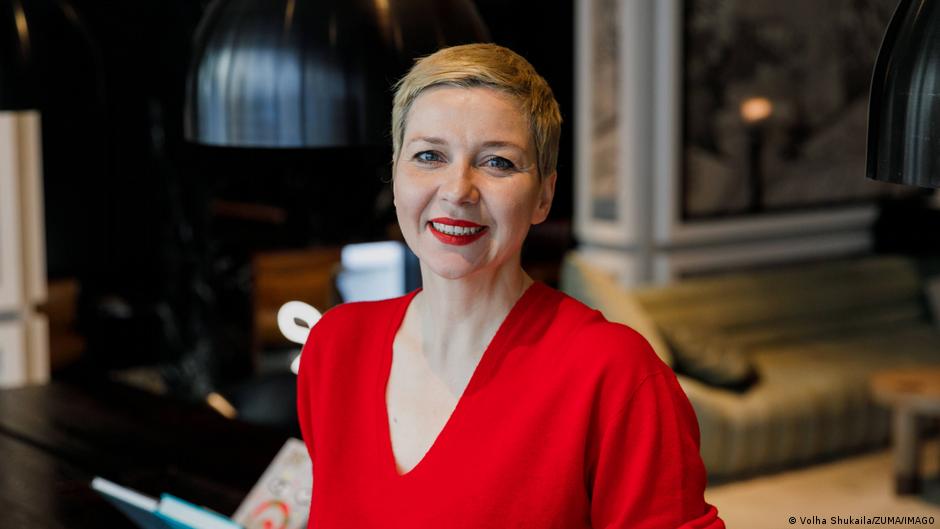
Belarusian activist and musician Maria Kolesnikova is urging European Union governments to treat diplomacy with Minsk not as a concession to Alexander Lukashenko’s system, but as a practical instrument for extracting results: the release of political prisoners and a reduction of Russia’s room for influence in Belarus.
In an interview with DW, Kolesnikova, a former political prisoner, called on Europe to follow the example of the United States by using a combination of diplomatic engagement and sanctions leverage to save the lives of people imprisoned in Belarus on political grounds. Her argument is likely to resonate beyond human rights circles. For Western governments, banks, export-control officials and companies monitoring sanctions exposure, the issue is also a test of whether targeted economic pressure can be converted into concrete concessions without normalizing the Belarusian leadership.
Kolesnikova rejected claims that she has softened her view of Lukashenko’s regime because she has increasingly spoken about the need for dialogue. She said her own release demonstrates that diplomacy can work when it is deployed as a tool of influence and tied to specific goals.
“We are talking here with you now because diplomacy was used precisely as an instrument of influence, as an instrument for achieving certain goals,” Kolesnikova said on DW News.
She stressed that years in prison had not changed her attitude toward the system in Belarus. Instead, she presented negotiations as a means to pressure that system where sanctions alone have not secured the release of all political detainees.
A Sanctions Strategy With Boardroom Consequences
Kolesnikova said more than 800 people convicted under political articles remain imprisoned in Belarus. She pointed to the U.S. negotiation track with Minsk as evidence that talks, when backed by sanctions pressure, can produce measurable outcomes. According to her, about 500 political prisoners were released following negotiations between Washington and Minsk in exchange for an easing of sanctions on Belarusian companies.
That formulation places Belarus policy squarely in the territory of corporate strategy and executive risk management. Sanctions relief for companies is not only a diplomatic signal; it can affect access to markets, payment systems, shipping, compliance reviews and the long-term viability of commercial relationships. For corporate leaders with exposure to Eastern Europe, any shift in restrictions on Belarusian entities requires close attention to regulatory language, licensing conditions and political durability.
Kolesnikova’s remarks suggest a transactional framework: the West retains economic leverage over Belarusian business interests, but uses that leverage to pursue defined humanitarian and strategic objectives. In practical terms, this places pressure on policymakers to distinguish between openness toward Belarusian society and concessions that benefit the ruling apparatus. It also raises questions for corporate boards about whether sanctions relief in Belarus should be treated as a stable reopening of commercial opportunity or as a reversible diplomatic instrument tied to prisoner releases and geopolitical positioning.
Her comments come as European officials face competing pressures. Maintaining a hard line against Lukashenko’s government remains central to EU policy after the crackdown on opposition figures and civil society. At the same time, prolonged isolation risks deepening Belarus’s dependence on Moscow, limiting Western channels of influence and leaving political prisoners with fewer practical avenues for release.
Reducing Russia’s Influence
Kolesnikova argued that Europe’s openness should be directed toward Belarus and Belarusians, not toward the regime itself. She said such openness could shrink Russia’s sphere of influence in the country, describing that objective as part of the architecture of European security.
For U.S. business readers, the strategic dimension is familiar. Belarus is not simply a human rights file; it is a geopolitical and economic node between the European Union and Russia. Decisions made in Brussels, Warsaw and Washington can alter the incentives facing Belarusian state-linked enterprises, private companies, banks and officials. They can also affect whether Minsk has options beyond deeper reliance on Russian political and financial support.
Kolesnikova specifically urged the European Union to follow the U.S. model and referred to recent talks between Polish Foreign Minister Radoslaw Sikorski and Belarusian Foreign Minister Maxim Ryzhenkov. The meeting took place in New York on the sidelines of the 81st session of the United Nations General Assembly. After the meeting, Sikorski said, among other things, that Warsaw was preparing to open a new building for its embassy in Minsk.
That detail matters. An embassy building is not a trade deal, but in diplomacy it can signal an intention to preserve channels, gather information and maintain the infrastructure required for future engagement. For executives and advisers tracking country risk, such moves can indicate that European governments are testing a more calibrated posture: keeping political distance from the regime while preserving enough contact to negotiate on prisoners, security and influence.
Kolesnikova’s own case is central to her argument. She was arrested in September 2020 over opposition activity. In a criminal case described in the source account as fabricated, a court in Minsk sentenced her on September 6, 2021, to 11 years in prison. She was released on December 13, 2025, together with Nobel Peace Prize laureate Ales Bialiatski and 121 other political prisoners after negotiations between Lukashenko and a U.S. delegation led by John Cole, the special envoy for Belarus.
Her message to Europe is therefore grounded in personal experience, but it carries broader policy implications. Kolesnikova is not arguing that dialogue legitimizes Minsk. She is arguing that refusing to use available diplomatic channels may leave leverage unused, prisoners behind bars and Belarus more firmly inside Russia’s orbit.
For policymakers, the challenge is execution. For companies, the lesson is caution. Any easing of sanctions connected to Belarusian firms may be part of a narrow political bargain rather than a durable normalization. Boards considering exposure to Belarus will need to assess not only legal permissions, but also reputational risk, policy reversibility and the possibility that sanctions could be tightened again if Minsk fails to deliver.
Kolesnikova’s appeal reframes Belarus diplomacy as a management problem as much as a moral one: how to use pressure, incentives and communication channels to produce outcomes without rewarding the behavior that created the crisis. Her answer is to keep sanctions as leverage, keep diplomacy active and keep the focus on Belarusian society rather than the regime.