EU Denies Ukraine’s Request to Accelerate €90 Billion Loan Disbursement
Brussels judged that front-loading the financing would ease Kyiv’s immediate military budget pressure while pushing the unresolved gap into 2027.
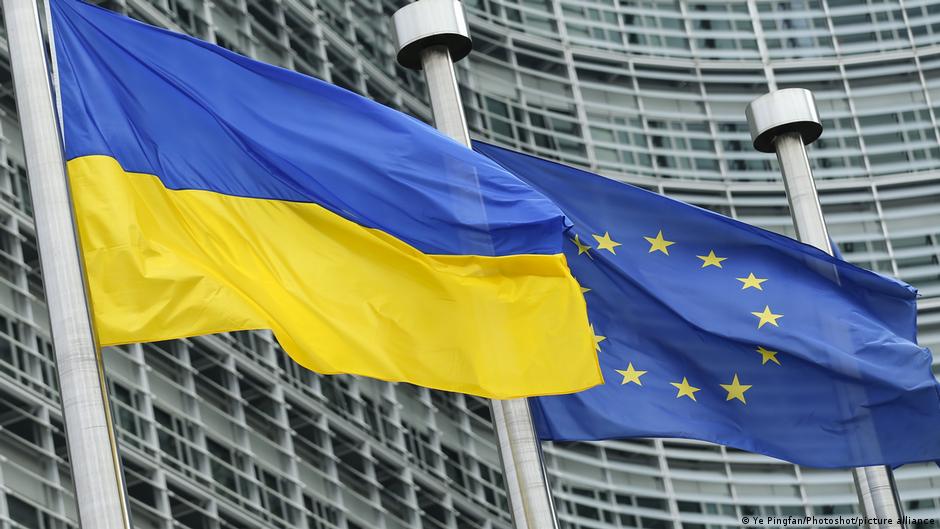
The European Union has rejected Ukraine’s request for an early release of part of a €90 billion loan package intended to help cover a military financing shortfall this year, a decision that underscores the increasingly difficult balance between wartime urgency and donor budget discipline.
Kyiv had asked Brussels to advance a portion of the loan as rising defense costs opened a larger-than-expected gap in its current-year military funding. According to people familiar with the matter cited by Bloomberg on Thursday, October 1, the appeal followed Ukraine’s unexpected acknowledgment over the summer that it faced an additional €27 billion financing deficit because of mounting war-related expenditures.
For EU officials, the question was not simply whether Ukraine needed the funds. It was whether moving money forward would solve the underlying financing problem or merely change the timing of the shortfall. Brussels concluded that accelerating disbursements now “could only push the problem into 2027,” according to the account, leaving Ukraine and its partners to confront the same fiscal pressure next year with fewer committed resources available.
Brussels concluded that faster funding now could delay the problem into 2027 rather than resolve it.
The decision places fresh emphasis on how Ukraine’s allies are managing support for a country still defending itself against Russian aggression while facing a multi-year budget challenge. It also highlights the executive and political calculations inside European institutions: officials are under pressure to sustain Ukraine’s war effort, but they must also preserve the credibility of longer-term financing plans and maintain conditions tied to reform.
A Funding Strategy Built Around Burden Sharing
European officials have instead turned to other Ukraine partners, including Canada, Norway and Japan, with a proposal that they help close the immediate gap. The working assumption, according to the report, is that the EU loan can cover two-thirds of Ukraine’s needs, while countries outside the bloc contribute the remainder.
That structure carries clear boardroom implications for governments and multilateral lenders coordinating support. The EU is effectively signaling that its balance sheet cannot be treated as the only available source of bridge financing. For non-EU partners, the message is that support for Kyiv will increasingly require planned capital commitments rather than ad hoc political gestures.
Bloomberg reported that €45 billion from the loan earmarked for 2027 will be made available “operationally,” but not before the beginning of next year. At the same time, the EU and Ukraine are expected to begin work on identifying additional budgetary and defense needs, a process likely to shape the next round of donor negotiations.
For Ukraine’s leadership, the denial of early disbursement sharpens a near-term financing challenge and increases the importance of demonstrating fiscal discipline. The country’s war economy requires large and continuing inflows, but donors are demanding clearer visibility on future requirements, implementation risks and the domestic policy measures Kyiv is willing to adopt.
Reform Conditions Move To The Forefront
The financing debate is also linked to reforms that European leaders see as central to Ukraine’s long-term alignment with the bloc. In September, European Commission President Ursula von der Leyen told Ukrainian President Volodymyr Zelensky during a meeting on the sidelines of the United Nations General Assembly in New York that the EU still had €37 billion in budget support available for 2026.
But von der Leyen directly tied the release of that money to Kyiv’s implementation of reforms aimed at fighting corruption and the shadow economy, increasing tax revenues and bringing Ukrainian legislation closer to EU standards. That linkage is significant: Brussels is not merely underwriting a wartime budget, it is using financial support to press for institutional changes that affect governance, revenue collection and Ukraine’s future integration path.
In corporate terms, the EU is behaving less like a passive lender and more like a strategic investor with covenants attached. The reform conditions are designed to strengthen Ukraine’s fiscal capacity and reduce reliance on emergency external funding over time. They also protect EU officials from criticism that large-scale support is being disbursed without sufficient controls.
The International Monetary Fund is part of the same financing architecture. IMF spokesperson Julie Kozak said the fund is discussing with Kyiv and its partners the possible size of Ukraine’s budget deficit. The IMF is also working with Ukraine to combine the second and third reviews of an $8.1 billion financing program, equivalent to €7.23 billion, and expects to submit them to its executive board by December 2026.
Kozak said further financing for Ukraine depends on receiving sufficient and credible assurances to cover the deficit. That requirement reflects a central concern for lenders: no institution wants to approve financing on assumptions that later prove inadequate, especially when Ukraine’s future needs remain large and exposed to the course of the war.
At the end of September, the IMF estimated Ukraine’s future financing gap at $30 billion to $35 billion in 2027, $17 billion in 2028 and $2 billion in 2029, according to Bloomberg. Those figures frame the EU’s refusal in a broader context. The immediate €27 billion shortfall is only one part of a multi-year capital requirement that must be sequenced across governments, EU institutions and multilateral lenders.
For executives, investors and policy strategists watching the region, the episode shows that Ukraine’s financing model is entering a more demanding phase. Donor support remains substantial, but disbursement is becoming more conditional, more coordinated and more sensitive to forward-looking fiscal projections. The boardroom question for Ukraine’s partners is no longer whether to support Kyiv, but how to structure that support so it can endure through 2027 and beyond.