South Korea Threatens Ukraine With Further Steps in Prisoner Disclosure Dispute
Seoul’s demand for a public apology underscores how wartime diplomacy can strain strategic partnerships and complicate security policy.
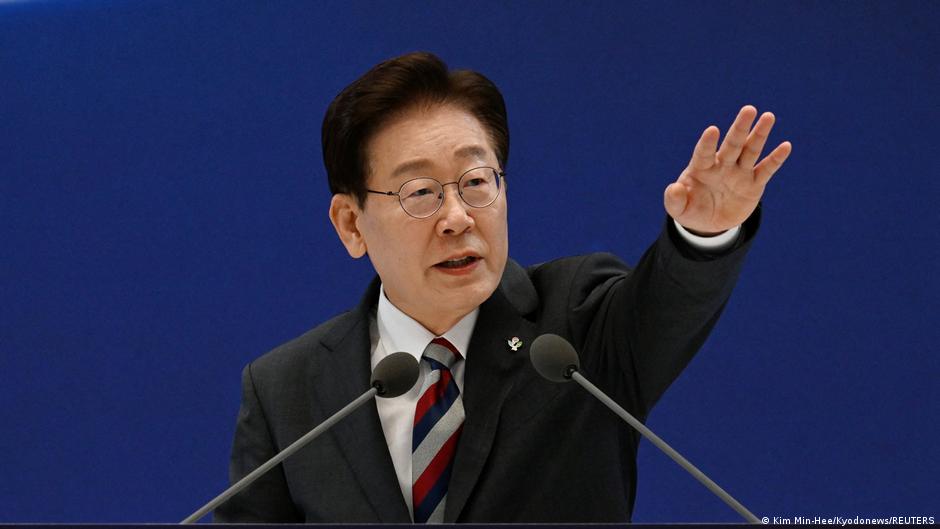
South Korean President Lee Jae Myung has warned that Seoul will take “further measures” if Ukraine refuses to publicly acknowledge what South Korea says was a confidentiality agreement over the transfer of two captured North Korean soldiers and does not issue an apology.
Lee did not specify what measures his government might take. But the dispute has moved quickly from a narrow diplomatic disagreement into a test of trust between two governments whose interests overlap in countering North Korean military support for Russia’s war against Ukraine.
In a post on X overnight into Friday, October 2, Lee accused Kyiv of portraying Seoul as a liar and said the matter could not be ignored.
“If acknowledgment of the facts and a public apology continue to be rejected, we will take further measures. This is a matter of honor for the Korean people and state that we cannot ignore,” Lee wrote.
The confrontation follows Ukrainian President Volodymyr Zelensky’s statement at the United Nations General Assembly in late September that Kyiv had transferred two North Korean prisoners of war to South Korea. Seoul sharply criticized Ukraine after the disclosure, saying the release of such information could endanger relatives of the prisoners still in North Korea and negatively affect relations between Seoul and Pyongyang.
South Korean First Vice Foreign Minister Park Yoon-joo also said Kyiv’s denial of a confidentiality agreement undermined mutual trust and demanded official explanations and an apology from Ukraine. Dmitry Litvin, an adviser to the Ukrainian president on communications, said in response that there had been no agreement between Kyiv and Seoul that information about the prisoners’ fate could not be disclosed. South Korea’s presidential administration expressed “deep regret” over those assertions.
Strategic Fallout for Seoul and Kyiv
For American business and policy observers, the episode highlights a recurring risk in global security partnerships: decisions made for wartime messaging can collide with allies’ domestic constraints, intelligence sensitivities and long-term strategic positioning. South Korea has become an increasingly important defense industrial player for Western-aligned governments, even as it has maintained careful limits on its role in Ukraine.
Until now, Seoul has supplied Ukraine mainly with non-lethal military equipment, including demining gear. Reuters has noted that some Western countries have recently pressed South Korea to provide lethal weapons to Ukraine as well. That debate carries implications for South Korea’s defense sector, its export strategy and its relations with both Washington and European capitals.
The dispute also arrives at a delicate moment for the Lee administration’s posture toward North Korea, a nuclear-armed neighbor. Shin Yul, a professor of political science at Myongji University, told AFP that in the context of South Korean domestic politics, Seoul’s approach to the diplomatic conflict with Ukraine “could prove problematic,” given the current administration’s restrained position toward Pyongyang.
Ukraine, for its part, is seeking to contain the damage. Foreign Minister Andrii Sybiha told journalists in Kyiv several hours before Lee’s post that Ukraine was interested in resolving the dispute with South Korea as quickly as possible and continuing cooperation with Seoul.
“I would not like to call this an incident. Let’s say it is a diplomatic misunderstanding,” Sybiha said, according to RBC-Ukraine.
Sybiha said he had been personally speaking every day in recent days with his South Korean counterpart. He emphasized that Ukraine regards South Korea as an important country and hopes for momentum, continued cooperation and concrete results in the relationship.
“I very much want this situation to be settled in the near term, and we are working on it,” Sybiha said.
Prisoners, Disclosure and Boardroom Risk
South Korea’s Yonhap news agency reported on September 28 that the country’s foreign ministry summoned Ukraine’s ambassador over Kyiv’s disclosure of information about the North Korean prisoners of war. On September 30, AFP reported, citing South Korean lawmaker Yoon Kun-young, that both prisoners had arrived in South Korea in mid-September.
After interrogation and security service checks, authorities in Seoul are expected to decide whether to grant the two men protection and begin a resettlement process. South Korea has said the disclosure could expose the prisoners’ relatives in North Korea to danger, reflecting the high human and political stakes attached to information about defections, captures and transfers involving North Korean nationals.
The corporate implications are indirect but meaningful. South Korea’s major defense manufacturers, technology companies and infrastructure groups operate in an environment where government strategy, export controls and alliance politics can determine market access and growth. Any deterioration in Seoul-Kyiv ties could complicate future cooperation in defense technology, reconstruction, logistics and security assistance.
The controversy also intersects with a broader question facing Western governments and contractors: how to manage sensitive information across coalitions supporting Ukraine. Public disclosures can serve diplomatic and strategic messaging goals, but they can also disrupt bilateral understandings, create domestic political costs and force executives to reassess political risk around government-linked projects.
For Seoul, the boardroom calculation extends beyond Ukraine. South Korea must balance pressure from Western partners, the threat posed by North Korea, and the need to preserve flexibility in its dealings with Pyongyang. For Kyiv, maintaining access to South Korean cooperation matters as Ukraine looks for military, technological and reconstruction support from advanced industrial economies.
Zelensky said last week on social media that, according to his information, about 8,000 North Korean troops are currently in Russia and another 10,000 are preparing to be sent there and then to the war against Ukraine. That claim reinforces Kyiv’s argument that North Korea has become an active military factor in the conflict. But the dispute with Seoul shows that even shared concern about Pyongyang does not eliminate the friction that can arise over intelligence handling, public messaging and diplomatic protocol.
Lee’s threat of unspecified further measures leaves room for negotiation while increasing pressure on Ukraine to offer a formula that can preserve relations without fully retreating from its public position. Sybiha’s language suggests Kyiv is searching for that kind of off-ramp. Whether Seoul accepts it may determine how much this diplomatic rupture affects a relationship with growing strategic and commercial significance.