Lithuania Moves to Restrict Russian and Belarusian Property Purchases
The proposed curbs would bar Russian and Belarusian citizens, including residency holders, from buying property near strategic sites.
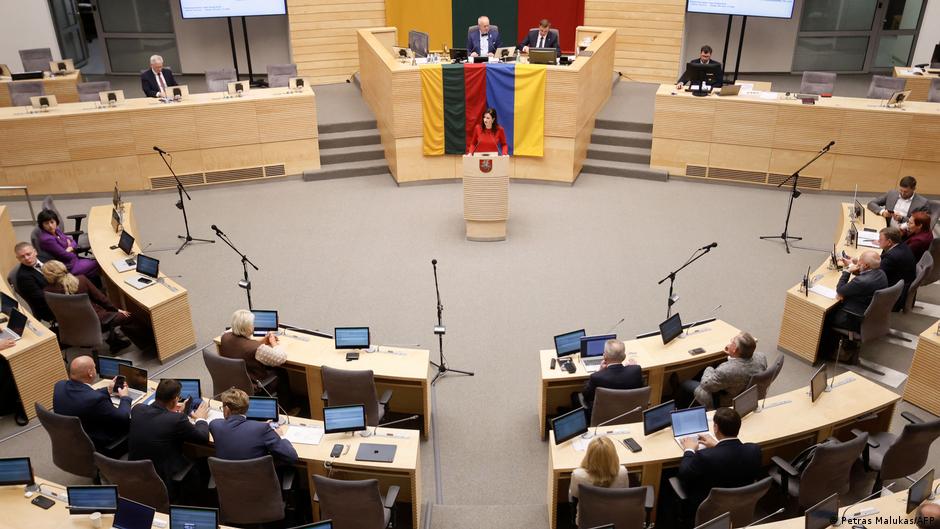
Lithuania’s government has approved draft legislation that would restrict Russian and Belarusian citizens from buying real estate near strategically important sites, a move framed by officials as part of a broader effort to reduce espionage risks and hybrid threats.
The proposal, reported on Wednesday, September 30, by Lithuanian National Radio and Television, or LRT, would apply even to Russian and Belarusian nationals who hold valid residence permits in Lithuania. The bill would not apply when ownership is acquired through inheritance.
For corporate executives, real estate investors and compliance teams operating in the Baltic region, the Lithuanian measure is another signal that national-security screening is moving beyond defense procurement and critical infrastructure ownership into adjacent property markets. The policy reflects a widening European view that land and buildings near military, transport and other strategic sites can carry intelligence value, particularly when controlled by nationals of states considered hostile or high-risk.
Security Policy Enters the Property Market
According to the draft, the ban is intended to “significantly reduce” intelligence activity and “hybrid operations” in Lithuania, including surveillance of military exercises or monitoring the movement of troops. If approved by Lithuania’s national parliament, the Seimas, the amendments would take effect on January 1, 2027.
Officials argue the measure would significantly reduce intelligence activity and hybrid operations, including surveillance of military exercises and troop movements.
The proposed restrictions would place Lithuania alongside Latvia and Finland, where similar limitations are already in force. Estonia is still planning to introduce a comparable ban. The regional pattern matters for companies with Baltic exposure because compliance risks are becoming more coordinated across neighboring markets, even where the specific legal mechanisms differ.
Lithuania’s Central Register data for May showed that 5,104 Russian citizens and 2,781 Belarusian citizens with temporary or permanent residence permits had purchased real estate in Lithuania, including property near strategically important facilities. Those figures illustrate why the measure has implications beyond symbolic sanctions policy: it could affect existing asset strategies, future acquisitions and due diligence for transactions involving individuals from Russia and Belarus.
In neighboring Latvia, the Seimas approved restrictions in June on the issuance of residence permits to citizens of Russia and Belarus. Lithuania’s bill therefore fits into a wider Baltic reassessment of the legal benefits available to Russian and Belarusian nationals, especially where residency status intersects with property ownership, mobility and access to sensitive areas.
A Broader Sanctions Framework
The property proposal follows Lithuania’s decision in late April to extend until December 31, 2027, a sanctions law targeting citizens of Russia and Belarus. The Seimas approved that extension by 95 votes to six. The original law was adopted on May 3, 2023.
Under that framework, Lithuania has suspended the acceptance of applications from Russian and Belarusian citizens for Schengen and national visas. Russian citizens are also barred from acquiring real estate in Lithuania, bringing in cash Ukrainian hryvnias and applying for electronic resident status.
The law also allows Lithuanian authorities to revoke temporary residence permits for Russian citizens if it is established that they visited Russia or Belarus more than once during the previous three calendar months. Exceptions apply when travel was caused by objective reasons or was connected to work in international transport.
From a boardroom perspective, these developments sharpen the need for companies to understand beneficial ownership, employee mobility and real estate exposure in Lithuania and across the region. Multinationals with Russian or Belarusian nationals among employees, investors, counterparties or property lessors may face additional documentation demands and reputational questions, particularly in sectors located near sensitive infrastructure.
The legislation also points to a more assertive role for governments in defining strategic geography. Real estate that might previously have been treated as a routine commercial asset can become sensitive if it is located near military facilities, transport nodes or other assets deemed important to national security. That shift can affect valuations, transaction timelines and the scope of legal review.
Defense Posture Adds to the Context
The property debate is unfolding as Lithuania considers further changes to its security posture. On September 22, members of the Seimas backed a proposal to repeal the constitutional ban on storing weapons of mass destruction, including nuclear weapons, on Lithuanian territory. According to LRT, 99 lawmakers supported the decision, 13 opposed it and five abstained.
For the constitutional amendment to be adopted, it must pass several rounds of voting. The first round is scheduled for October 6, and the final vote is scheduled for January 12, 2027.
Separately, Lithuanian President Gitanas Nauseda wrote on X that U.S. troops scheduled to replace American personnel who had previously left Lithuania as part of a rotation were already on their way to the country. “I have just received confirmation that a new contingent of American military personnel is already heading to Lithuania!” he wrote, thanking U.S. President Donald Trump for the decision.
Taken together, the measures show Lithuania aligning property law, residency policy and defense planning around a more expansive definition of national security. For business leaders, the practical lesson is that geopolitical risk in the Baltics is increasingly being translated into concrete rules governing who may own assets, where they may own them and under what conditions they may retain residency rights.